

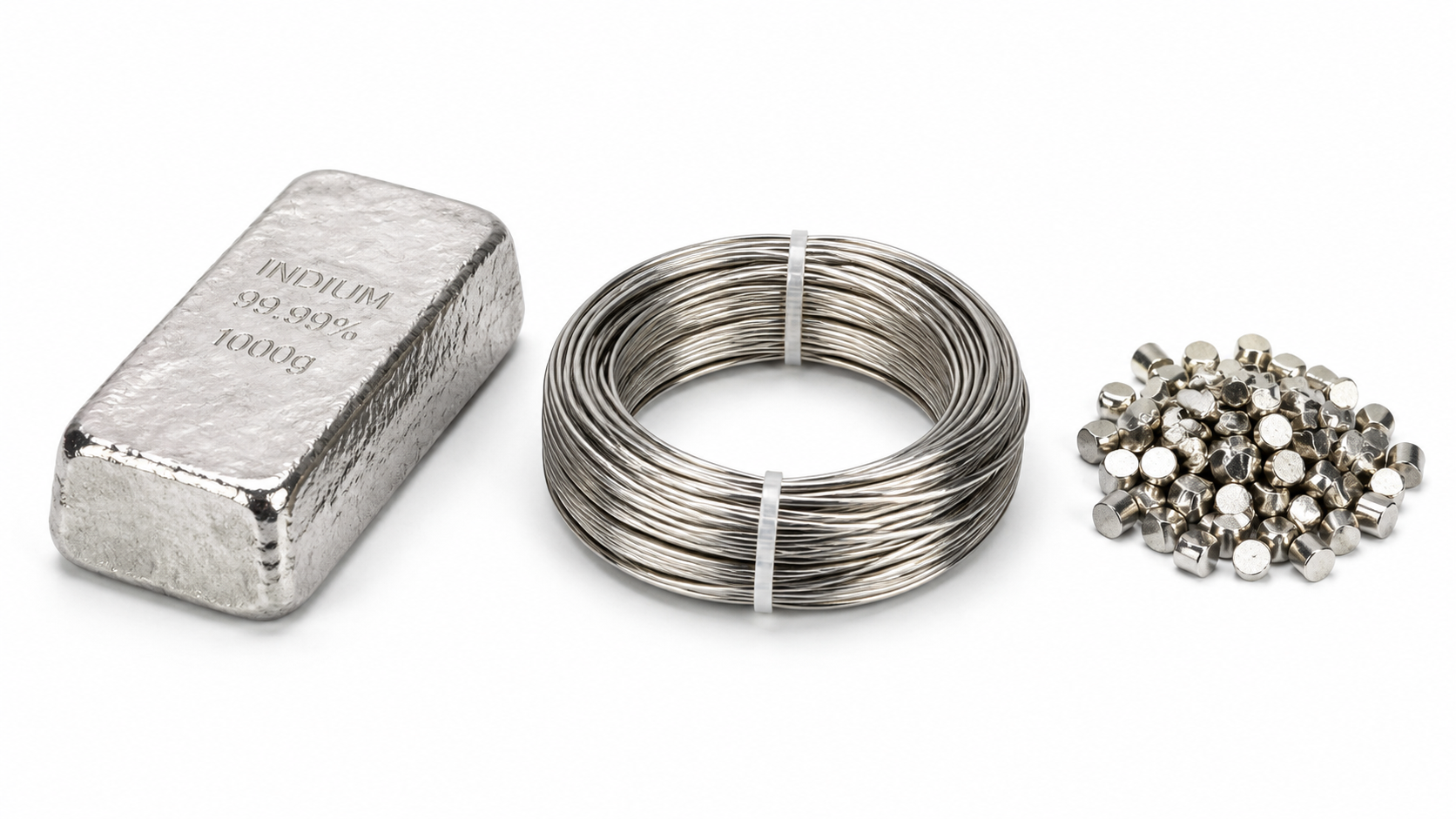
Indium Ingots, Wire, and Pellets: Three Forms, Three Application Landscapes

Indium is a silver-white metal with a faint bluish tint, exceptionally soft, highly malleable, with a melting point of just 156.61°C, a boiling point of 2,060°C, and a density of 7.30 g/cm³. As a globally scarce strategic resource, indium serves multiple high-end manufacturing sectors—including semiconductors, optoelectronics, new energy, and medical devices—in three primary physical forms: ingots, wire, and pellets. While chemically identical, these forms address fundamentally different application needs.
I. Indium Ingots: Primary Raw Material for Bulk Applications
Product Definition: Indium ingots are rectangular trapezoidal blocks produced by smelting and casting, appearing silver-white with a faint blue tint. They comply with standard YS/T 257-2009, with common grades including In99995 (99.995%) and In9999 (99.99%). Typical ingot weights are 500g±100g and 1000g±100g.
Core Applications:
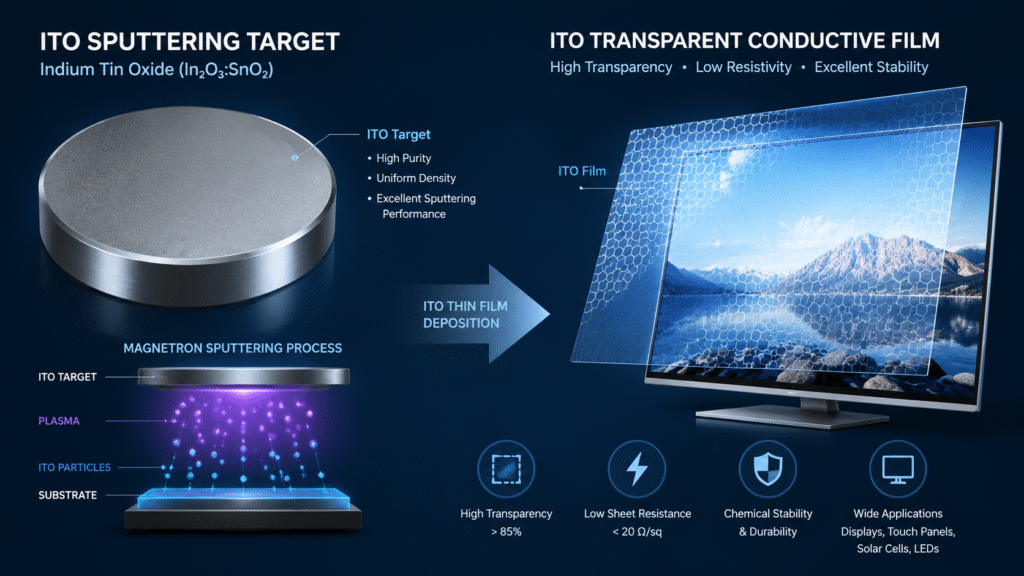
(1) ITO Target Manufacturing (≈70% of consumption): Indium ingots are the fundamental raw material for producing ITO (indium tin oxide) targets, which are the core transparent conductive electrodes in LCDs, flat-panel displays, touchscreens, and OLEDs.
(2) Low-Melting Alloys and Bearing Alloys: Indium readily forms alloys with many metals and is used in low-melting alloys and bearing alloys. Small additions of indium can extend bearing alloy service life by 4-5 times.
(3) Semiconductor Doping: High-purity indium ingots are used to prepare III-V compound semiconductors (such as InP), high-purity alloys, dopants, and solar cells. Yunnan Tin Industry Co., Ltd. reported indium reserves of 4,821 tonnes and production of 127 tonnes of indium ingots in 2024.
(4) Other Applications: Light sources, and due to its softness, gap-filling seals.
II. Indium Wire: Precision Soldering and Low-Temperature Sealing
Product Definition: Indium wire is produced by precision drawing of high-purity indium. Common purities are 99.95% (4N5) and 99.995% (5N), with diameters typically ranging from 0.5-3.0mm. It features a bright surface, soft texture, and excellent ductility. Indium Corporation offers pure indium wire with a minimum diameter of 0.010 inches (0.25mm), while alloy wire diameters range from 0.001 inches (0.025mm) to 0.250 inches (6.35mm).
Core Applications:
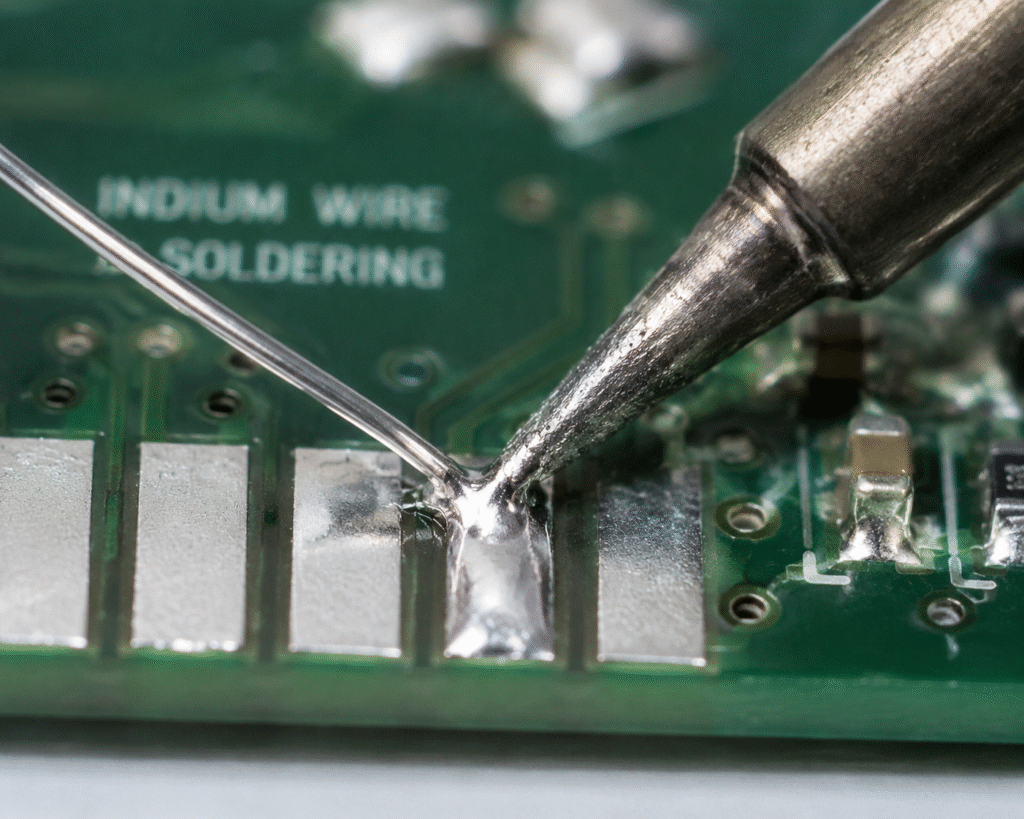
(1) Precision Electronic Packaging and Chip Bonding: Indium wire is widely used in electronic packaging and chip bonding due to its excellent electrical and thermal conductivity, softness, and chemical stability. As a solder, it enables reliable connections at very low temperatures, making it ideal for heat-sensitive components.
(2) Low-Temperature Soldering and Vacuum Sealing: Indium wire is used as a low-temperature and lead-free solder, widely applied in sealing operations. Pure indium wire is especially valued in cryogenic environments where it retains softness and forging toughness. Indium alloy wire melting points can range from 47°C to 313°C.
(3) Special Material Bonding: Pure indium can bond to glass, ceramics, and quartz. Common alloys include: In100 (melting point 157°C), In97/Ag3 (melting point 143°C, enhanced strength), and In52/Sn48 (eutectic, melting point 118°C, ideal for heat-sensitive components).
III. Indium Pellets (Beads/Granules): Vacuum Coating and Precision Batching
Product Definition: Indium pellets are granular metal produced by melting and granulating high-purity indium, achieving purities up to 99.995% with uniform particle size and clean surfaces. Common diameters are 1mm, 3mm, and 5mm, with shapes customizable (cylindrical, cubic, spherical, etc.).
Core Applications:
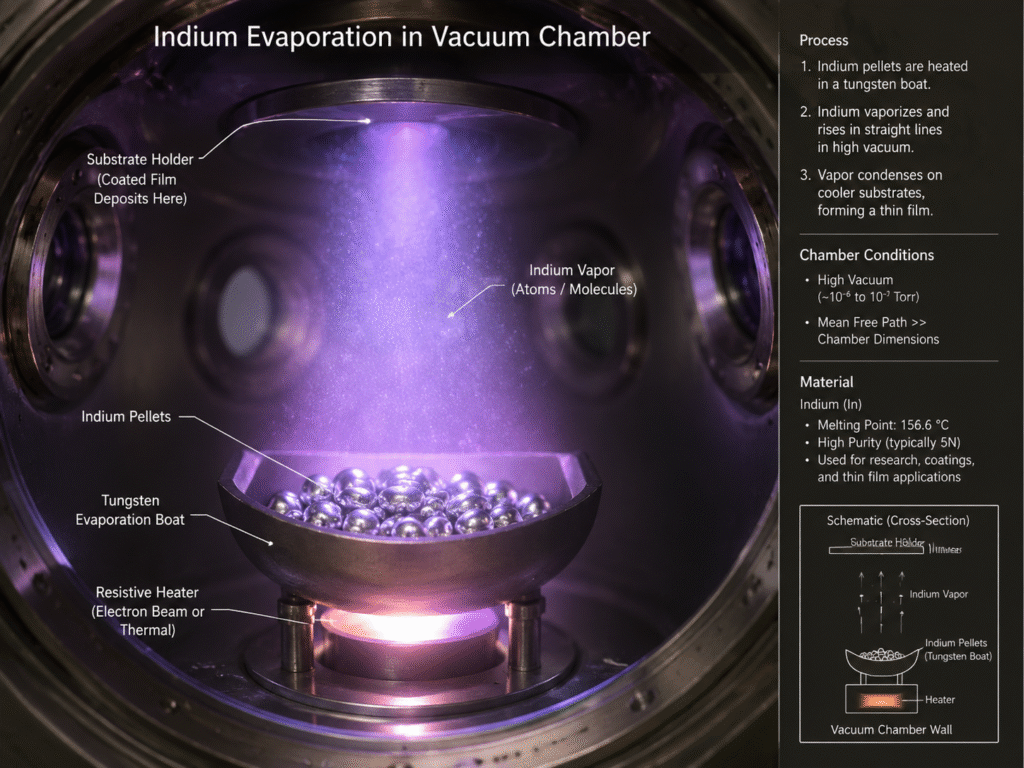
(1) Vacuum Evaporation and Electron Beam Evaporation (Primary Application): Indium pellets are predominantly used in vacuum coating. They offer high adhesion, high purity, and low vaporization temperature, making them ideal for thin-film deposition via thermal or electron-beam evaporation.
(2) Semiconductor Doping and Thin-Film Preparation: Used as contact electrodes, functional films, and high-k dielectric films to meet chip miniaturization demands.
(3) ITO Coating Material: Pellets can be used directly to produce ITO evaporation granules for transparent conductive films.
(4) Alloy Preparation and Research: Uniform pellets facilitate precise batching for alloy and solder preparation, and in research applications.
Summary: Indium ingots serve as the foundational raw material for large-scale industry; indium wire is the precision connector for electronics packaging and low-temperature sealing; and indium pellets are the building blocks for thin-film technologies supporting modern optoelectronics and semiconductor manufacturing.
