

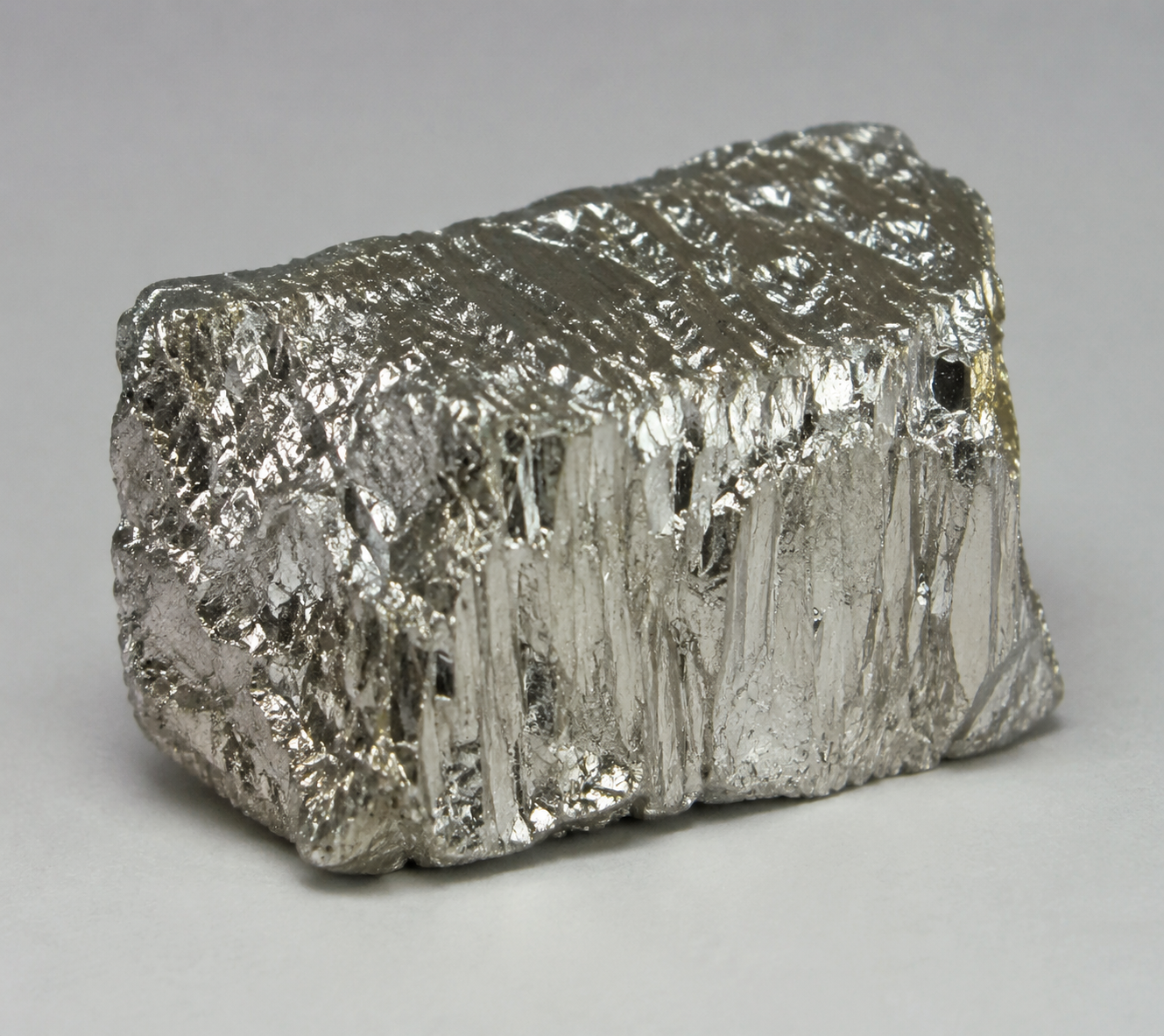
Dysprosium Recycling: Current Status, Technologies, and Strategic Outlook

Dysprosium (Dy) is one of the most strategically valuable heavy rare earth elements. As an indispensable additive in NdFeB permanent magnets—added in small quantities to maintain magnetic strength at high operating temperatures—dysprosium is irreplaceable in EV drive motors, wind turbine generators, industrial robotics, and defense systems. However, its highly concentrated resource distribution and extreme separation difficulty make dysprosium recycling a core issue in global supply chain security.
I. Dysprosium Recycling Rates: Current Status and Gaps
Global Landscape: China controls approximately 63% of global dysprosium reserves and the overwhelming majority of chemical separation capacity. On the recycling front, Western countries recover less than 1% of dysprosium from waste, while China already recovers 8%–12% of its supply from scrap. This gap reflects significant differences in recycling infrastructure and industrial chain completeness.
China Data: Driven by policies including the Rare Earth Management Regulations and the 14th Five-Year Plan for Circular Economy, China’s rare earth slag comprehensive utilization rate increased from 35% in 2020 to 52% in 2025, and is expected to approach 60% in 2026. However, recovery rates for high-value elements (terbium and dysprosium) still hover between 65% and 70%.
NdFeB Scrap Potential: China generates over 100,000 tonnes of NdFeB magnet scrap annually, containing approximately 30,000 tonnes of Pr/Nd oxides and 2,000 tonnes of Dy/Tb oxides, valued at over RMB 50 billion—yet the actual recycling rate is below 10%. Spent NdFeB magnets from EVs and wind turbines offer 90%–99% recovery rates and are the only viable high-grade secondary source for dysprosium oxide production.
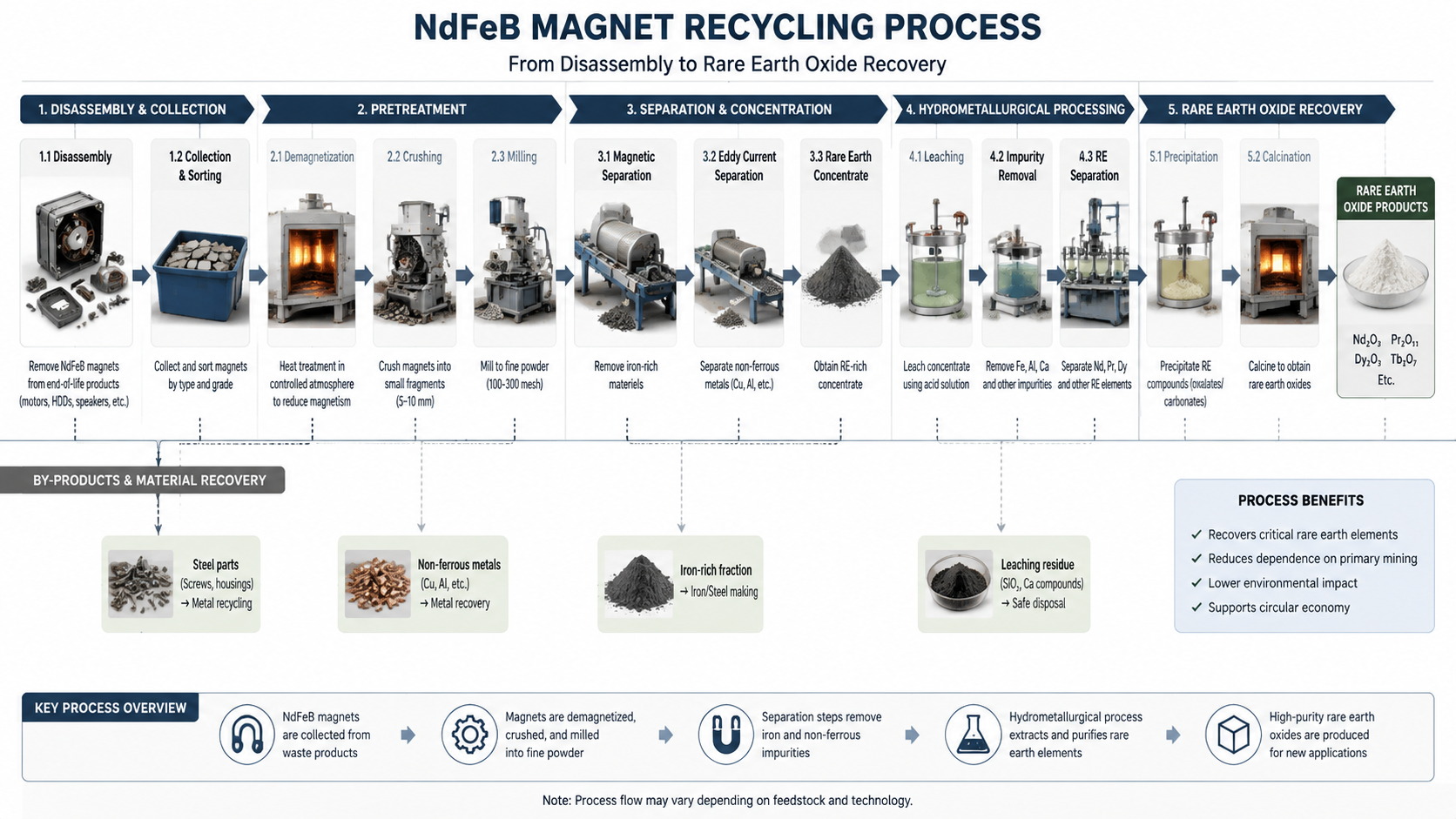
II. Mature Recycling Technology Routes
1. Hydrometallurgy — The Current Mainstream
Hydrometallurgy is the most widely adopted dysprosium recovery route, encompassing acid leaching, solvent extraction, and ion exchange.
- Acid Leaching: Dissolving dysprosium-bearing waste (e.g., NdFeB magnet scrap) with inorganic acids (HCl, HNO₃, H₂SO₄) to bring dysprosium into solution.
- Solvent Extraction: Leveraging distribution coefficient differences between dysprosium and other rare earth ions (e.g., neodymium) for selective separation. Traditional solvent extraction often requires hundreds of extraction stages for high-purity separation.
- Ion Exchange: A May 2026 study systematically explored recovering and purifying neodymium and dysprosium from simulated NdFeB magnet leach solutions via ion exchange.
China’s recycling processes are primarily hydrometallurgical, with relatively mature technology achieving rare earth recovery rates above 95% in industrial applications, though challenges remain including low byproduct value, excessive wastewater ammonia nitrogen, and high costs for some technologies.
2. Pyrometallurgy — Environmentally Friendly Route
Pyrometallurgy enriches and separates rare earths through high-temperature processing, offering advantages including environmental friendliness, short process flow, large throughput capacity, and strong feedstock adaptability. However, some methods remain too costly for large-scale industrial application, with relatively low overall recovery rates.
A 2025 study explored calcium addition to magnesium-based extractants for high-temperature Nd and Dy recovery from Nd-Fe-B scrap—at 850°C, dysprosium recovery increased from 28% to 91% with calcium addition-, marking a significant breakthrough in pyrometallurgical efficiency.
3. Short-Loop Recycling — Emerging Direction
Short-loop recycling uses physical methods including mechanical disassembly, hydrogen decrepitation, and re-magnetization to directly convert waste magnets into regenerated magnets, achieving 90% energy savings in just 1–2 hours while retaining 90%–95% of original magnetic properties. This route shows strong promise in consumer electronics and other applications with less stringent performance requirements.
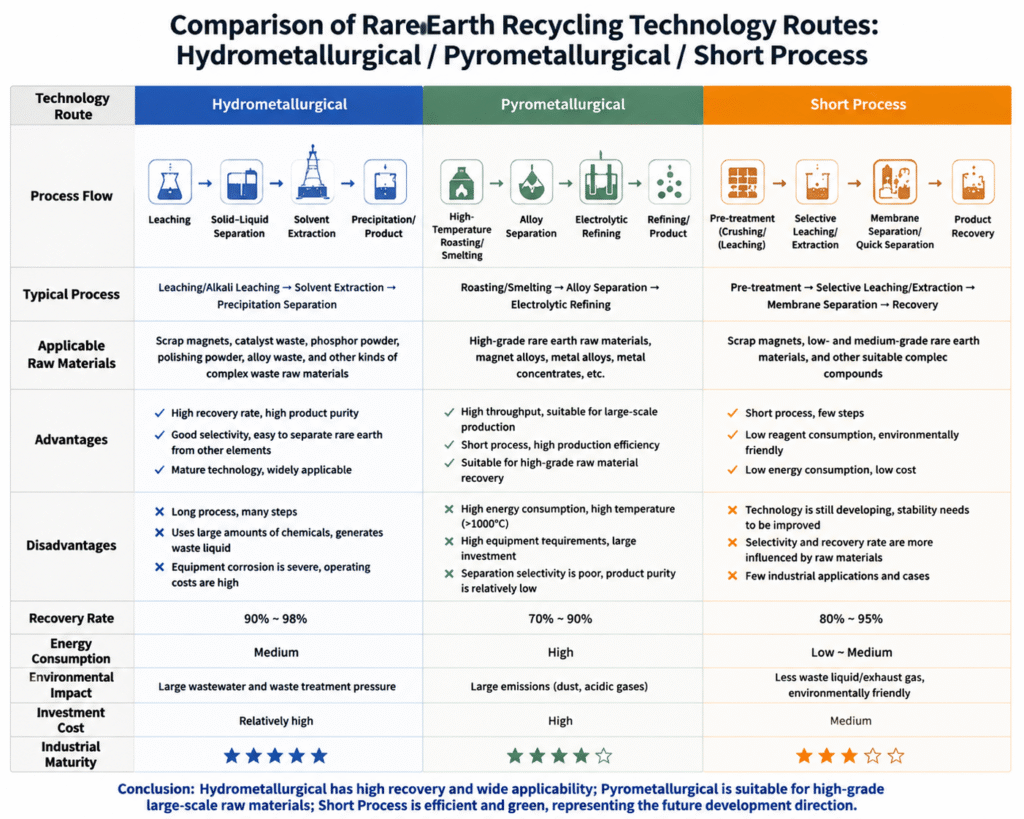
III. Latest Technology Breakthroughs (2025–2026)
▶ Iondrive: 93.5% Dysprosium Recovery
In June 2026, Australia’s Iondrive announced that its IONSolv deep eutectic solvent process achieved 93.5% dysprosium recovery in commercial U.S. e-waste testing, with neodymium and praseodymium recoveries both at 96.5%. This result far exceeded the 32.5% dysprosium recovery assumption used in its November 2025 techno-economic analysis.
▶ Momentum Technologies: 99.5% High-Purity Dysprosium
In June 2026, Texas-based Momentum Technologies, using its proprietary Membrane Solvent Extraction (MSX) technology, recovered 99.5% pure dysprosium from magnet production waste. The technology was developed in collaboration with the U.S. Department of Energy and Oak Ridge National Laboratory.
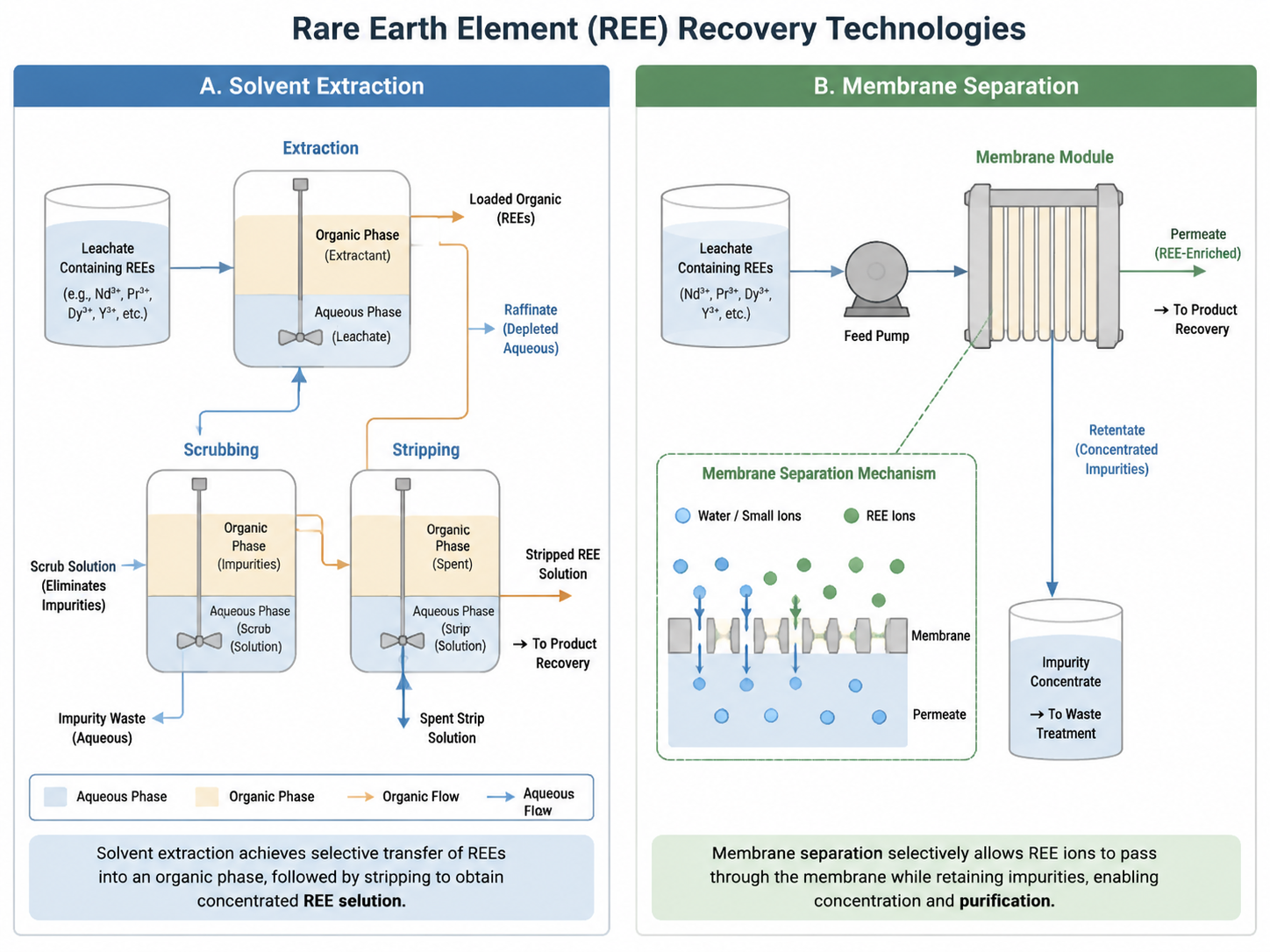
▶ Electrochemical Ion-Gating Synergistic Membrane Extraction
A June 2026 study developed electrochemical ion-gating synergistic membrane extraction technology enabling continuous selective separation of Nd³⁺/Dy³⁺. By 2030, the estimated volume of NdFeB magnets reaching end-of-life for recycling is projected to reach 27,000 to 54,000 tonnes.
▶ Active Grain Boundary Reconstruction
A June 2026 study demonstrated regeneration of sintered NdFeB sludge into high-performance magnets via active grain boundary reconstruction, achieving 85 wt% regenerated powder utilization.
IV. Policy Drivers and Market Outlook
China Policy: The State Council issued the Rare Earth Management Regulations in 2024, explicitly encouraging comprehensive utilization of rare earth secondary resources. The Technical Specification for Classification and Comprehensive Utilization of Recyclable Rare Earth Secondary Resources (GB/T 46992-2025), published on December 31, 2025, and effective July 1, 2026, provides a standardization framework for rare earth recycling.
Market Data: Global rare earth slag generation exceeded 1.2 million tonnes in 2025, with theoretical recovery value of key rare earth elements (Nd, Pr, Dy oxides) exceeding $18 billion. The global rare earth slag comprehensive utilization market was approximately **$7.6 billion in 2025 and is projected to exceed $13.5 billion by 2030, with a CAGR of approximately 12.8%. China accounts for over 70% of global rare earth slag recovery capacity, with production costs 15%–20% lower than overseas competitors.
Price Trends: In June 2026, dysprosium oxide prices ranged from RMB 1.25–1.28 million/tonne, with a monthly increase of approximately 15%. The average price of Pr/Nd oxide in H1 2026 was RMB 731,000/tonne, up 73.6% year-over-year.
