

The Role of Gallium in LED Manufacturing and Its Market Demand Trends

Abstract:
Gallium (Ga), a strategic dispersed metal predominantly sourced from bauxite refining, serves as the foundational element for modern LED technology through its compound semiconductor forms—gallium arsenide (GaAs) and gallium nitride (GaN). This white paper provides a comprehensive analysis of gallium‘s technical role in LED manufacturing, its market dynamics, and the evolving supply-demand landscape shaped by export controls and technological advancement. Drawing on the latest industry data and research up to May 2026, this report examines market sizes, growth trajectories, and the strategic implications of gallium’s concentrated supply chain.
1. Introduction
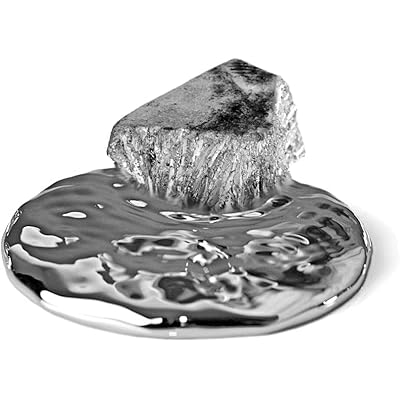
Gallium, atomic number 31, is a dispersed metal that rarely forms independent mineral deposits, being recovered almost exclusively as a by-product of aluminum refining. Despite its relatively low production volume—global primary gallium output is measured in hundreds of tonnes annually—its compound semiconductors underpin the global LED industry valued at over USD 12 billion.
The two principal compound semiconductors of gallium—gallium arsenide (GaAs) and gallium nitride (GaN)—serve complementary roles in LED manufacturing. GaAs substrates dominate red, orange, yellow, and infrared LED production, while GaN is the core material for blue, green, and ultraviolet LEDs. Together, they form the complete visible spectrum foundation for all modern LED lighting and display applications.
This white paper systematically examines the technical mechanisms, market data, and strategic implications of gallium’s role in LED manufacturing.
2. Gallium’s Technical Role in LED Manufacturing
2.1 Gallium Arsenide (GaAs): Substrate for Red/IR Optoelectronics
GaAs is a III-V compound semiconductor with a direct bandgap of 1.42 eV and electron mobility approximately six times that of silicon, making it essential for high-frequency optoelectronic devices. In LED manufacturing, GaAs wafers serve as the substrate platform for red, orange, yellow, and infrared LED epitaxial growth. GaAs epitaxial wafers are critical enabling materials for LEDs, VCSELs, and photovoltaic devices across telecommunications, consumer electronics, aerospace, and automotive industries.
China published a national standard for “GaAs Substrates for LED Epitaxial Chips” in August 2025.
2.2 Gallium Nitride (GaN): The Engine of Blue/Green/UV LEDs
GaN is a wide-bandgap (3.4 eV) third-generation semiconductor that enables blue, green, and ultraviolet LEDs. Compared to traditional LED technologies, GaN offers higher efficiency, greater brightness, and longer operational lifespan. The invention of GaN-based blue LEDs earned the 2014 Nobel Prize in Physics and catalyzed the solid-state lighting revolution.
2.3 Trimethylgallium (TMGa): The Chemical Bridge
TMGa serves as the critical metalorganic precursor in MOCVD processes for manufacturing GaN and GaAs epitaxial layers. The global TMGa market was valued at approximately USD 161.2 million in 2025 and is projected to reach USD 239.6 million by 2034, growing at a CAGR of 4.5%. Leading global manufacturers achieved commercial-scale 7N (99.99999%) purity levels in 2025, a critical milestone for Micro LED and high-frequency device fabrication.
3. Market Sizing and Growth Projections
3.1 Global LED Market
According to TrendForce, the global LED market is projected to reach USD 12.176 billion in 2026, driven by momentum from Micro/Mini LEDs, UV/IR LEDs, automotive lighting and displays, and agricultural lighting applications.
The broader LED materials market is projected to expand from USD 37.7 billion in 2025 to USD 88.2 billion by 2034, at a CAGR of 9.9%. Growth is anchored in accelerating adoption of Micro-LED epitaxial wafers, advanced phosphor materials, and high-efficiency InGaN emitters.
3.2 GaAs Wafer and Epitaxial Market
The global GaAs wafer market was valued at approximately USD 1.33-1.43 billion in 2025, with projections varying by source. Research and Markets projects growth from USD 1.33 billion in 2025 to USD 1.48 billion in 2026 at a CAGR of 11.8%, reaching USD 2.33 billion by 2030. 360iResearch estimates a valuation of USD 1.43 billion in 2025, growing to USD 2.06 billion by 2032 at a CAGR of 5.33%.
The GaAs epitaxial wafer market was valued at USD 919.67 million in 2025, projected to reach USD 1,413.17 million by 2032 at a CAGR of 6.32%-. The GaAs substrate wafer market was estimated at USD 347 million in 2024, with a forecast readjusted size of USD 602 million by 2031 (CAGR 8.2%).
| Segment | 2025 Value | 2031/2032 Forecast | CAGR |
| GaAs Wafers (360iResearch) | USD 1.43 Bn | USD 2.06 Bn (2032) | 5.33% |
| GaAs Wafers (R&M) | USD 1.33 Bn | USD 2.33 Bn (2030) | ~12% |
| GaAs Epitaxial Wafers | USD 919.67 Mn | USD 1,413.17 Mn (2032) | 6.32% |
| GaAs Substrate Wafers | ~USD 350 Mn | USD 602 Mn (2031) | 8.2% |
Key demand drivers include 5G/6G infrastructure deployment (North America 5G penetration reached 40% in 2023, with connections expected to reach 669 million by 2028), VCSEL adoption for 3D sensing and automotive LiDAR, and satellite communications expansion.
3.3 GaN Wafer and Substrate Market
The GaN wafers market was valued at USD 4.93 billion in 2025 and is projected to reach USD 16.32 billion by 2032, growing at a CAGR of 18.62%.
In the GaN substrate segment, the market was valued at USD 292.3 million in 2025 and is projected to grow to USD 545.2 million by 2031, reaching USD 861.2 million by 2035, at a CAGR of 11.5%. Growth is attributed to increasing adoption in power electronics and EVs, accelerated 5G/6G infrastructure deployment, and rising demand for high-efficiency LEDs and optoelectronic devices.
| Segment | 2025 Value | Forecast | CAGR |
| GaN Wafers | USD 4.93 Bn | USD 16.32 Bn (2032) | 18.62% |
| GaN Substrates | USD 292.3 Mn | USD 545.2 Mn (2031) | 11.5% |
3.4 LED Chip Market
The global LED chip market was valued at approximately USD 3.4 billion in 2024 and is expected to reach USD 4.95 billion by 2031, at a CAGR of 5.60%. According to GIR, global LED chip revenue was approximately USD 3,727 million in 2025, projected to reach USD 5,707 million by 2032 (CAGR 6.3%).
3.5 China LED Industry
China‘s LED industry achieved a total output value of approximately RMB 103.7 billion in 2025, with upstream epitaxial chip production at RMB 26.8 billion and midstream packaging at RMB 76.9 billion.
4. Micro LED: The Growth Engine for Gallium Demand
4.1 Market Outlook
Micro LED technology represents the most significant growth vector for gallium consumption in the LED sector. TrendForce projects that the global Micro LED direct-view display market will reach USD 1.2 billion by 2027, with a CAGR of 86% from 2023 to 2027.
The Micro LED chip market for head-mounted displays is forecast to grow at a CAGR of 133% from 2025 to 2030. TrendForce anticipates a market boom in 2029-2030, with Apple and Meta releasing premium AR devices featuring Micro LED displays.
In the Mini LED segment, the display market grew by 25% in 2025, with P1.2 as the dominant product (>50% share). The market is projected to reach USD 2.194 billion by 2029, at a CAGR of 28% from 2024-2029. The broader Mini LED + MicroLED segment is projected to grow from approximately USD 33.7 billion in 2025 to over USD 48 billion in 2026.
4.2 Industrialization Milestones
- April 2026: Wuhan Optics Valley Core Materials released 8-inch Micro LED epitaxial wafers at the JFEF forum, achieving a 75% cost reduction compared to traditional products
- January 2026: Ennostar and ALLOS Semiconductors announced a strategic partnership to drive 8-inch GaN-on-Si LED epitaxial wafer mass production-
- Late 2025: Zhongtu Technology (annual PSS capacity >18 million units in 4-inch equivalent) filed for IPO on the STAR Market
- Major Chinese players including San’an Optoelectronics, HC Semitek, and Jucan Optoelectronics have built comprehensive full-color LED chip technology systems integrating both GaN and GaAs
5. Gallium Supply Dynamics and Export Controls
5.1 Global Production and Supply Concentration
China controls over 90% of global gallium supply, with production almost entirely derived as a by-product of bauxite refining. The top five global gallium producers—including Chinalco, Zhuhai Fangyuan, Jinjiang Group, Beijing Jiya, and East Hope—account for approximately 55% of global market share.
The global gallium market was valued at approximately USD 364 million in 2025.
5.2 Export Control Escalation
Since mid-2023, China has implemented increasingly stringent export controls on gallium:
- July 2023: Export licensing requirements introduced
- December 2024: Full export ban to the United States on gallium, germanium, and antimony
- January 2025: Core gallium extraction technologies added to controlled items
- April 2025: Updated export control list covering gallium
- May 2025: Cross-agency enforcement against smuggling and transshipment
These measures form a systematic control mechanism-. The temporary embargo on gallium and germanium alone was estimated by the U.S. Geological Survey to potentially cost the U.S. economy approximately USD 3.4 billion, with the semiconductor sector bearing the brunt of the impact.
5.3 Implications for LED Supply Chains
The export controls have triggered reassessment of supply chain vulnerabilities, particularly for sectors reliant on GaN-based products including LED lighting, displays, high-efficiency power devices, and LiDAR systems-.
6. Strategic Outlook
6.1 Key Trends
- Micro/Mini LED as Primary Growth Driver: The transition from traditional lighting to advanced display applications is accelerating gallium demand in LED manufacturing. Micro LED industrialization is transitioning from laboratory to mass production.
- Substrate Technology Transition: The shift from sapphire to 8-inch GaN-on-Si substrates promises to significantly reduce epitaxial costs while increasing production efficiency. Zhongtu Technology‘s 18 million-unit annual PSS capacity demonstrates China’s growing capabilities in upstream materials.
- Export Control Normalization: Gallium‘s strategic mineral status will continue to strengthen, accelerating supply chain diversification and regionalization efforts globally.
- Next-Generation Gallium-Based Materials: Gallium oxide , with its ultra-wide bandgap (~4.8 eV), is positioning itself as a disruptive material for deep-UV LEDs and power electronics, potentially creating entirely new demand categories for gallium.
6.2 Summary of Key Metrics
| Metric | Value | Source |
| Global LED Market (2026) | USD 12.176 Bn | TrendForce |
| Global LED Chip Market (2031) | USD 4.95 Bn | 6Wresearch |
| GaAs Wafer Market (2025) | USD 1.33-1.43 Bn | R&M / 360iResearch |
| GaN Wafer Market (2025) | USD 4.93 Bn | 360iResearch |
| GaN Substrate Market (2025) | USD 292.3 Mn | GMI |
| TMGa Market (2025) | USD 161.2 Mn | USD Analytics |
| LED Materials Market (2034) | USD 88.2 Bn | USD Analytics |
| Micro LED Display (2027) | USD 1.2 Bn | TrendForce |
| China LED Output (2025) | RMB 103.7 Bn | CAS |
| China Ga Supply Share | >90% | 中国镓产业报告 |
7. Conclusion
Gallium‘s role in LED manufacturing has evolved from enabling basic red and blue LED chips to supporting the next generation of Micro LED displays, automotive lighting, and UV sterilization technologies. The metal’s compound semiconductors—GaAs and GaN—form the irreplaceable material foundation for the entire visible-spectrum LED industry.
Market data consistently points to robust growth across all gallium-containing LED material segments. The acceleration of Micro LED industrialization—epitomized by the 75% cost reduction achieved with 8-inch wafers—represents the single most significant demand catalyst. However, the extreme concentration of gallium supply in China, combined with escalating export controls, creates a strategic dimension that extends well beyond normal market dynamics.
For industry participants, understanding gallium’s dual nature—as both a technological enabler and a strategic resource—will be essential for navigating the evolving LED manufacturing landscape through 2030 and beyond.
