

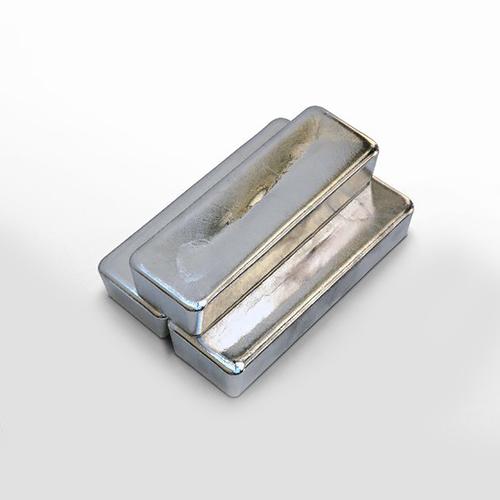
Indium Metal Industry 2026 Annual Development Report: Resource Landscape, Technological Breakthroughs, and Strategic Opportunities

Abstract
Based on global public data and industry dynamics as of March 2026, this report systematically reviews the resource distribution, policy environment, technological progress, and market trends of indium metal. Analysis indicates that indium, as a critical strategic metal, is confronting a profound contradiction between rigid supply constraints and explosive demand growth. Prices have reached decade-high levels, necessitating a reassessment of its strategic value.
I. Global Resource Landscape and Supply Analysis
1.1 Resource Distribution
Indium is extremely dispersed in the Earth’s crust, with global economically recoverable reserves estimated at 15,000-25,000 tonnes. China’s proven reserves amount to approximately 8,000 tonnes, accounting for 72.7% of the global total, ranking first worldwide. Canada, Russia, and Peru also have deposits, but their reserve shares are limited.
1.2 Production Landscape
Global refined indium production in 2024 was approximately 1,080 tonnes, with China accounting for about 70% and South Korea 17%. Together, these two countries control nearly 90% of global supply.As a by-product of zinc smelting, indium production is constrained by the scale of the host metal industry, resulting in extremely low supply elasticity.
1.3 Supply Trends
Driven by increasingly stringent environmental policies and heightened resource conservation awareness, supply from major producing countries has steadily declined. In December 2025, China’s exports of unwrought indium decreased by over 23% year-on-year. Global circulating inventories remain at historically low levels, with supply tightness persisting.
II. Policy Environment and Strategic Developments
2.1 Domestic Policies
- Strategic Mineral Catalog: Indium has been included in the national catalog of critical strategic minerals, benefiting from resource protection policies.
- Export Controls: In 2026, indium export quotas have been reduced to 30% of annual production, effectively regulating global market circulation.
- Strategic Reserve Recommendations: During the 2026 National Two Sessions (NPC and CPPCC), representatives proposed establishing a multi-tiered reserve model encompassing “national centralized reserves + enterprise commercial reserves + social reserves,” incorporating indium into the national strategic mineral reserve system.
2.2 International Developments
The U.S. Department of Defense is accelerating its critical minerals strategic reserve mandate. Indium has been jointly designated by the U.S. and Canada as one of the most supply-constrained critical minerals. Western nations have significantly heightened their focus on supply chain security.
III. Technological Progress and Industrial Breakthroughs
3.1 Ultra-High Purity Preparation
In January 2026, Guangxi Huaxi Nonferrous Metal Design and Research Institute successfully developed 7N-grade (99.99999%) ultra-high purity indium products, which have passed权威 testing meeting industry-leading standards. This breakthrough positions China among the few countries globally mastering ultra-high purity indium preparation technology.
3.2 Fundamental Research
A research team from Xiamen University of Technology published findings on indium nanocrystals in Advanced Functional Materials, revealing the mechanisms of multi-step nucleation and interface evolution for the first time, providing theoretical guidance for the precise synthesis of indium-based materials.
3.3 Application Innovation
Indium Corporation has launched several indium-containing thermal interface materials, including liquid metal TIMs and Heat-Spring® products, offering solutions for high-power chip thermal management.
IV. Market Demand and Downstream Applications
| Application Sector | Demand Drivers | 2026 Demand Characteristics |
|---|---|---|
| Photovoltaic HJT Cells | Mass production scale-up of heterojunction technology | 8 tonnes of indium per GW; HJT capacity exceeding 500 GW corresponds to demand >4,000 tonnes |
| Optical Modules / Semiconductors | AI data center construction | Indium phosphide demand increasing 40%-50% annually; global supply gap 70% |
| Display Panels | OLED/foldable screens/automotive displays | ITO target demand growing 12% annually, accounting for 45%-46% of total indium consumption |
| Thermal Management Materials | High-power chip cooling | Expanding application of liquid metal TIMs |
V. Market Performance and Price Trends
As of February 2026, domestic refined indium prices reached 3,850-3,950 RMB/kg, an 88% increase from the beginning of the year. Rotterdam port indium prices broke through $500-600/kg, the highest level since 2015.
Price-driving factors include:
- Supply-side resource constraints and sluggish production growth.
- Explosive downstream demand growth, widening the supply-demand gap.
- Policies reinforce the strategic attributes, escalating market expectations.
VI. Analysis of Core Industry Chain Enterprises
6.1 Resource-Dominated Enterprises
- Yunnan Tin Company Limited: Holds the world’s largest indium reserves at 4,821 tonnes, with an annual production capacity of 127 tonnes, commanding nearly 30% domestic market share.
- Huaxi Nonferrous Metals: Possesses indium reserves of approximately 3,500 tonnes, ranking as the second-largest primary indium producer in China, and has achieved mass production of 7N ultra-high purity indium.
6.2 Technology-Led Enterprises
- Zhuzhou Smelter Group: A leader in recycled indium recovery, with an annual production capacity of 60 tonnes and a 15% cost advantage.
- Huludao Zinc Industry Co., Ltd.: Holds over 30% market share in indium for ITO targets, with deep partnerships with BOE and CSOT (TCL China Star).
VII. Risk Factors
- Price Volatility Risk: Indium prices are subject to significant fluctuations due to the interplay of supply-demand dynamics, policies, and geopolitical factors.
- Substitution Technology Risk: Breakthroughs in alternative materials such as perovskite solar cells or graphene could potentially reduce indium demand.
- Environmental Policy Risk: Domestic environmental production restrictions may further constrain production capacity.
VIII. Conclusion
In 2026, the indium industry stands at a historic inflection point. On the supply side, growth is limited by resource endowment and policy constraints. On the demand side, robust growth is driven by the synergy of three major sectors: photovoltaics, AI, and displays. On the policy front, rising expectations for strategic reserves further strengthen market confidence. Against the backdrop of a widening supply-demand gap, indium’s strategic value and price are poised to steadily ascend.
