

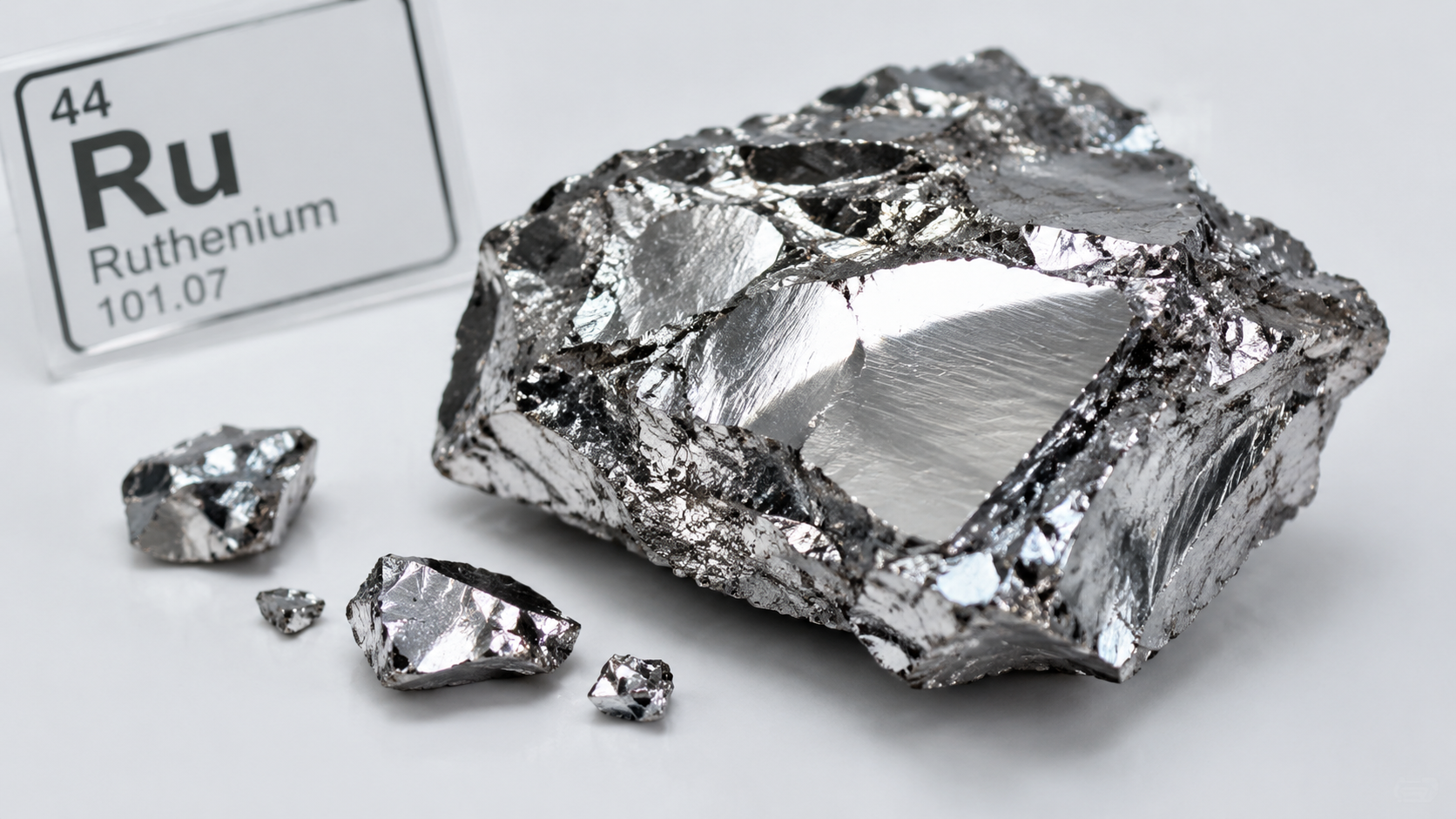
Ruthenium Corrosion Resistance and Extreme Environment Applications

Ruthenium (Ru), atomic number 44, is a distinctive member of the platinum group metals often underestimated in value. With a melting point of 2334°C, density of 12.45 g/cm³, and exceptional chemical inertness, ruthenium has become an irreplaceable alloying element in advanced high-temperature structural materials and electrochemical applications.
I. Corrosion Resistance: Among the Most Inert PGMs
Ruthenium exhibits exceptional chemical stability, resisting corrosion from strong acids, alkalis, and oxidative environments at ambient temperature. It is not corroded by aqua regia, sulfuric acid, hydrochloric acid, hydrofluoric acid, or phosphoric acid at 100°C.
Key Corrosion Data:
| Corrosive Medium | Ruthenium Resistance |
| Aqua Regia | Not corroded (at 100°C) |
| Sulfuric Acid | Not corroded (at 100°C) |
| Hydrochloric Acid | Not corroded (at 100°C) |
| Hydrofluoric Acid | Not corroded (at 100°C) |
| Phosphoric Acid | Not corroded (at 100°C) |
| Strong Alkalis | Resistant at ambient temperature |
Most Ru-rich compositions exhibit corrosion rates below 0.2 mm/year in supercritical acidic fluids. Ruthenium’s chemical inertness promotes the formation of a dense RuO₂ protective film on alloy surfaces, impeding corrosive media penetration.
II. Extreme Environment Applications
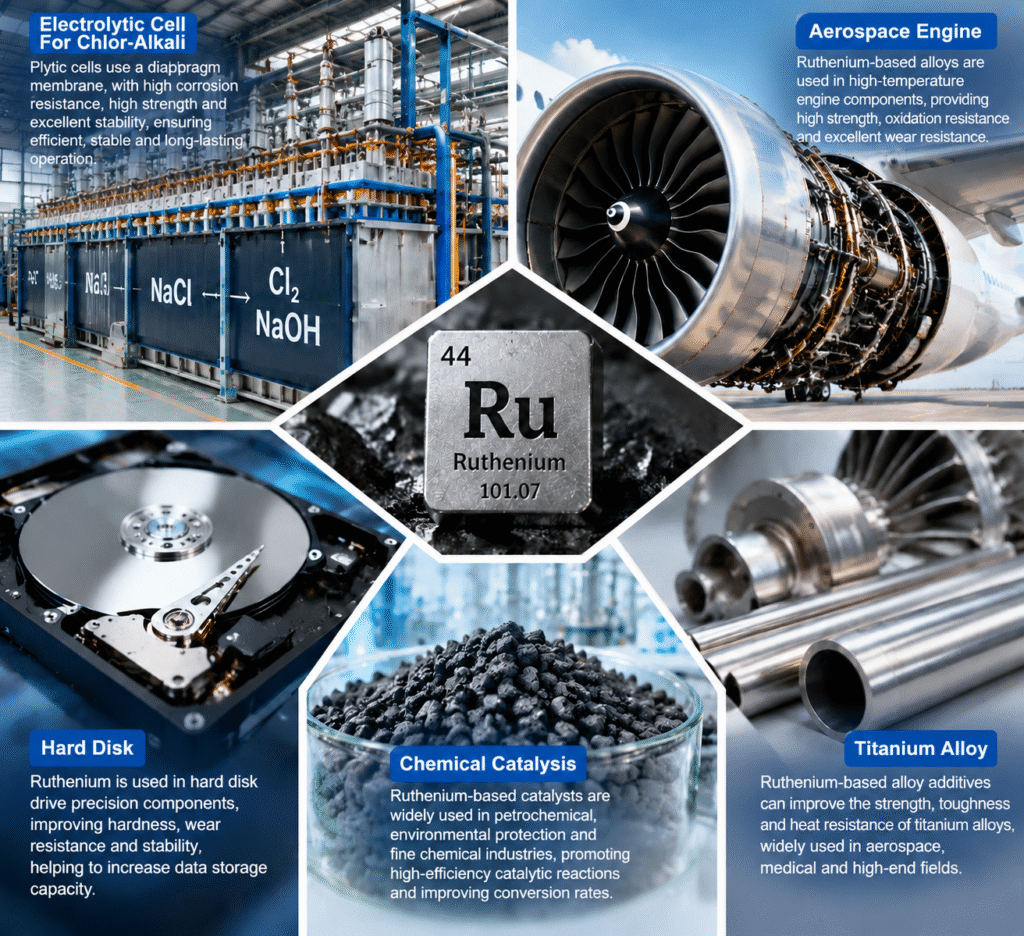
1. Chlor-Alkali Industry & DSA Anodes
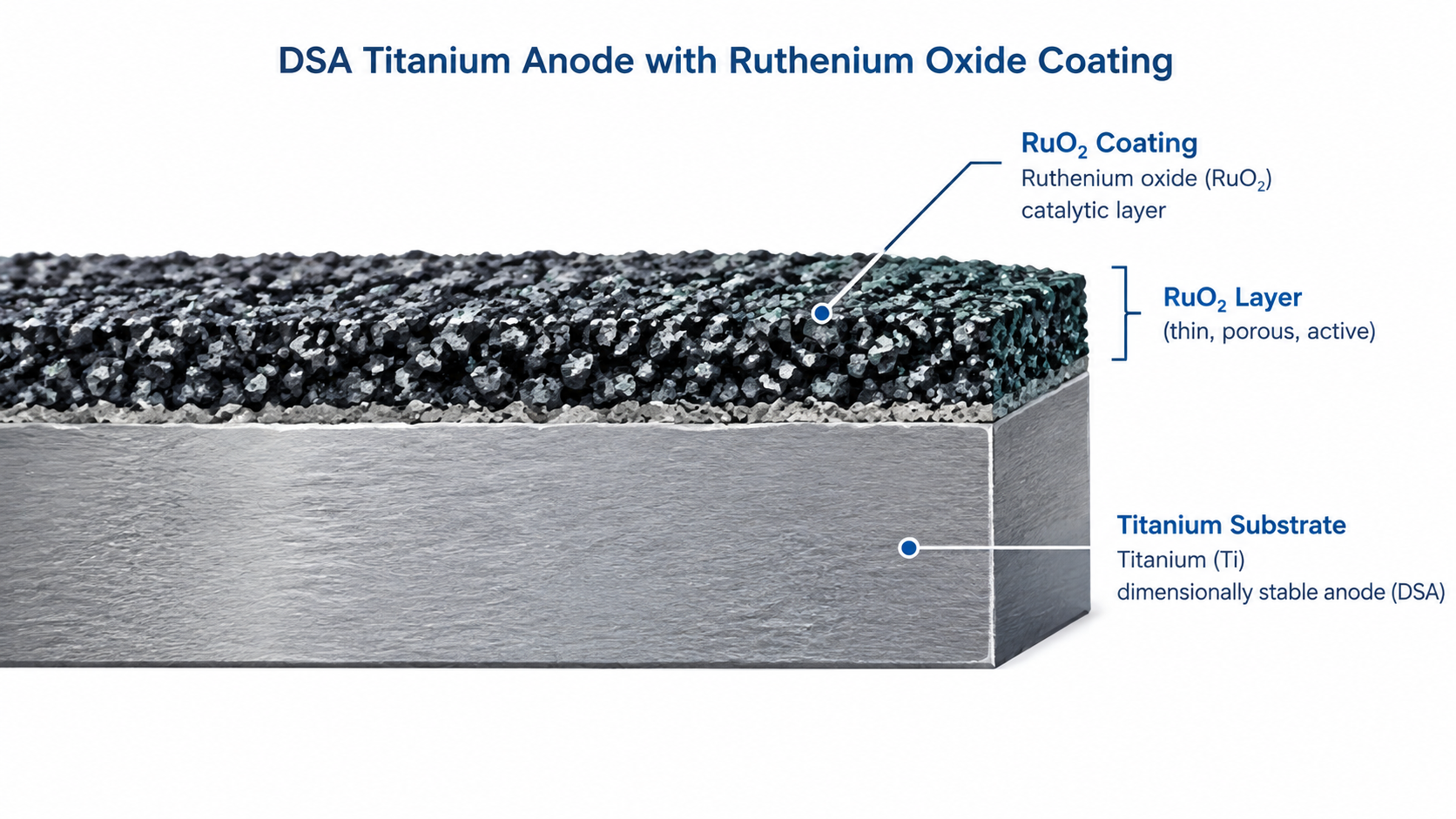
Ruthenium-coated titanium anodes (DSA) are the most ideal anode material for electrolysis cells. Key specifications:
- Corrosion rate: ≤0.001 mm/year in pH 0–14 environments-
- Service life: >6 years in diaphragm chlor-alkali processes vs. 8 months for graphite anodes
- Energy savings: ~15% electricity reduction
2. Aerospace Superalloys
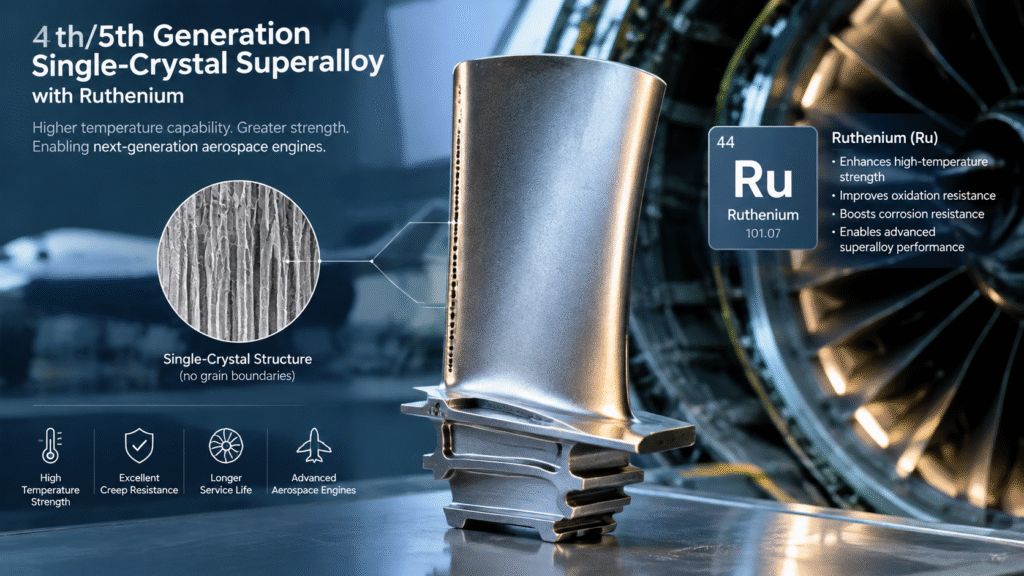
Ruthenium is the defining element of 4th and 5th generation Ni-based single-crystal superalloys. Ru-containing alloys demonstrate 30–80% longer service life compared to conventional alloys.
3. Chemical Catalysts
Ruthenium-based catalysts are widely used in oxidation, dehydrogenation, isomerization, and carbonylation reactions. Recent research shows that adding ≥0.5% Ru enables self-passivation of austenitic alloys in 50% H₂SO₄ at 80°C.
4. Electronics & Data Storage
Ruthenium enables higher data density in hard disk drives as sub-nanometer thin films. Ru-based perpendicular magnetic recording has become the optimal solution as 3D NAND chip stacking approaches physical limits.
5. Titanium Alloy Enhancement
Adding just 0.1 wt% Ru significantly improves titanium alloy corrosion resistance in hydrochloric acid, enabling applications in oil/gas production, offshore, and geothermal energy.
III. Market Prices
As of September 7, 2026, Shanghai ruthenium powder (99.95%) traded at RMB 415–420/g. The Engelhard average ruthenium price rose 46% in January 2026 vs. December 2025. Industry forecasts project a 7-tonne supply deficit in 2026.
