
Core Performance Advantages of PrNd Alloy in EV Traction Motors

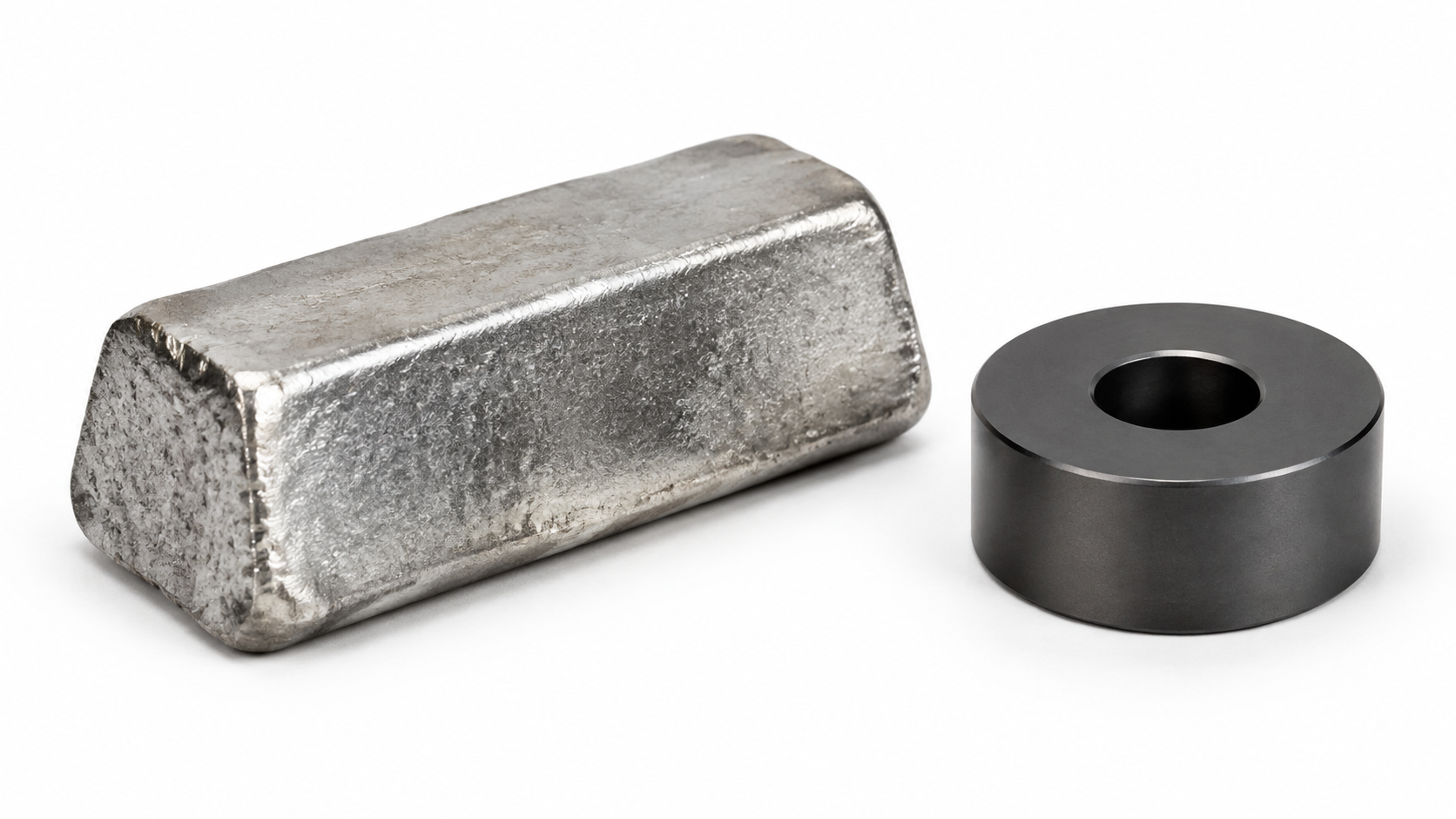
At the critical juncture where the global EV industry is transitioning from “policy-driven” to “market-driven,” the performance of the traction motor directly determines vehicle power, range, and manufacturing cost. The material that sets the upper limit of motor performance is the high-performance NdFeB permanent magnet, for which PrNd alloy is the core raw material.
I. Performance Contribution Mechanism
1. Magnetic Roles of Pr and Nd
In NdFeB permanent magnet materials, neodymium (Nd) and praseodymium (Pr) provide the primary magnetic force, while dysprosium (Dy) and terbium (Tb) serve as “thermal stabilizers”. The PrNd ratio directly affects the magnetocrystalline anisotropy and temperature stability of the magnet.
2. Enhancement of Key Parameters
Adding PrNd to NdFeB magnets significantly improves coercivity (Hcj) and Curie temperature (Tc) , enhancing high-temperature stability and demagnetization resistance. This enables motors to maintain strong magnetic output under high-speed and high-temperature operating conditions.
3. Energy Density Advantage
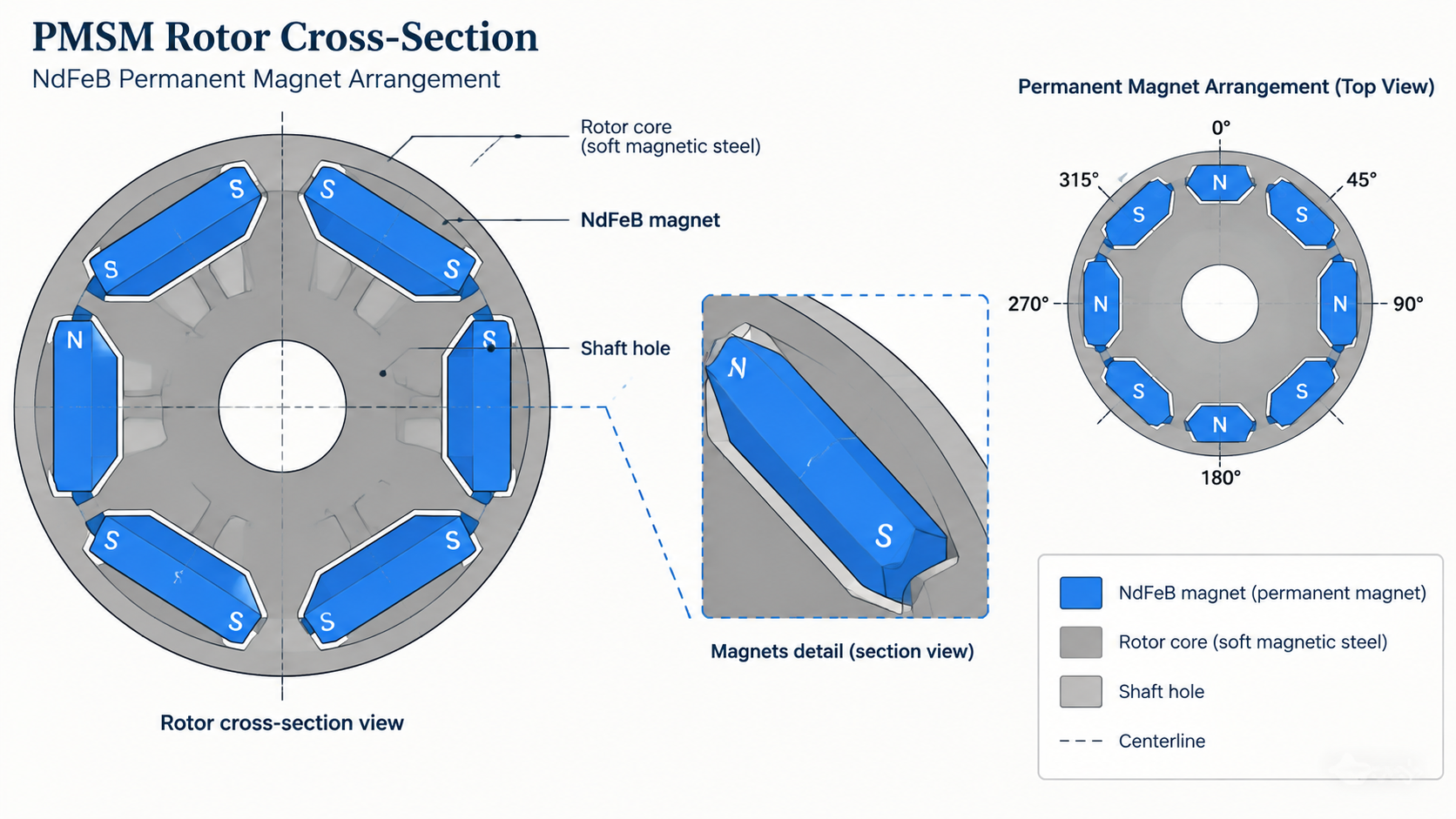
Sintered NdFeB remains the default choice for high-performance drive motors. Ferrite magnets achieve only about one-tenth the energy product of NdFeB, a difference of an order of magnitude that dictates larger motor volumes for equivalent power output.
II. Motor-Level Performance
1. Efficiency: Motors equipped with PrNd-containing permanent magnets achieve >95% energy conversion efficiency, about 5–8 percentage points higher than traditional induction motors.
2. Power Density and Volume: NdFeB enables >20% volume reduction at the same power and speed. Ferrite motors are typically 10%–30% larger at the same power rating.
3. Torque Density: NdFeB’s “self-excitation” property—no rotor current required—enables motors to be smaller, lighter, higher torque density, and more efficient.
4. Thermal Stability: Enhanced coercivity and Curie temperature ensure no demagnetization at >150°C.
III. Engineering Support Technologies
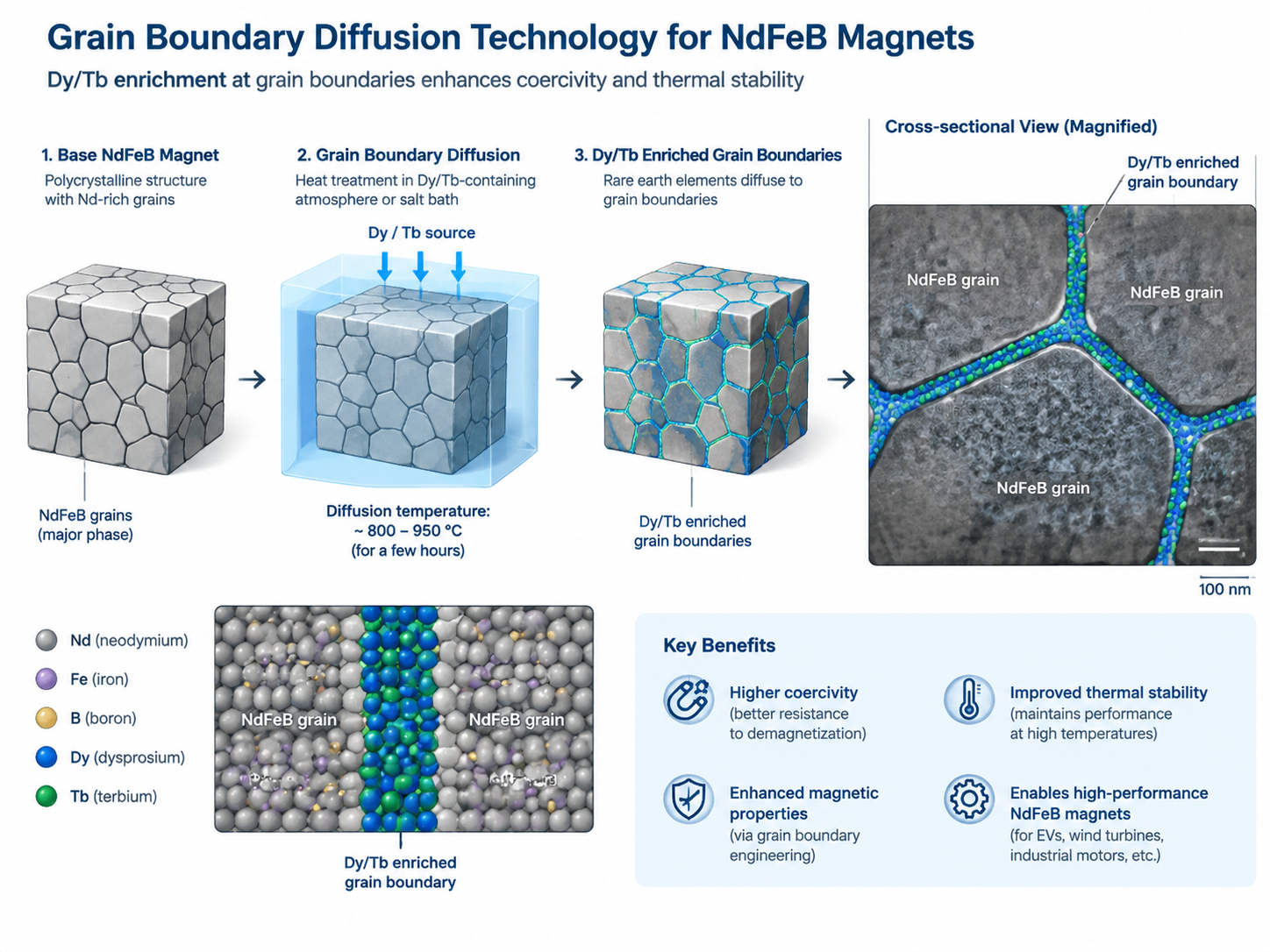
Grain Boundary Diffusion (GBD): Positions heavy rare earths primarily at grain boundaries, reducing Dy/Tb content by 50%–70% while maintaining high coercivity.
Magnet Segmentation: Suppresses eddy current losses in high-speed motors.
IV. Market Reality
Prices: H1 2026 PrNd oxide average price was RMB 731,000/tonne, up 73.6% YoY. As of September 11, 2026, PrNd oxide spot prices were RMB 730,000–732,000/tonne.
Usage: Each EV drive motor consumes 2–3 kg of NdFeB, equivalent to 1.2–1.8 kg of PrNd oxide. Passenger vehicles average 2.5–4.5 kg of magnet steel per unit.
Supply Chain: China controls approximately 69% of global rare earth smelting and separation capacity and >90% of finishing capacity.
