

Corrosion Resistance of Rhodium: Chemical Inertness, Industrial Applications, and Strategic Value

Abstract:
Rhodium, a platinum group metal with unparalleled chemical inertness, stands at the summit of corrosion resistance among all engineering metals. This white paper provides a comprehensive analysis of rhodium‘s corrosion resistance mechanisms, its performance in diverse chemical environments, and the industrial applications that this property enables—including electronic electroplating, platinum-rhodium alloys for extreme high-temperature environments, precision thermocouples, and emerging MEMS probe coatings. Drawing on data current to May 2026, this report integrates the latest patent breakthroughs and market intelligence to present a holistic view of rhodium’s strategic significance.
1. Introduction
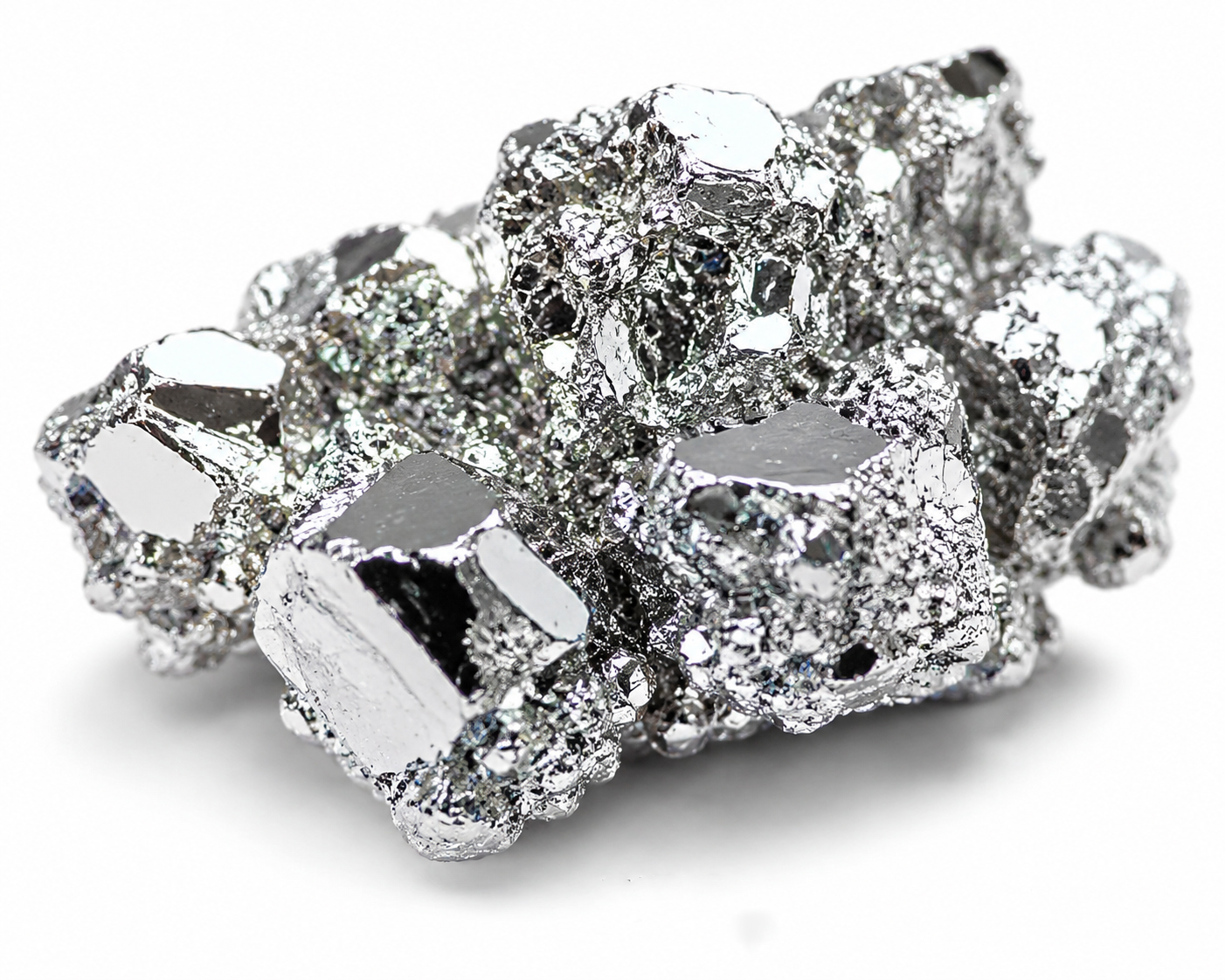
Rhodium (Rh), atomic number 45, is a member of the platinum group metals (PGMs) and is widely recognized as the most chemically inert among them. Discovered in 1803 by William Hyde Wollaston—who named it after the Greek word “rhodon” (rose) due to the rose-red color of its chloride solution—rhodium has evolved from a laboratory curiosity into an irreplaceable industrial material.
With an annual global production of merely approximately 25 tonnes concentrated predominantly in South Africa (>80% of exports) and Russia, and a market price reaching RMB 2,480-2,500 per gram as of May 18, 2026, rhodium‘s extreme scarcity amplifies the strategic importance of its unique properties.
2. Chemical Inertness and Corrosion Resistance Mechanisms
2.1 Core Mechanisms
Rhodium’s corrosion resistance derives from three synergistic factors:
Electronic Structure Stability: Rhodium‘s electron configuration (4d⁸5s¹) places its d-orbital electrons in a stable intermediate state between half-filled and fully-filled configurations. This confers a high redox potential and low thermodynamic driving force for oxidation.
Oxide-Free Surface: Unlike most metals, rhodium does not normally form an oxide, even when heated. Atmospheric oxygen is absorbed only at the melting point and released during solidification.
High-Temperature Passivation: Under extreme oxidative conditions, rhodium can form a thin, dense Rh₂O₃ protective film that decomposes only at 1386K (approximately 1113°C), providing an additional protective barrier.
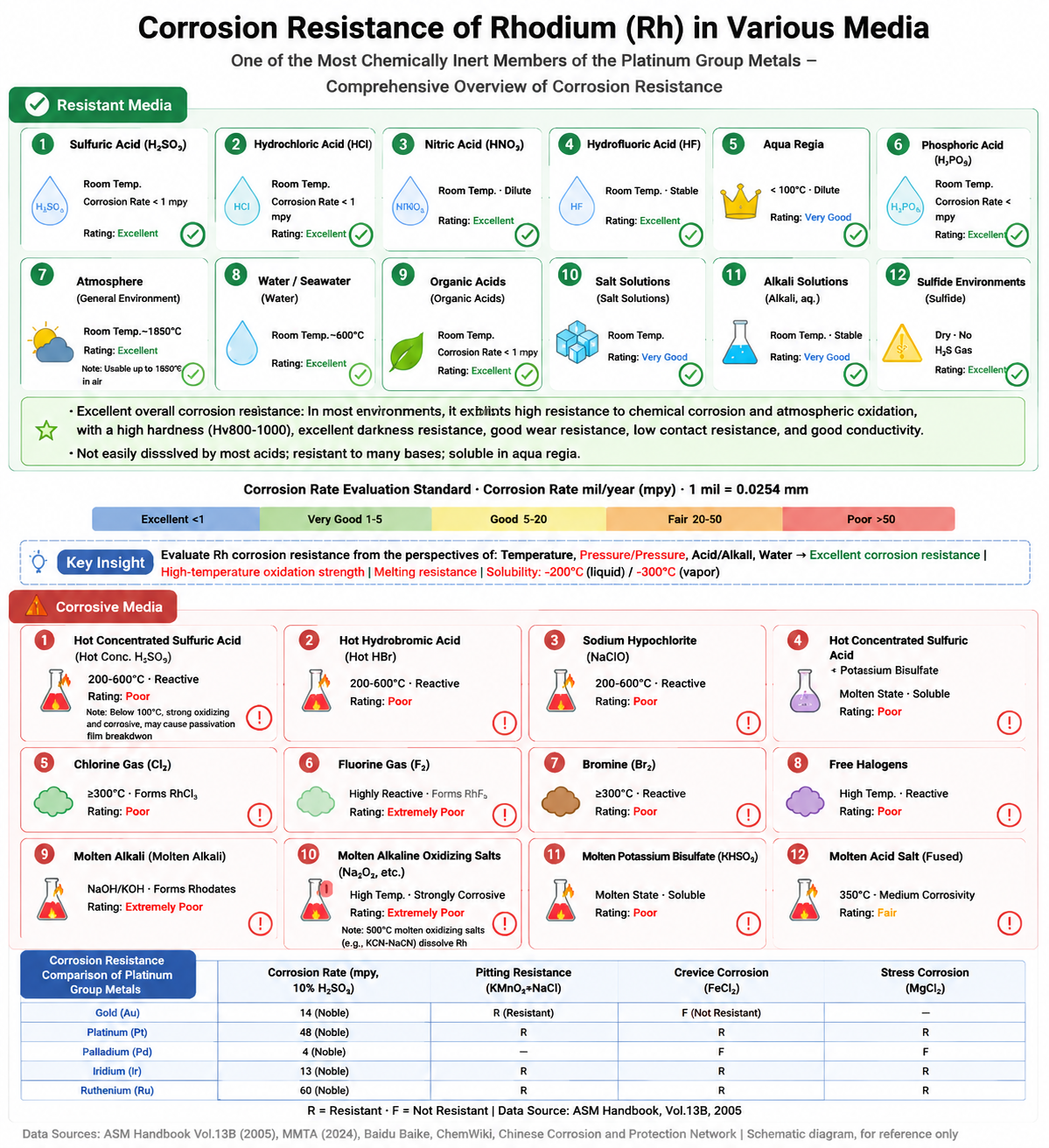
2.2 Performance Across Chemical Environments
| Environment | Conditions | Corrosion Resistance | Source |
| Air | Up to 600°C | Unaffected | [12†L11-L12] |
| Water | Up to 600°C | Unaffected | [12†L11-L12] |
| Acids (including aqua regia) | Below 100°C | Unaffected | [12†L12-L13] |
| Aqua regia | Room temperature | Slightly soluble, extremely slow dissolution | [6†L8-L9] |
| Aqueous solutions (all pH) | Without complexing agents | Stable under anodic and cathodic polarization | [4†L28-L31] |
| Halogens (Cl, Br) | Room temperature | Stable | [6†L8-L9] |
| Hot concentrated H₂SO₄ | 200-600°C | Reacts | [0†L16-L17] |
| Hot HBr | 200-600°C | Reacts | [0†L16-L17] |
| Molten alkalis | High temperature | Attacked | [12†L12-L13] |
Key Insight: Rhodium remains chemically inert across virtually all conventional and moderately aggressive chemical environments. Its corrosion boundaries are limited to hot concentrated sulfuric acid and hydrobromic acid (200-600°C) and high-temperature molten alkalis.
2.3 Comparative Position within PGMs
Within the platinum group, rhodium, iridium, and osmium constitute the top tier of corrosion resistance, significantly outperforming platinum and palladium in high-temperature oxidation environments. The addition of rhodium to platinum markedly enhances the alloy‘s resistance to oxidation, acid corrosion, and arc erosion.
3. Industrial Applications Enabled by Corrosion Resistance
3.1 Electronic Electroplating
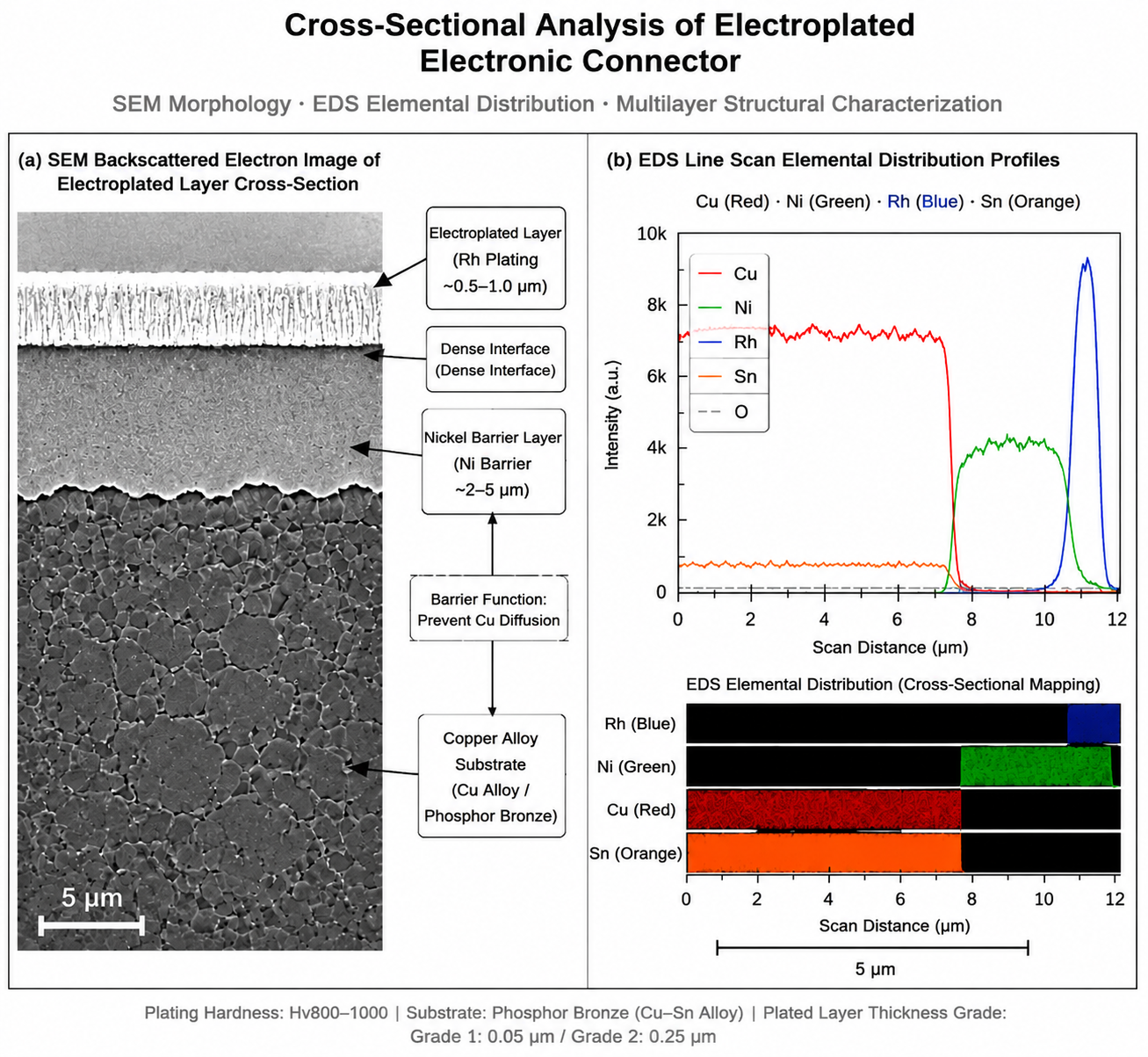
Industrial rhodium electroplating achieves a hardness of Hv 800-1,000 (comparable to industrial chromium plating), combined with excellent corrosion resistance. The coating remains chemically stable at room temperature without oxidation or discoloration, withstands temperatures up to 500°C in air, and exhibits the lowest electrical resistivity in the platinum group (490 μΩ/m).
These properties make rhodium plating ideal for printed circuit board terminals, connectors, and switch contacts requiring long-term stable low contact resistance under severe wear conditions. In a typical conductive terminal construction, the rhodium layer serves as the outermost barrier: substrate → nickel layer (acid resistance) → platinum layer (corrosion protection) → rhodium layer (ultimate protection), providing comprehensive corrosion shielding.
2026 Breakthrough—Rhodium Composite Plating Solution for MEMS Probes:
In January 2026, Qianyi Semiconductor (Suzhou) Co., Ltd. filed a patent (CN121272510A) for a rhodium-based composite plating solution specifically designed for MEMS probe surface coatings. The innovation introduces nano-particles that are uniformly embedded into the rhodium deposit as second-phase particles, effectively resolving the critical problem of brittleness and fracture susceptibility in thick rhodium coatings while maintaining high hardness, enhanced corrosion resistance, and superior wear properties.
3.2 Platinum-Rhodium Alloys for High-Temperature Environments
The addition of rhodium to platinum systematically enhances thermal EMF stability, oxidation resistance, and acid corrosion resistance. Pt-Rh alloys containing more than 20% rhodium are completely insoluble in aqua regia at room temperature.
TFT-LCD Glass Manufacturing: Pt-Rh alloys (Pt content 70-90%) serve as the core material for platinum channels in TFT-LCD substrate glass production, operating continuously in molten glass at approximately 1700°C while maintaining fiber diameter variation below 0.3%. The high-temperature stability and erosion resistance of Pt-Rh alloys directly determine the service life of production equipment and glass quality.
2026 Breakthrough—Anti-Rhodium Preferential Erosion Gradient Coating:
In March 2026, Caihong Display Devices Co., Ltd. filed a patent (CN121653605A) for a gradient coating system comprising three functional layers: a rhodium-rich sacrificial diffusion layer, an iridium-ruthenium nanocomposite transition layer, and a yttria-stabilized hafnia primary protective layer. The synergistic effect of this engineered triple-layer structure achieves over 97% suppression of rhodium dissolution under high-temperature operating conditions of 1640-1670°C.
3.3 International Temperature Standard
The PtRh10/Pt thermocouple has been established as the defining standard for the 630.74-1064.43°C temperature range since the 7th International Temperature Scale Conference in 1927, and remains the benchmark for this critical temperature interval. The application demands simultaneous long-term repeatability of thermoelectric properties, high-temperature oxidation resistance, and chemical erosion resistance.
3.4 Aerospace and Laboratory Equipment
Pure rhodium crucibles can operate in air at temperatures up to 1850°C and are utilized in the production of calcium tungstate and lithium niobate single crystals—critical materials for electronic and optical industries. Rhodium electrodes exhibit stability across all pH ranges in aqueous solutions under both anodic and cathodic polarization. Rhodium solutions at concentrations of 1-10,000 ppm remain chemically stable for years in 10% HCl/LDPE containers.
3.5 Chemical Industry Catalysis
Pt-Rh alloy catalytic gauzes drive approximately 90% of global nitric acid production through ammonia oxidation, operating continuously for months under extreme temperature, pressure, and corrosive conditions.
4. Supply-Demand Dynamics and Strategic Implications
4.1 Production and Supply Concentration
Global primary rhodium production is approximately 25 tonnes annually, with South Africa accounting for over 80% of exports and Russia as the second-largest source. Rhodium has no independent economic deposits and is recovered entirely as a co-product of platinum and palladium mining, resulting in structurally inelastic supply.
4.2 Pricing and Market Trends
As of May 18, 2026, Shanghai Metals Market quotes rhodium powder (99.95%, domestic) at RMB 2,480-2,500 per gram. Over the past year, a basket of platinum, palladium, and rhodium prices has risen by 50-100%. However, miner production guidance indicates declining output for fiscal year 2026.
4.3 Recycling and Supply Security
The rhodium recycling closed-loop system has achieved a 98% recovery rate, providing a critical supplement to primary supply. Nevertheless, recycling is constrained by end-of-life autocatalyst collection efficiency and processing capacity.
4.4 Strategic Assessment
Rhodium‘s strategic value is anchored in the convergence of three structural factors:
- Extreme supply rigidity and geographic concentration
- Irreplaceable corrosion resistance across multiple critical industries
- Growing demand from electronics, glass manufacturing, and aerospace sectors
5. Conclusion and Outlook
Rhodium’s corrosion resistance is not merely a technical parameter—it is the unifying value proposition that underpins its entire industrial application ecosystem. From sub-micron electroplated coatings maintaining stable contact resistance through hundreds of thousands of insertion cycles in electronic connectors, to Pt-Rh alloy channels operating continuously for thousands of hours in molten glass at 1700°C, rhodium‘s chemical inertness redefines the boundaries of material stability in extreme environments.
Key developments to monitor include:
- Gradient coating technologies extending rhodium’s service life in ultra-high-temperature glass manufacturing
- Nanoparticle-reinforced composite plating expanding rhodium‘s applicability in MEMS and semiconductor testing
- Rhodium-based electrocatalysts for durable hydrogen evolution in acidic media
- Enhanced recycling infrastructure to strengthen supply security amid declining primary production
In the intersection of extreme scarcity and unmatched performance, rhodium will continue to command strategic attention across the global materials industry.
