

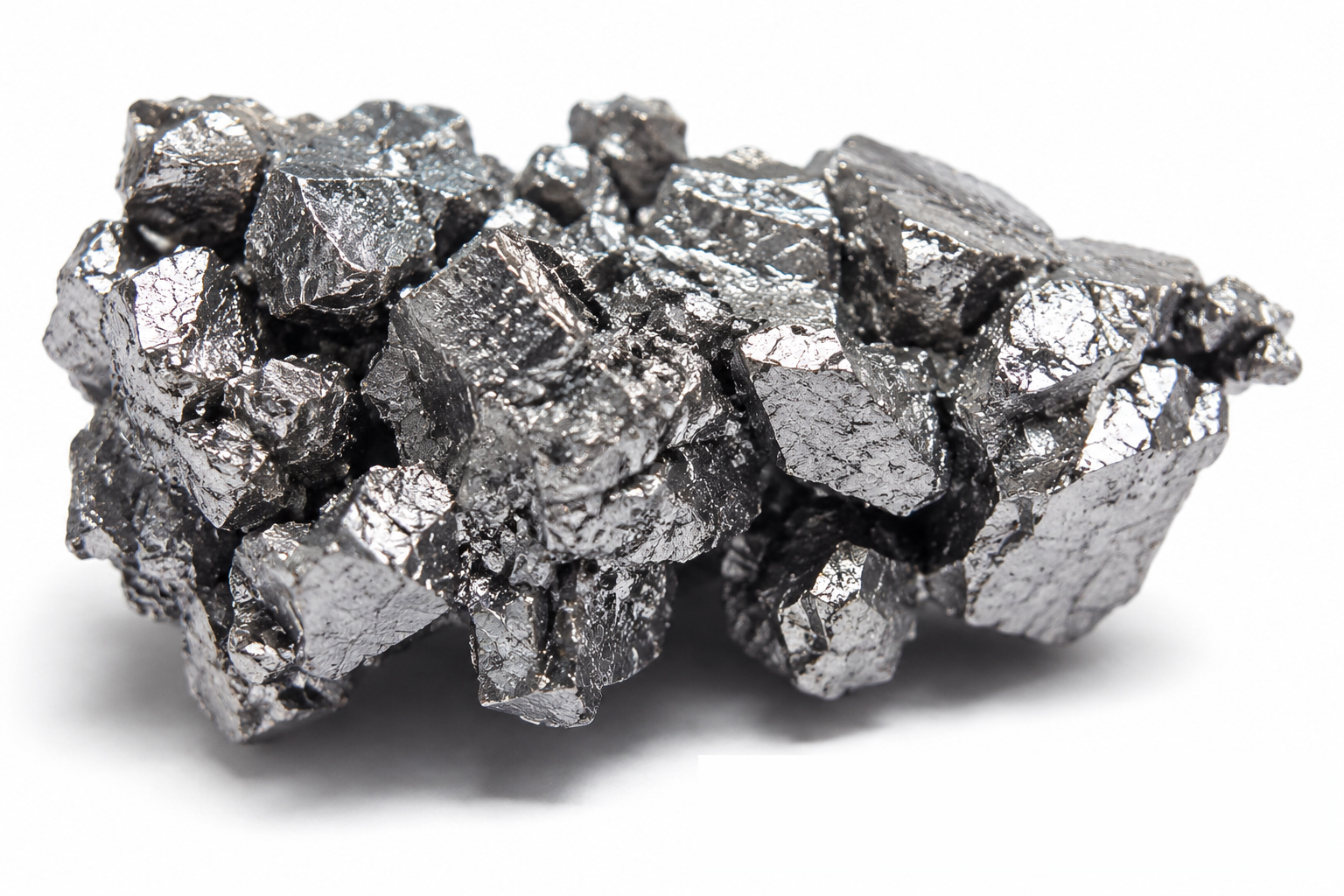
Mechanical Properties and High-Temperature Stability of Ruthenium Alloys: From Solid-Solution Strengthening to Extreme Environment Applications

Abstract:
Ruthenium, a distinctive member of the platinum group metals, has emerged as an irreplaceable alloying element in advanced high-temperature structural materials. With a melting point of 2334°C, exceptional chemical inertness, and unique microstructural regulation capabilities, ruthenium serves as the defining characteristic element of fourth- and fifth-generation nickel-based single-crystal superalloys. This white paper provides a comprehensive analysis of ruthenium‘s mechanical properties, high-temperature stability mechanisms, and industrial applications, integrating the latest research breakthroughs and market data up to May 2026.
1. Introduction
Ruthenium (Ru), atomic number 44, occupies a unique position among platinum group metals. While less recognized than its counterparts rhodium and iridium, ruthenium’s combination of a 2334°C melting point, strong chemical inertness, and moderate cost makes it an increasingly strategic alloying element in high-temperature structural materials and advanced semiconductor manufacturing.
As of May 20, 2026, Shanghai Metals Market quotes ruthenium powder (99.95%) at RMB 385–400 per gram, substantially below rhodium (RMB 2,480–2,500/g) and iridium (RMB 1,710–1,740/g). This cost advantage, combined with unique performance characteristics, underpins ruthenium‘s expanding industrial significance.
2. Fundamental Properties of Pure Ruthenium
2.1 Physical and Chemical Characteristics
| Property | Value | Source |
| Melting Point | 2334°C | [11†L13] |
| Crystal Structure | Hexagonal close-packed (HCP) | [3†L24-L26] |
| Theoretical Density | 12.45 g/cm³ | [15†L5-L6] |
| Electrical Resistivity | ~7.1 μΩ·cm | [15†L9] |
Ruthenium’s HCP structure satisfies Born stability conditions across the 0–1200 K temperature range. All elastic stiffness constants decrease monotonically with increasing temperature, but mechanical stability is maintained throughout, establishing the physical foundation for high-temperature applications.
Ruthenium exhibits exceptional chemical stability, resisting corrosion from strong acids, alkalis, and oxidative environments at ambient temperature. Its chemical inertness, combined with high hardness, makes it an ideal strengthening additive for alloys operating in extreme environments.
3. Mechanisms of Mechanical Property Enhancement
3.1 Solid-Solution Strengthening and Grain Refinement
Ruthenium primarily exists as a solid solution in alloys. Through solid-solution strengthening, it refines grain structure and inhibits grain growth, significantly enhancing room-temperature and elevated-temperature strength, hardness, and wear resistance. In nickel- and cobalt-based superalloys, appropriate ruthenium additions reduce dislocation motion barriers, improving ductility and toughness. Under heavy-load, high-speed friction conditions, ruthenium-containing alloys demonstrate 30–80% longer service life compared to traditional alloys.
3.2 Corrosion Resistance Synergy
Ruthenium‘s chemical inertness promotes the formation of a dense RuO₂ protective film on alloy surfaces, impeding corrosive media penetration. This is particularly valuable for nickel-based alloys, where ruthenium effectively mitigates intergranular corrosion and stress corrosion cracking, expanding applicability in extreme corrosive environments.
3.3 High-Temperature Creep Resistance
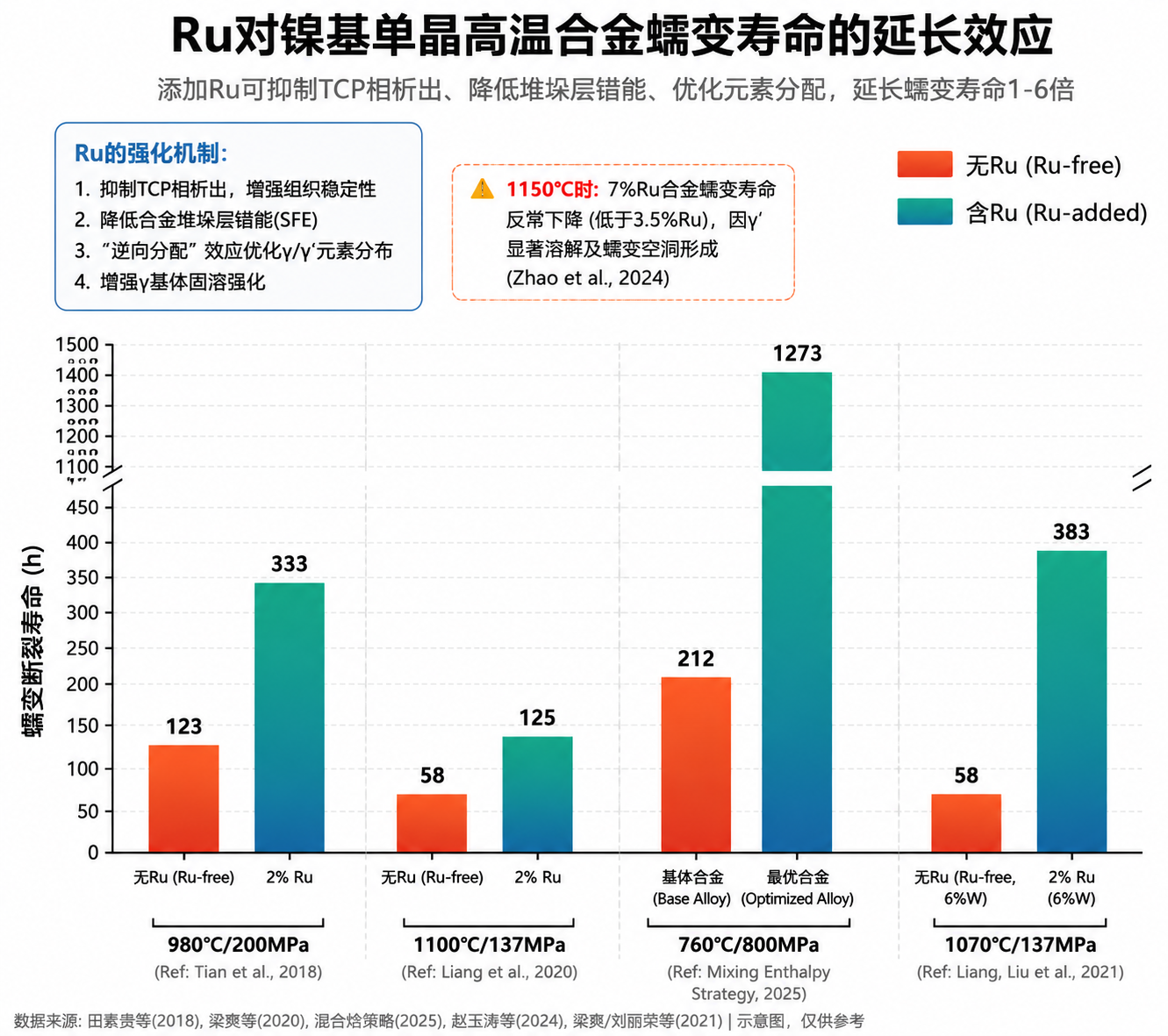
Ruthenium additions significantly improve high-temperature creep resistance and reduce thermal fatigue damage. Re/Ru-containing single-crystal nickel-based alloys achieve a creep life of 725 hours under 1040°C/160 MPa conditions. Ruthenium’s reduction of stacking fault energy is the core mechanism underlying this creep performance enhancement.
4. Ruthenium in Nickel-Based Single-Crystal Superalloys
4.1 The TCP Phase Challenge
Nickel-based single-crystal superalloys are critical materials for aero-engine turbine blades and industrial gas turbine hot-section components. While refractory elements (Re, Cr, W) enhance temperature capability, their accumulation increases the precipitation tendency of topologically close-packed (TCP) phases—brittle intermetallic compounds that serve as crack initiation sites and propagation pathways, severely threatening component safety.
4.2 Northwestern Polytechnical University 2025 Breakthrough—Dual Effects of Ru
In September 2025, Professor Yang Wenchao and Professor Su Haijun‘s team at NPU’s State Key Laboratory of Solidification Processing published a landmark study in Scripta Materialia (DOI: 10.1016/j.scriptamat.2025.116873) on Ru‘s dual effects on TCP phase growth and twinning behavior during creep of fourth-generation single-crystal superalloys.
Positive Effect—Reverse Partitioning Suppression of TCP Growth:
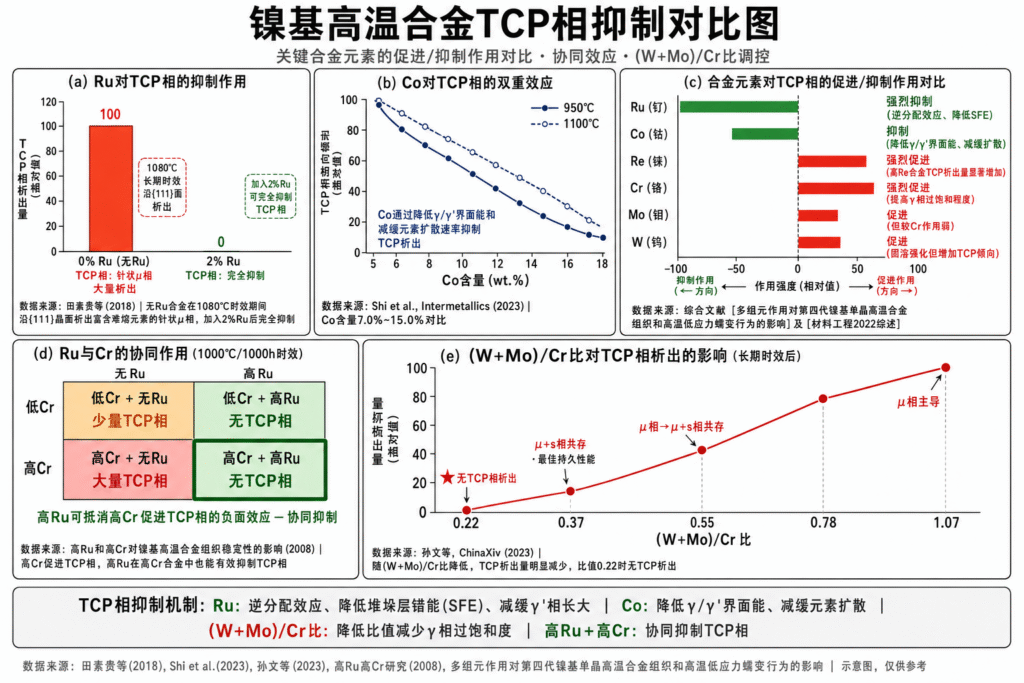
Ruthenium substitutes for tungsten in the μ-phase TCP structure, producing a “reverse partitioning” effect that suppresses TCP phase coarsening and alleviates localized stress concentration. First-principles calculations confirmed that Ru atoms occupying W-atom C₂ positions in the μ-Co₇W₆ structure achieve minimum formation energy, quantitatively explaining the suppression mechanism at the atomic scale.
Negative Effect—Stacking Fault Energy Elevation Hindering Twinning:
Simultaneously, ruthenium elevates TCP phase stacking fault energy, hindering twinning transformation, reducing TCP plasticity, and exacerbating localized stress concentration that promotes microvoid nucleation and early crack propagation.
Net Result: Under 1100°C/150 MPa creep conditions, the 3Ru alloy demonstrated extended steady-state creep stage and prolonged creep rupture life compared to the 0Ru alloy, with suppressed TCP phase precipitation.
4.3 Atomic-Scale Simulation Validation
Molecular dynamics simulations published in February 2025 investigated Ru cluster effects on Ni/Ni₃Al nanowire deformation. At lower temperatures, Ru clusters effectively impeded dislocation motion; at higher temperatures, anharmonic effects diminished the impeding capability, providing atomic-scale insight into temperature-dependent strengthening mechanisms.
5. Binary Ruthenium Alloy Systems
5.1 Ti-Ru Alloys (2025)
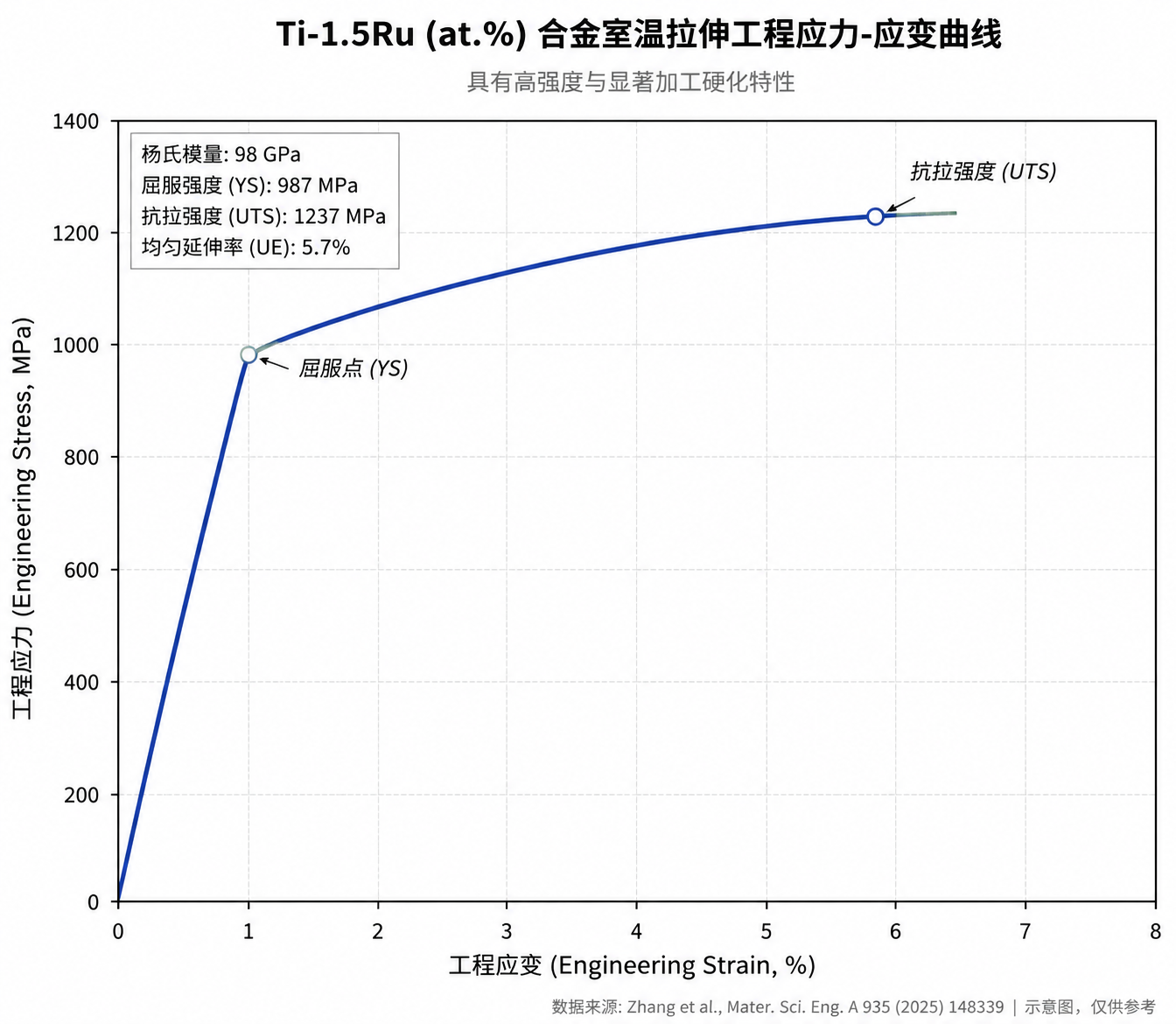
A study published in Materials Science and Engineering: A (Volume 935, 2025) systematically characterized Ti-1.5Ru (at.%) alloy with a duplex microstructure:
| Property | Value |
| Young‘s Modulus | 98 GPa |
| Yield Strength | 987 MPa |
| Ultimate Tensile Strength | 1,237 MPa |
| Uniform Elongation | 5.7% |
The alloy’s high strength derives from refined duplex microstructure; significant strain hardening is attributed to abundant dislocations in α blocks combined with stress-induced α‘ and α” martensites in the retained β phase. This combination of high strength and excellent corrosion resistance positions dilute Ti-Ru alloys as promising candidates for load-bearing biomedical implants.
5.2 Ni-Ru Alloys
Nickel-ruthenium alloys synergistically combine nickel’s mechanical strength, formability, and base corrosion resistance with ruthenium‘s hardness, wear resistance, and extreme environment adaptability. The nickel component ensures fundamental toughness and processability through forging and rolling, while ruthenium elevates overall performance for precision mechanical components, specialty electrode materials, and high-temperature catalyst supports.
5.3 RuAl Intermetallic Compounds
RuAl is a B2-structured intermetallic compound with a melting point of approximately 2100°C and density of 7.97 g/cm³—lighter than nickel-based superalloys. Single-phase RuAl simultaneously demonstrates excellent high-temperature oxidation resistance, exceptional thermodynamic stability, high strength at elevated temperatures, and good ductility at room temperature. At 1000°C, RuAl exhibits excellent oxidation resistance due to the formation of a dense, protective Al₂O₃ scale.
For microelectronic applications, RuAl thin film electrodes (130 nm thickness) demonstrate stability up to 800°C in air and 900°C in high vacuum for at least 10 hours. Long-term high-temperature stability is demonstrated up to at least 700°C in air for 192 hours, with less oxidizing atmospheres expected to allow application at higher temperatures for significantly longer duration.
6. Ruthenium-Based Sputtering Targets and Thin Films
6.1 High-Purity Ru Targets for Advanced Semiconductor Nodes
High-purity ruthenium targets (≥99.995%, 4N5; ≥99.99%, 5N) are critical materials for advanced semiconductor manufacturing. Key specifications: density ≥12.4 g/cm³, grain size <50 μm, oxygen content <100 ppm, surface roughness Ra <0.3 μm.
At the 7nm node and below, ruthenium replaces traditional Ta/TaN as the copper interconnect diffusion barrier, leveraging its low resistivity (~7.1 μΩ·cm) and excellent copper diffusion blocking capability.
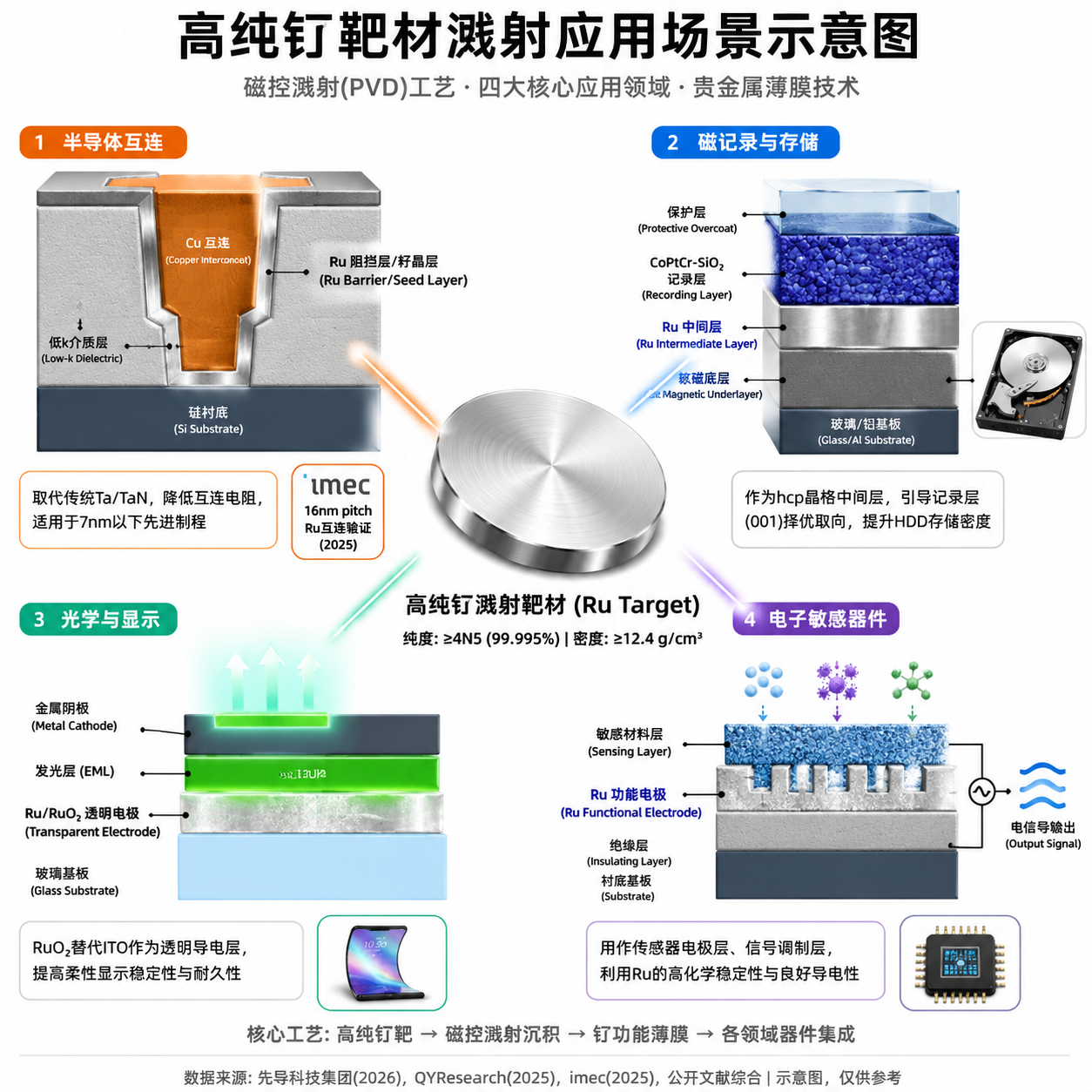
6.2 MoC-Doped Amorphous RuMoC Thin Films
Research published in June 2025 employed magnetron co-sputtering of Ru and MoC targets to fabricate amorphous RuMoC thin films. Strong C-Mo bonding combined with weak C-Ru bonding effectively suppresses residual oxygen content, significantly enhancing thermal stability. MoC’s immiscibility with Cu further strengthens diffusion barrier performance.
6.3 High-Purity Ultra-Low-Oxygen RuTa Alloy Targets
In January 2025, Yunnan Precious Metals Laboratory filed a patent for high-purity (≥99.995%) ultra-low-oxygen RuTa alloy targets. The fabrication route integrates powder mixing, low-pressure pre-pressing, high-vacuum calcination, hot isostatic pressing (HIP) sintering, and precision surface finishing, achieving superior diffusion barrier film performance.
6.4 Ru-B Compound Hardness
First-principles calculations of Ru-B compounds reveal that Vickers hardness increases with boron content, with RuB₃ (P-6m2 structure) exhibiting the highest value of 19.8 GPa. The enhanced hardness originates from strengthened covalent Ru-B and B-B bonding with increasing boron concentration.
7. Market Dynamics and Strategic Value
7.1 Pricing (May 20, 2026, Shanghai Metals Market)
| Metal | Purity | Price Range (RMB/g) |
| Ruthenium | 99.95% | 385–400 |
| Iridium | 99.95% | 1,710–1,740 |
| Rhodium | 99.95% | 2,480–2,500 |
Ni-Ru alloy market prices range from approximately RMB 8,000–30,000/kg, primarily determined by ruthenium content (typically 0.5–10 wt%) and prevailing Ru market prices.
7.2 Recycling Value
Ruthenium-containing alloys possess significant end-of-life recycling value. Hydrometallurgical and pyrometallurgical processes enable separation and purification of ruthenium and base metals. This circular resource characteristic reduces lifecycle costs and aligns with sustainable critical mineral utilization trends.
8. Conclusion and Outlook
Ruthenium‘s mechanical properties and high-temperature stability position it as an irreplaceable strategic element across multiple high-tech industrial domains:
- Nickel-Based Superalloys: Through reverse partitioning suppression of TCP phases, ruthenium extends creep rupture life under extreme conditions. Ongoing optimization of Ru content aims to maximize its beneficial effects while minimizing negative impacts on TCP phase plasticity.
- Ti-Ru Biomedical Alloys: The Ti-1.5Ru system’s exceptional combination of strength (YS 987 MPa, UTS 1,237 MPa) and corrosion resistance positions it for orthopedic and dental implant applications.
- RuAl Intermetallics: With a 2100°C melting point, low density, and proven high-temperature stability in both air and vacuum, RuAl represents a promising candidate for next-generation aerospace structural and microelectronic electrode applications.
- Semiconductor Targets: High-purity Ru targets address critical requirements at sub-3nm nodes, with innovations in MoC doping and ultra-low-oxygen RuTa alloys further enhancing thin-film thermal stability.
- Ru-Based Refractory High-Entropy Alloys: Emerging Ru-based HEAs (e.g., RuPtIrRhCu) demonstrate excellent stability and multi-functional catalytic activity, with potential for extreme high-temperature mechanical applications under exploration.
The convergence of ruthenium‘s moderate cost, unique microstructural regulation capabilities, and expanding application frontiers positions it for sustained strategic importance in the global advanced materials landscape.
