

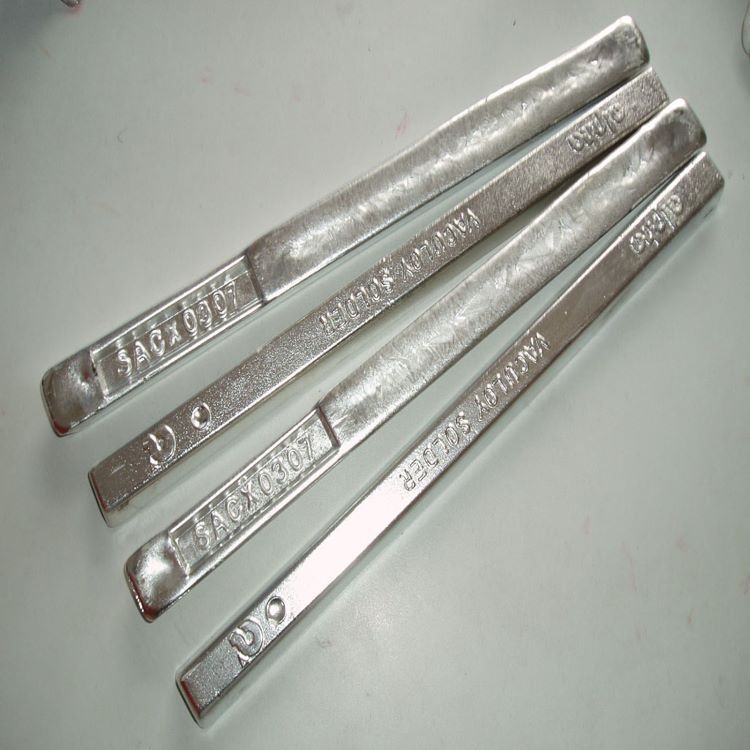
Technical Specification Report for Tin Purity and Quality Identification

Executive Summary
Based on the mandatory national standard GB/T 728-2020 “Tin Ingots” and relevant testing technical specifications, this report systematically outlines the technical key points for the chemical composition analysis, physical property testing, appearance quality inspection, high-purity tin testing requirements, and selection of third-party testing institutions for tin products. The report aims to provide a technical basis for the procurement, acceptance, quality control, and trade of tin products, ensuring that all links in the supply chain comply with national regulations and industry standards.
I. Introduction
Tin, as a critical industrial raw material, is widely used in electronic packaging, tinplate, alloy manufacturing, and food packaging. With the rapid development of high-end manufacturing industries such as 5G communications and AI chips, the purity requirements for tin products continue to rise, and the demand for testing high-purity tin (4N/5N/6N grades) is growing daily. This report provides a systematic technical solution for tin quality identification based on the latest national standards and technical specifications.
II. Basis of National Standards
2.1 Core Standards
| Standard No. | Standard Title | Status | Core Content |
|---|---|---|---|
| GB/T 728-2020 | Tin Ingots | Current (replaces GB/T 728-2010) | Tin ingot grades: Sn99.90, Sn99.95, Sn99.99; each divided into Class A and Class AA. |
| GB/T 3260.11-2023 | Methods for Chemical Analysis of Tin – Part 11 | Current | Determination of 12 elements (Cu, Fe, Bi, Pb, Sb, As, Al, Zn, Cd, Ag, Ni, Co) by ICP-OES. |
| GB/T 8012-2000/2013 | Cast Tin-Lead Solders | Current | Testing of chemical composition and physical properties. |
| GB/T 1819.2-2004 | Methods for Chemical Analysis of Tin Concentrates | Current | Determination of tin content by potassium iodate titration. |
2.2 Purity Classification Standards
- Chemical Grade Tin: 99.9% – 99.99% tin content.
- High-Purity Tin (4N): ≥99.99%; single impurity ≤10 ppm, total impurities ≤50 ppm.
- High-Purity Tin (5N): ≥99.999%; single impurity ≤1 ppm.
- Ultra-Purity Tin (6N): ≥99.9999%; each metallic impurity ≤0.1 ppm.
2.3 Export Compliance Requirements
Exported products must also meet the limit requirements of the EU RoHS 2.0 (2011/65/EU), including Cd <100 ppm, Pb <1000 ppm, etc.
III. Chemical Composition Analysis Methods
3.1 Determination of Tin Content
| Method | Applicable Scenario | Technical Features |
|---|---|---|
| Titration (Iodometric Method) | Routine analysis, main content determination | Traditional classical method, simple operation. |
| ICP-OES | Simultaneous multi-element analysis | High precision, can determine over 12 impurities. |
| ICP-MS | Trace element analysis | Detection limit down to ppt level, suitable for high-purity tin. |
| XRF | Rapid screening | Non-destructive, precision 0.03%. |
| GD-MS | High-purity tin of grade 5N and above | Detection limit <1 ppb, ultra-high purity analysis. |
3.2 Impurity Element Detection Scope
High-purity tin testing shall cover the following impurities: Pb, Cu, As, Fe, Sb, Bi, Zn, Al, Cd, Ag, Ni, Co, S, P, C, and a total of up to 28 elements, with detection limits reaching 0.1-10 ppm. Key impurity control limits: Pb ≤0.01%, As ≤0.005%, Cu ≤0.005%, Fe ≤0.003%, S ≤10 ppm, O ≤50 ppm, N ≤20 ppm, H ≤5 ppm.
IV. Physical Property Testing Indicators
| Indicator | Reference Value | Testing Method |
|---|---|---|
| Density | 7.28-7.31 g/cm³ | Archimedes’ water displacement method |
| Vickers Hardness | 5-12 HV | Microhardness test |
| Melting Point | 231.9-232.5°C | Thermal analysis (DSC) |
| Tensile Strength | ≥15 MPa | Universal testing machine |
| Grain Size | Average grain size ≤100 μm | Metallographic microscopy |
| Electrical Resistivity | — | Four-point probe method |
V. Appearance Quality and Special Performance Inspection
5.1 Appearance Quality
- Surface Finish: No oxide scale, cracks, bubbles, inclusions, or folds.
- Color Uniformity: Consistent color, no abnormal discoloration.
5.2 Special Performance
- Tin Pest Observation: Evaluate the stability of pure tin or high-tin alloys at low temperatures (≤13.2°C).
- Oxidation Resistance: High-temperature oxidation test to assess resistance to oxidation.
- Corrosion Resistance: Salt spray test, immersion test to evaluate corrosion rate.
VI. Third-Party Testing Services
6.1 Qualification Requirements for Testing Institutions
- CMA (China Metrology Accreditation): Test reports have legal effect in China.
- CNAS (China National Accreditation Service for Conformity Assessment): Internationally recognized test results.
- ISO/IEC 17025: Internationally accepted laboratory quality management system certification.
6.2 Testing Process
Submit sample → Initial inspection (free plan development) → Quotation → Sign confidentiality agreement → Laboratory testing (7-15 working days) → Issue report
6.3 Testing Cost and Time Reference
The testing period is typically 7-15 working days, with specific costs depending on the complexity of the testing items. No fees are charged during the initial sample inspection phase.
VII. Market Background Reference
In the first quarter of 2026, the domestic tin market exhibited a tight supply-demand balance, with an average price of approximately 366,250 RMB/ton for 1# tin in the Yangtze River spot market. Under these market conditions, high-quality tin product identification is of great significance for ensuring supply chain security.
VIII. Conclusion
The purity and quality identification of tin products should comprehensively employ multiple approaches, including national standards, chemical analysis, physical testing, and appearance inspection. For high-end applications (semiconductors, photovoltaics, etc.), testing standards for 4N/5N/6N high-purity tin must be implemented, utilizing advanced techniques such as ICP-MS and GD-MS. Enterprises should select third-party testing institutions with CMA/CNAS qualifications to ensure the accuracy and legal validity of test results.
