

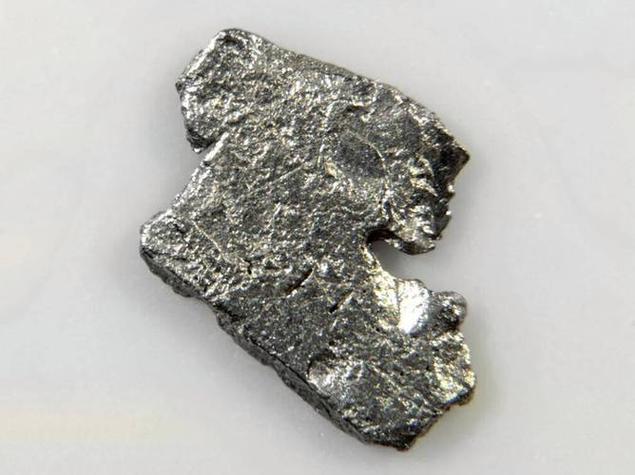
Research Report on the Application of Ruthenium Metal in the Electronics Industry

Abstract
Based on global public data and industry dynamics as of March 2026, this report systematically reviews the core application areas, technical principles, and market landscape of ruthenium metal in the electronics industry. Analysis indicates that ruthenium, as an important member of the platinum group metals, possesses irreplaceable strategic value in cutting-edge fields such as AI data storage, semiconductor interconnects, thick-film resistors, supercapacitors, and spintronic devices.
I. Overview
Ruthenium (Ru) is one of the least abundant elements in the platinum group metals, primarily produced as a by-product of platinum and nickel mining, with supply highly concentrated in South Africa. Its unique physical and chemical properties—high melting point, low electrical resistivity, excellent chemical stability, and catalytic activity—position it as a core material in several specialized segments of the electronics industry.
II. Core Application Areas and Technical Analysis
2.1 Magnetic Recording Layer in Hard Disk Drives
Ruthenium serves as a critical material in the perpendicular magnetic recording layer of hard disk platters. It is used to guide the formation of an ideal crystal orientation in the magnetic recording layer, enabling high-density data storage. In 2026, AI data center construction is driving a surge in HDD demand, contributing to a ruthenium price increase exceeding 210% over one year.
2.2 Semiconductor Interconnect Material
At technology nodes of 5 nanometers and below, ruthenium is regarded as the most promising competitor to replace copper interconnects. Its advantages include: resistivity less sensitive to thickness variations, elimination of the need for liner and diffusion barrier layers, and the potential for hybrid integration with copper to reduce resistance by up to 60%. Atomic Layer Deposition (ALD) is a key technology for preparing sub-nanometer ruthenium thin films, and the development of novel Ru(II) dicarbonyl amidinate complex precursors lays the foundation for industrial applications.
2.3 Thick-Film Resistor Pastes
Ruthenium dioxide (RuO₂) is the core conductive phase in thick-film resistor pastes, widely used in hybrid integrated circuits and chip resistors. In 2025, the global RuO₂ powder market was valued at $37.09 million, with an average price of $15,620/kg. Electronic-grade products require extremely strict purity, necessitating control over halide and alkali metal ion impurities. A patent published in March 2026 significantly enhanced the specific surface area and carrier concentration of RuO₂ through Ce³⁺ doping and dual-template pore size regulation.
2.4 Supercapacitor Electrodes
RuO₂ possesses a theoretical specific capacitance exceeding 1000 F/g, making it a research hotspot for high-performance supercapacitor electrode materials. A study reported in February 2026 on Mn-doped RuO₂ nanocomposites achieved a specific capacitance of 416.9 F/g and an energy density of 51.1 Wh/kg in ammonium-ion hybrid supercapacitors.
2.5 Spintronic Devices
In March 2026, a Japanese research team successfully prepared single-oriented RuO₂(101) epitaxial thin films, observing altermagnetism and spin-split magnetoresistance effects, opening new directions for the development of spintronics.
III. Market Landscape and Industry Dynamics
3.1 Price Trends
As of March 13, 2026, the ruthenium price stood at approximately $1,750 per ounce, representing an increase of over 210% compared to $560 per ounce in the same period last year.
3.2 Supply and Demand Analysis
- Supply Side: Ruthenium is produced exclusively as a by-product of platinum group metal mining, with South Africa as the primary producing region. In January 2025, South African PGM production decreased by 3.8% year-on-year. Investment in new mines over the past 20 years has been limited, leading to a continued decline in output.
- Demand Side: AI data center construction is driving growth in HDD demand; R&D investment in ruthenium interconnects for advanced semiconductor nodes continues to increase; and the green energy transition is driving expansion of the supercapacitor market.
- Supply-Demand Balance: Metals Focus predicts a supply deficit of 203,000 ounces in the ruthenium market for 2026.
3.3 Competitive Landscape
The global RuO₂ powder market is dominated by multinational corporations such as Heraeus and Umicore. Regional suppliers like J&J Materials and Shaanxi Kaida Chemical hold positions in specific market segments.
IV. Risk Factors
- Supply Risk: Highly concentrated production regions mean that geopolitical events and mine production disruptions could trigger significant price volatility.
- Technology Substitution Risk: Carbon-based materials could potentially compete in areas like supercapacitors.
- Price Volatility Risk: The recent price surge driven by AI-related concepts carries the possibility of a correction.
V. Conclusion
In 2026, the strategic value of ruthenium in the electronics industry is being redefined. From AI data storage to advanced semiconductor processes, from traditional thick-film resistors to next-generation spintronic devices, ruthenium occupies critical nodes by leveraging its unique performance advantages. Against a backdrop of rigid supply contraction and consistently expanding expanding demand, the strategic position of the ruthenium industry is expected to further elevate.
