

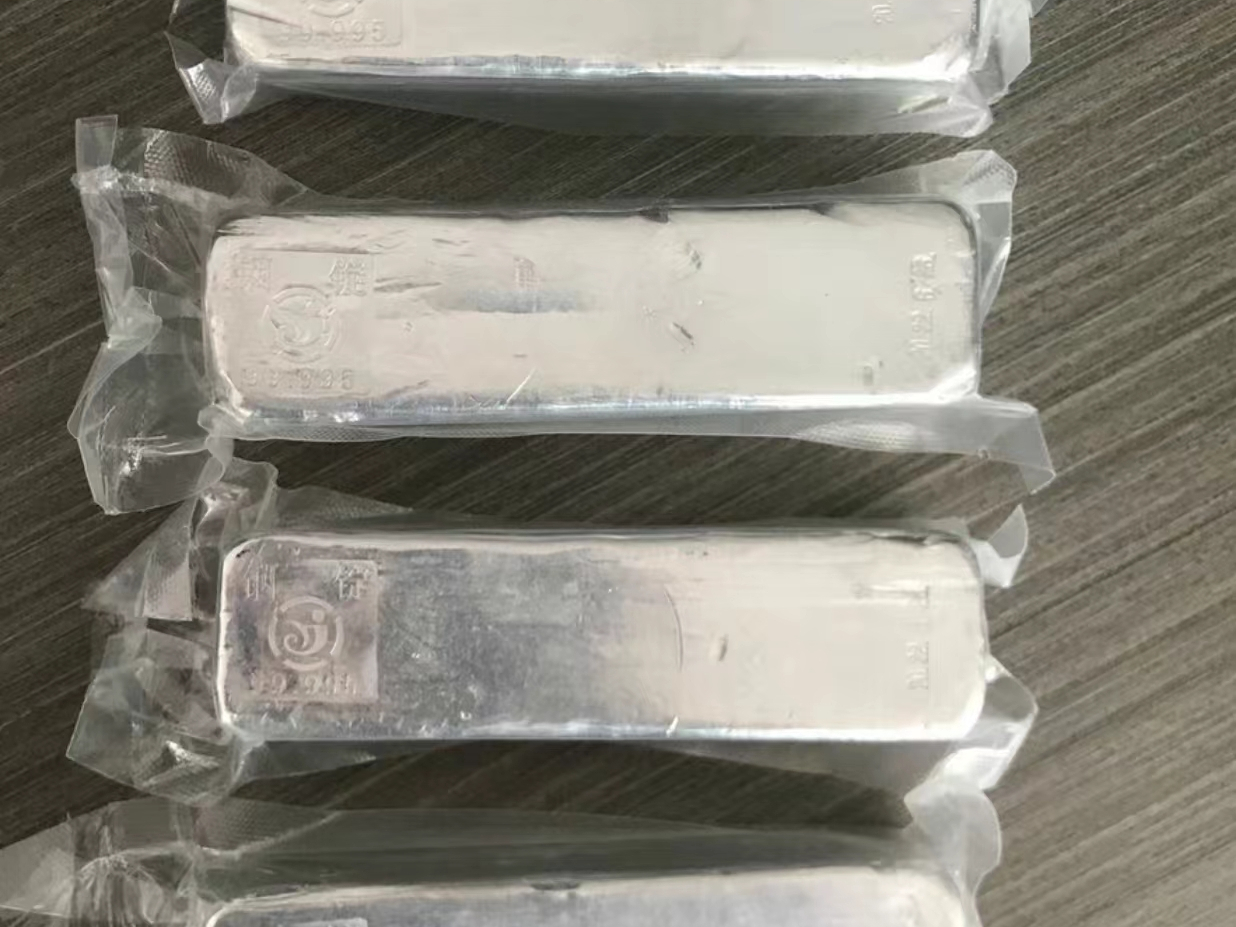
Indium in Medical Applications: A Panoramic Technology Report from Transparent Electrodes to Precision Diagnostics

Abstract: This article systematically reviews the core application directions and technological advances of indium and its compounds in medical device manufacturing, covering Indium Tin Oxide (ITO) transparent bioelectrodes, Indium Phosphide (InP) quantum dot imaging, Indium-111 radioisotope diagnostics, non-magnetic ITO devices, and dental alloys. Incorporating the latest global research findings and market data from 2025–2026, this report aims to provide an authoritative and comprehensive technical reference on indium medical applications for industry colleagues.
1. Introduction
As a core member of the dispersed metals family, indium plays an indispensable role in high-tech fields due to its unique physicochemical properties—high electrical conductivity, high optical transparency, low melting point, good ductility, and biocompatibility. Beyond its widespread applications in flat-panel displays, photovoltaics, and semiconductors, the value of indium in medical device manufacturing is attracting increasing attention from both academia and industry.
Based on the latest publicly available data and research literature as of April 2026, this article provides a systematic review of the current application status and technological advances of indium in the medical field, aiming to serve as a reference for industry decision-making, technology R&D, and investment judgments.
2. Major Application Directions of Indium in the Medical Field
2.1 Indium Tin Oxide (ITO) Transparent Bioelectrodes
2.1.1 Technical Principles and Performance Indicators
Indium Tin Oxide (ITO) is the most widely used form of indium in medical devices. ITO thin films combine high electrical conductivity and high optical transparency, making them ideal materials for transparent electrodes. The performance parameters of flexible two-dimensional ITO thin films reported in the latest 2025 research are as follows:
| Performance Indicator | Parameter Value | Data Source |
|---|---|---|
| Film Thickness | 2–10 nm | NSF, 2025 |
| Optical Transmittance | >95% | NSF, 2025 |
| Electrical Conductivity | >1300 S/cm | NSF, 2025 |
| Deposition Temperature | <140°C | NSF, 2025 |
| Flexural Resistance | 2× that of conventional ITO | NSF, 2025 |
| Scratch Resistance | 3× that of conventional ITO | NSF, 2025 |
| Skin Contact Impedance | Comparable to Ag/AgCl | NSF, 2025 |
2.1.2 Applications in Medical Diagnosis
Flexible ITO electrodes have been successfully applied to multimodal biosignal acquisition combining simultaneous electrocardiography (ECG) and photoplethysmography (PPG), providing a critical material foundation for wearable medical monitoring devices. Additionally, non-magnetic ITO heating devices developed for chip-scale SERF atomic magnetometers have achieved temperature fluctuations below 0.2°C and a sensitivity of 20.38 fT/Hz¹/², offering an innovative thermal management solution for high-spatial-resolution magnetoencephalography (MEG) and magnetocardiography (MCG).
In cancer research, a bioelectronic platform integrating ITO microelectrode arrays with PDMS microwells has enabled real-time impedance monitoring of drug responses in 3D tumor spheroids. IC₅₀ measurements showed values of 0.62±0.14 μg/mL and 1.47±0.16 μg/mL for 2D and 3D models, respectively.
2.1.3 Market Size
According to research data from Future Market Report, the global ITO sensor market was approximately US$1.45 billion in 2024 and is expected to reach US$2.80 billion by 2032, representing a compound annual growth rate (CAGR) of 8.2% from 2025 to 2032.
2.2 Indium Phosphide (InP) Quantum Dots in Bioimaging
2.2.1 Technical Advantages and Positioning
Indium phosphide quantum dots are considered a non-toxic alternative to cadmium-based quantum dots. Their emission spectrum covers the entire visible region, and their photoluminescence quantum yield and optoelectronic performance are comparable to cadmium-based quantum dots.
2.2.2 Key Research Advances (2025)
| Research Institution / Journal | Key Findings | Date |
|---|---|---|
| Hangzhou Institute for Advanced Study, UCAS / JACS | First water-soluble InP-based quantum dots with fluorescence quantum yield approaching 100%; single-particle fluorescence non-blinking and photobleaching resistant | April 2025 |
| Inorganic Chemistry | PEI-encapsulated InP/ZnSe/ZnS quantum dots successfully used for labeling hepatocellular carcinoma cells, low toxicity, excellent photostability | 2025 |
| Journal of Materials Chemistry B | PEGylation significantly reduces platelet activation induced by InP/ZnS quantum dots, enhancing safety for in vivo applications | Jan 2025 |
| Chemical Engineering Journal | Near-infrared InP/ZnS quantum dots used to kill multidrug-resistant bacteria with imaging guidance | 2025 |
2.2.3 Market Outlook
The global indium phosphide optoelectronic device market is projected to grow from US$2.5 billion in 2021 to US$5.6 billion by 2027, representing a CAGR of 14%.
2.3 Indium-111 Radioisotope in Nuclear Medicine Diagnosis
2.3.1 Technical Principles
Indium-111 (¹¹¹In) is one of the most commonly used diagnostic radionuclides in nuclear medicine SPECT imaging. Its half-life is approximately 2.8 days, and the energy of its emitted gamma rays is suitable for detection by single-photon emission computed tomography (SPECT). By labeling ¹¹¹In onto monoclonal antibodies targeting specific antigens or receptors, precise localization of lesions can be achieved.
2.3.2 Clinical Applications and Research Progress
- Indium-111 OncoScint: Targets the TAG-72 antigen (highly expressed in ~95% of colorectal cancers and 100% of ovarian cancers), widely used for tumor localization diagnosis.
- ¹¹¹In-panitumumab: A US Phase I clinical trial (NCT05945875) in 2025 is evaluating the diagnostic efficacy of this technology in patients with head and neck squamous cell carcinoma.
- ¹¹¹In-XYIMSR-01: Received the SNMMI 2025 Mars Shot Research Grant for first-in-human studies in metastatic clear cell renal cell carcinoma.
- Alzheimer’s disease diagnosis: Preliminary research progress has been made using ¹¹¹In-labeled brain-penetrating Aβ antibodies for SPECT imaging.
2.4 Dental Alloys and Biocompatible Materials
Indium has been used in dentistry since the 1930s, initially as a trace additive to gold alloys to enhance hardness and corrosion resistance. Gallium-indium-tin alloys show no detectable cytotoxicity to living organisms and are considered alternative materials to mercury-containing dental materials.
A 2025 study quantified the effects of indium ions on human gingival fibroblasts – low concentrations (approximately 0.8 mM In³⁺) induced terminal differentiation, while high concentrations exhibited cytotoxicity. This provides critical parameters for the safe dosage range of indium-containing dental materials. Another study systematically evaluated the effects of eight metal ions, including indium, from dental alloys on capillary-like tube formation in vitro, further enriching the biocompatibility database for indium-containing implant materials.
3. Industrial and Policy Background
3.1 Supply-Demand Landscape
Indium is a typical dispersed metal. The vast majority of global production comes as a by-product from smelting of host metals such as zinc and tin; there are no independent economically viable indium deposits, rendering supply elasticity nearly zero. China is the absolute global leader in indium supply, accounting for the majority of global production and reserves. However, China’s primary indium production has declined in recent years, with supply failing to increase. Global tradable inventories have fallen to historically low levels, sufficient to cover only approximately one month of global consumption.
On the demand side, the consumption pattern of indium is rapidly expanding from traditional display panels to emerging sectors such as photovoltaic HJT cells, AI optical module communications, and medical sensors.
3.2 Price Trends
According to authoritative monitoring by Shanghai Nonferrous Metals (SMM), from the beginning of 2026 to date, domestic refined indium spot prices have climbed from approximately 2,500 RMB/kg to 4,700 RMB/kg, a cumulative increase of 88%. International Rotterdam indium prices simultaneously broke through 500 USD/kg, reaching a ten-year high. As of late March 2026, domestic indium spot prices averaged approximately 4,500 RMB/kg.
3.3 Policy Environment
On February 4, 2025, China’s Ministry of Commerce and General Administration of Customs issued Announcement No. 10 of 2025, imposing export controls on tungsten, tellurium, bismuth, molybdenum, and indium-related items. In 2026, export controls were further tightened – total indium exports were limited to within 30% of annual production, and high-purity indium (≥6N) requires special approval with stricter management. This marks the formal inclusion of indium into the national critical strategic mineral resource security system.
4. Conclusions and Outlook
The application of indium in medical device manufacturing has formed a development pattern characterized by “mature applications providing stable support, frontier technologies accelerating breakthroughs, and industrial policies demonstrating strong synergy.” ITO transparent electrodes and Indium-111 nuclear medicine diagnostics constitute the two major commercial pillars of indium in the medical field today; InP quantum dots in bioimaging are at a critical juncture transitioning from laboratory to clinical translation; and frontier directions such as non-magnetic ITO devices and indium-based complex drugs represent potential growth poles for the next 5–10 years.
Against the macro backdrop of rigid supply constraints, resonance of three major demand drivers, and tightening export controls, the medical application of indium – as a high-value-added, high-technology-barrier downstream sector – merits continued attention and strategic positioning by all industry stakeholders for its strategic value and commercial potential.
