

Environmental Compliance Requirements for Tin in the Electronics Industry: A Comprehensive Overview

1. Introduction: Tin’s Strategic Role in Electronics
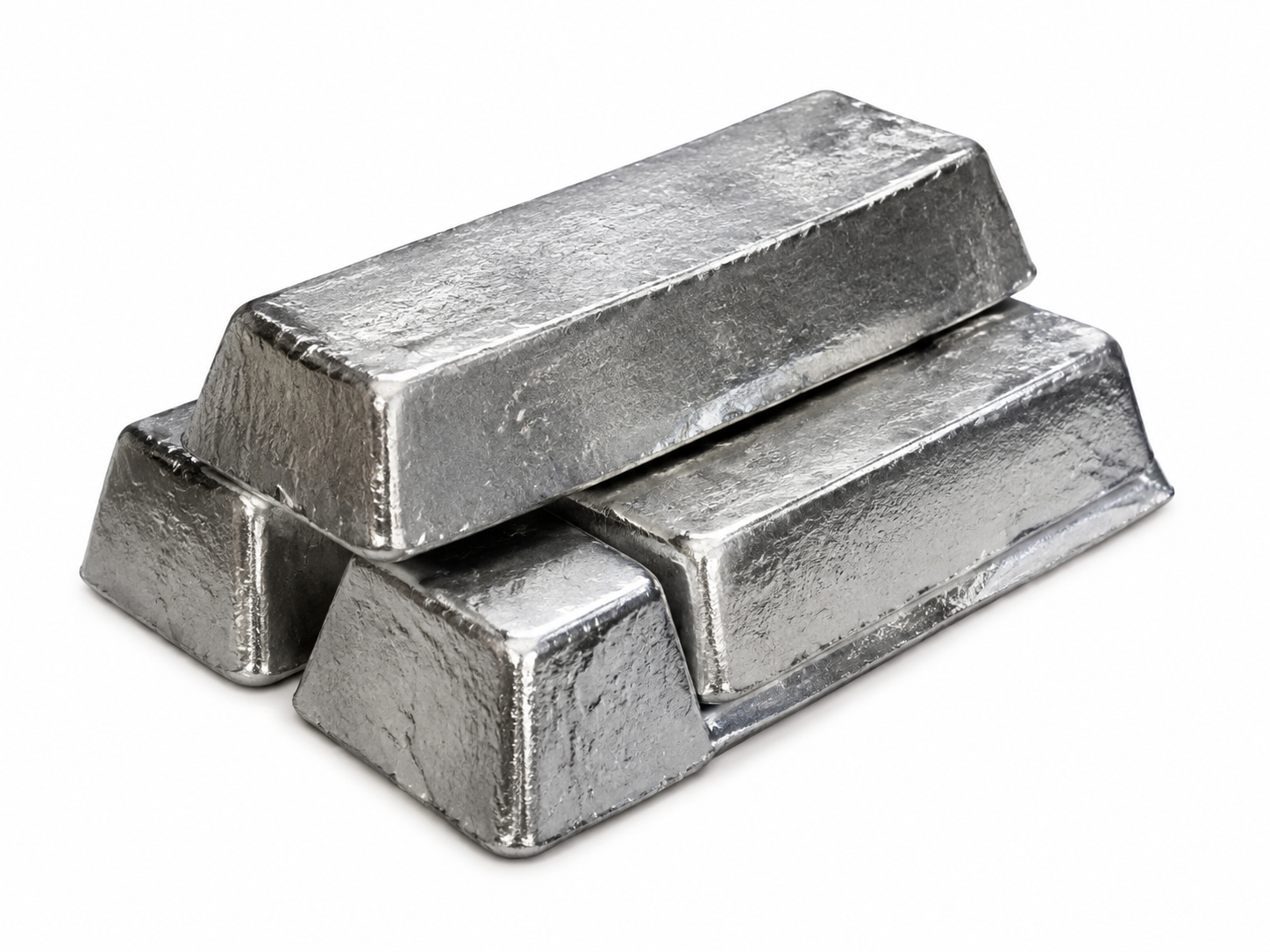
Tin (Sn) occupies a foundational position in the global electronics supply chain. With a density of approximately 7.3 g/cm³ and a melting point of 231.9°C, tin is a low-melting-point, soft, ductile metal that is easily processed into foils, wires, and alloys. More than half of global tin production is consumed in solder applications, serving as the electrical interconnection material across consumer electronics, automotive electronics, industrial control systems, and aerospace equipment.
According to USGS 2025 data, global identified tin reserves stand at approximately 6 million tonnes, concentrated primarily in China, Indonesia, Myanmar, Brazil, Australia, and Russia, with the top five producing nations accounting for over 75% of global reserves. Global refined tin demand for 2026 is projected at approximately 393,000 tonnes, with solder applications representing over 53% of total consumption (Source: Guosen Securities, 2026).
2. EU RoHS Directive: Restructured Lead Exemptions
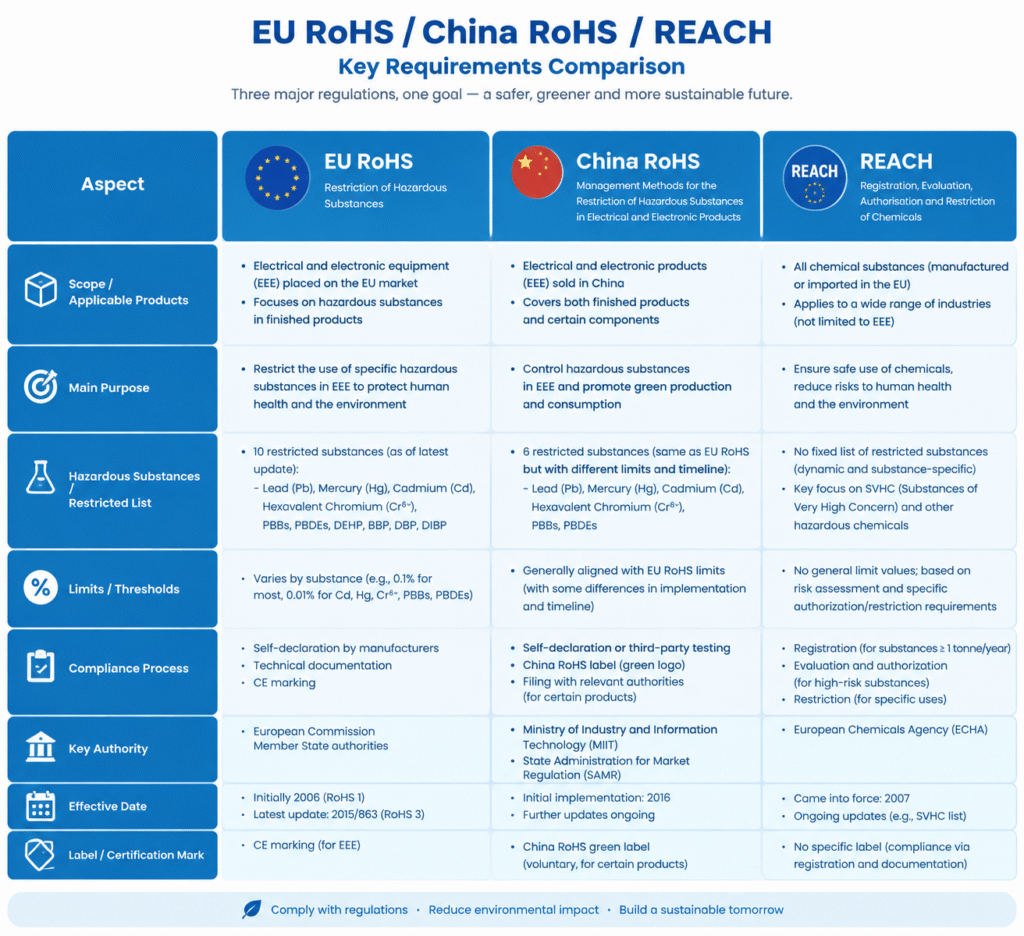
The EU RoHS Directive (2011/65/EU) restricts lead to a maximum of 0.1% by weight in homogeneous materials, subject to time-limited exemptions listed in Annex III. On 8 September 2025, the European Commission adopted three delegated directives—(EU) 2025/1802, 2025/2363, and 2025/2364—restructuring the Annex III lead exemptions. These were published on 21 November 2025, with national transposition due by 30 June 2026 and provisions applying from 1 July 2026.
The critical structural change involves the segmentation of broad parent entries 7(a), 6(a), and 6(b) into narrower, application-specific sub-entries, each with its own expiry date running through 2027. Under the revised framework, entry 7(a) covering lead in high-melting-temperature solders (≥85% lead content) expires on 31 December 2026. Sub-entries 7(a)-I through 7(a)-V, covering specific applications such as chip interconnect, die attach, first-level solder joints, and BGA solder balls, have staggered expiry dates through 31 December 2027.
As of 16 July 2026, the European Commission has opened infringement procedures against seven Member States—Spain, Cyprus, Latvia, Hungary, Malta, Portugal, and Slovakia—for failing to transpose the delegated directives into national law by the 30 June 2026 deadline. The revised entries apply EU-wide from 1 July 2026 regardless of national transposition status, and technical files should cite the EU-level directives as the compliance baseline.
The RoHS 2.0 2025 edition, effective 1 July 2025, additionally introduced four phthalate restrictions (DEHP, BBP, DBP, DIBP), all capped at 0.1% in homogeneous materials. A notable enforcement change requires that solder products undergo complete digestion—XRF screening is no longer accepted for conformity determination; ICP-OES or ICP-MS quantitative confirmation is mandatory.
3. China RoHS: From Voluntary to Mandatory
On 1 August 2025, China published GB 26572-2025, “Requirements for Restricted Use of Hazardous Substances in Electrical and Electronic Products,” upgrading China RoHS from a recommended standard to a mandatory national standard, effective 1 August 2027. The standard expands the restricted substance list from six to ten, adding four phthalates (DBP, BBP, DEHP, DIBP). Limits remain at 0.1% (1,000 ppm) for lead, mercury, hexavalent chromium, and the four phthalates, and 0.01% (100 ppm) for cadmium, all measured in homogeneous materials.
The homogeneous material definition—any single material that cannot be mechanically separated, such as a plastic housing or solder joint—requires individual testing. High-risk materials, including solder, plastic additives, and electroplated layers, are prioritized for inspection.
4. REACH Regulation: Organotin Restrictions
On 11 August 2025, the European Commission published Regulation (EU) 2025/1731, amending Annex XVII of REACH to add 16 Category 1B CMR substances. Among these are dibutyltin oxide (CAS No. 818-08-6, classified as a Category 1B mutagen) and dibutyltin maleate (classified as a Category 1B reproductive toxicant), with concentration limits of 0.1%–0.3%, effective 1 September 2025.
It is important to distinguish organotin compounds from metallic tin and inorganic tin compounds. While organotin compounds exhibit potent neurotoxicity and endocrine-disrupting effects, metallic tin and its inorganic compounds are generally recognized as having low toxicity. Recommended alternatives for dibutyltin oxide include calcium-zinc composite stabilizers, alternative organotin compounds such as dioctyltin, and rare-earth heat stabilizers, with the requirement to validate the electrical performance and long-term reliability of substitute materials.
5. Lead-Free Solder Systems: Material Synergy and Reliability
5.1 SAC305: The Industry Standard
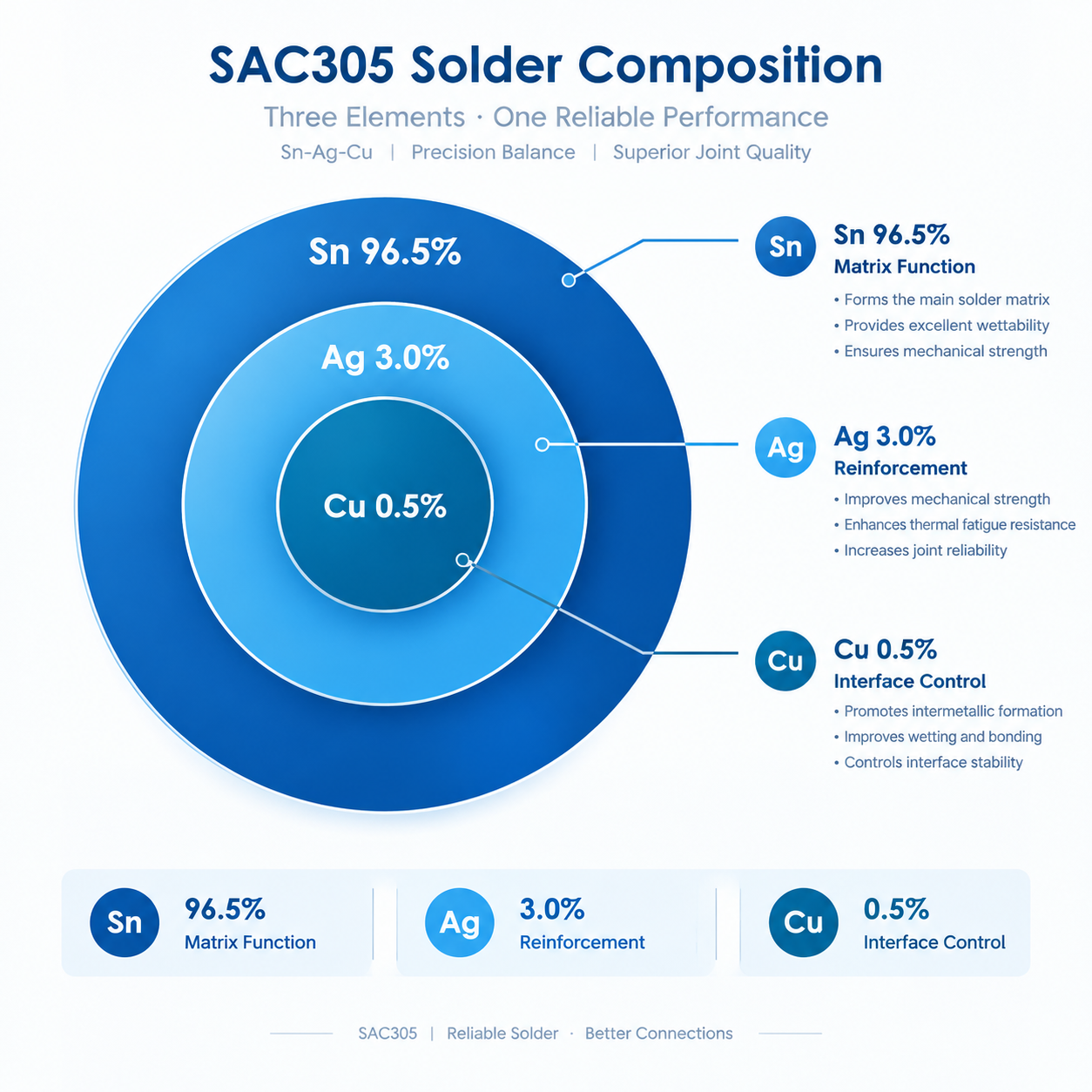
SAC305 (Sn-96.5Ag-3.0Cu-0.5) is the most widely deployed lead-free solder alloy in electronics manufacturing. In this system, tin serves as the primary matrix material (approximately 96.5%), providing the low-melting-point base and excellent wettability. Silver (3.0%) functions as a trace alloying element, forming Ag₃Sn intermetallic compound particles that pin grain boundaries and impede crack propagation. Copper (0.5%) acts as a micro-alloying component that regulates interfacial reactions, suppressing excessive Cu₆Sn₅ IMC layer growth at the solder-copper substrate interface.
The melting temperature of SAC305 is approximately 217–220°C, roughly 34°C higher than the 183°C eutectic point of traditional Sn63/Pb37 solder. Micro-alloying with 0.1% Ni has been shown to reduce the interfacial IMC growth rate to 0.12 μm/s and extend thermal fatigue life to 2.3 times that of conventional solders. Optimized solder joints achieve 5,800 cycles to failure under thermal cycling (-55 to 125°C) with a 35% improvement in shear strength.
However, IPC’s April 2026 comprehensive three-year study, conducted across six independent laboratories with 23 industry partners, identified a previously unrecorded fatigue acceleration mechanism in SAC305 solder joints. After approximately 3,000 thermal cycles between -40°C and +125°C, grain boundary coarsening accelerates crack propagation rates by 35%–50%, a finding with significant implications for automotive and aerospace PCB assemblies designed for 15-year service life.
5.2 Sn-Bi Low-Temperature Solders
Sn-Bi eutectic alloys, with a melting point of approximately 139°C, offer a promising low-temperature soldering alternative. The Sn-Bi system provides good wettability and high tensile strength, positioning it as a favorable competitor to replace Pb-based solders. However, the brittleness introduced by the Bi phase, combined with dendrite segregation and grain coarsening during soldering, currently limits its application scope. Ongoing research focuses on modifying Sn-Bi solders through the addition of Ag, Cu, Zn, Sb, and Ni to optimize melting characteristics, microstructure, and mechanical properties.
5.3 Tin Whisker Mitigation
China’s GB/T 46788-2025, “Environmental Acceptance Requirements for Tin Whisker Susceptibility of Tin and Tin Alloy Surface Finishes on Semiconductor Devices” (adopting IEC 62483:2013), was published on 2 December 2025 and takes effect on 1 July 2026. The standard specifies environmental acceptance testing and whisker growth retardation methods for tin-based surface finishes on semiconductor devices.
6. Tin Recovery from Electronic Waste
Global e-waste reached 62 million metric tonnes in 2022, an 82% increase from 2010, yet only 22.3% is formally recycled, resulting in an estimated $62 billion in lost recoverable resources annually. Waste printed circuit boards (WPCBs) account for 4–7% of total e-waste and contain more than 60 elements including gold, silver, copper, and tin, with metal content exceeding that of naturally mined ores. Tin constitutes approximately 4% by weight of WPCBs and represents the second most abundant strategic metal after copper, commanding a price approximately twice that of copper.
Recent advances in recovery technology include co-smelting of WPCBs with copper smelting slag, achieving recovery rates of 95.62% for Cu, 68.77% for Pb, and 82.51% for Sn under optimized conditions. A novel ultrasonic-coupled composite organic acid system using citric acid as the leaching agent and ascorbic acid as the reducing agent achieved 89.03% tin leaching, with ultrasound cavitation enhancing the leaching rate by over 15%. Bioleaching approaches integrating Acidithiobacillus ferrooxidans-mediated bioleaching with thermally activated bentonite adsorption represent an emerging two-stage recovery framework.
In China, the “14th Five-Year Plan for Circular Economy Development” lists tin as a strategic secondary metal priority. The 2024 “Regulatory Conditions for the Secondary Non-Ferrous Metals Industry (Revised Edition)” sets minimum recovery rate thresholds for tin-containing waste: no less than 92% for electronic waste and no less than 85% for tin-plated packaging waste.
7. Occupational Health and Safety
Occupational Exposure Limits. China’s GBZ 2.1-2019 establishes a PC-TWA of 2 mg/m³ for tin and its inorganic compounds (as Sn). The U.S. NIOSH REL and OSHA PEL are both 2 mg/m³ (TWA), applicable to other inorganic tin compounds (as Sn) except tin oxides. For organic tin compounds, ACGIH recommends a more stringent TLV-TWA of 0.1 mg/m³ and a STEL of 0.2 mg/m³. The NIOSH IDLH is 100 mg/m³ (as Sn).
Engineering Controls and Personal Protection. Local exhaust ventilation and dust collection systems should be installed at high-risk operations including soldering and melting. NIOSH respirator recommendations specify dust and mist respirators (APF=5) for exposures up to 10 mg/m³, and supplied-air or powered air-purifying respirators with dust/mist filters (APF=25) for exposures up to 50 mg/m³. Personal protective equipment including dust masks, protective gloves, and safety goggles should be worn.
8. Conclusion
The environmental compliance landscape for tin in the electronics industry is characterized by increasingly stringent regulatory requirements across multiple jurisdictions. The restructuring of EU RoHS lead exemptions, the elevation of China RoHS to mandatory status, the tightening of REACH organotin restrictions, and the systematic development of e-waste recycling policies collectively define the operational boundaries for tin in electronics. For industry participants, proactive monitoring of regulatory timelines, optimization of lead-free solder alloy systems, and enhancement of tin recovery efficiency from end-of-life electronics constitute the core compliance and sustainability agenda.
