

Selenium: Environmental Performance and Safe Use Regulations in Industrial Applications

1. Introduction: Understanding Selenium’s Dual Role
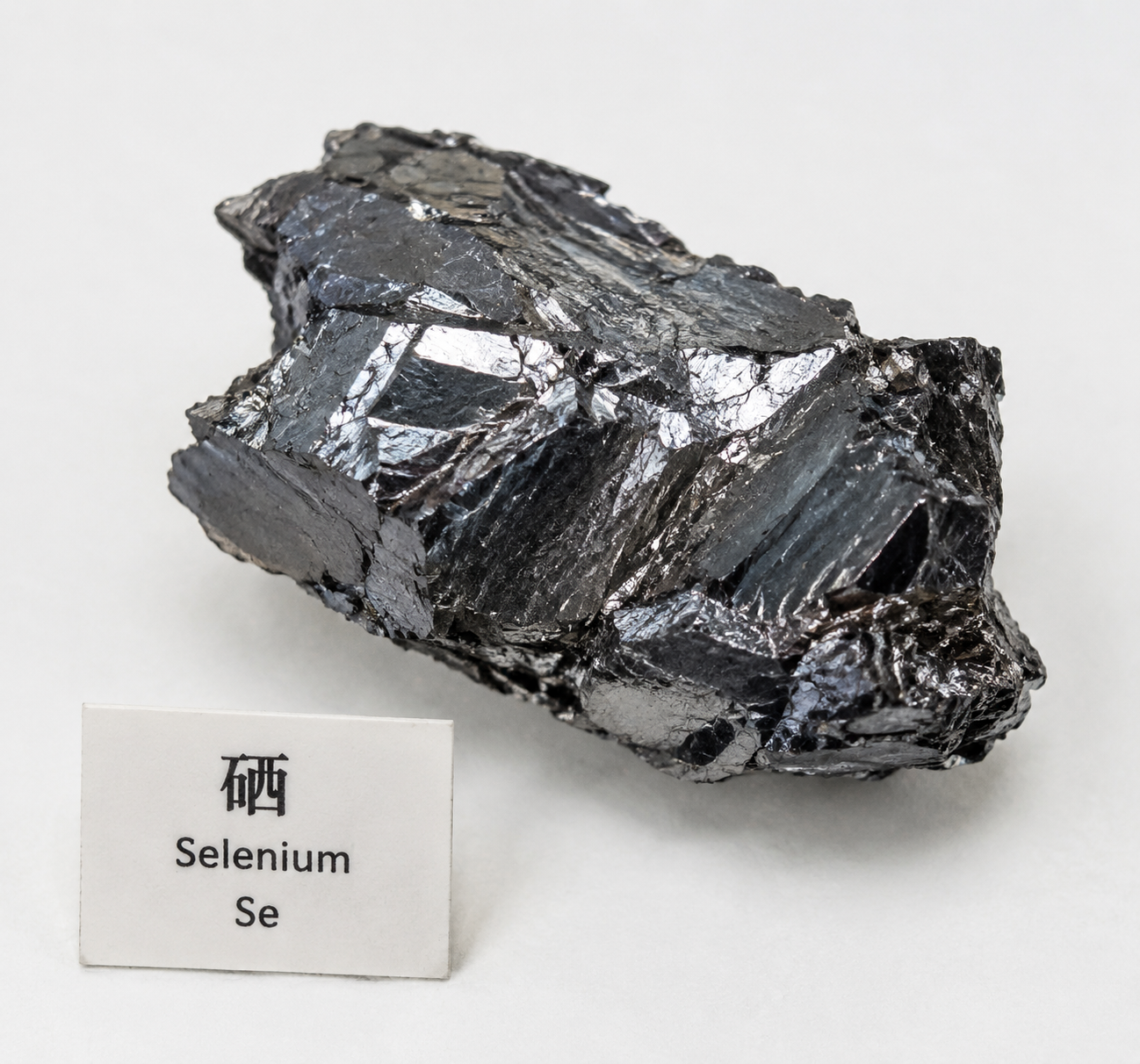
Selenium (Se) occupies a unique position in the industrial materials landscape. It is neither a bulk commodity metal nor a mere laboratory curiosity. Rather, it functions as a critical trace additive and functional component in several high-value industrial processes, while simultaneously presenting well-documented environmental considerations that demand rigorous management.
According to USGS Mineral Commodity Summaries 2026, global refined selenium production was estimated at approximately 3,700 tonnes in 2024, representing a 4.8% increase from 3,530 tonnes in 2023. The principal producing countries are China (approximately 1,800 tonnes), Japan (710 tonnes), Russia (340 tonnes), and Belgium (200 tonnes), collectively accounting for over 80% of global supply. Notably, selenium is predominantly recovered as a by-product of copper anode slime processing rather than from primary mining operations.
2. Environmental Behavior and Fate
Selenium’s environmental mobility is governed by pH and redox conditions. In alkaline oxidizing environments, selenite can oxidize to highly soluble selenate, significantly increasing its migration potential. Conversely, under acidic reducing conditions, selenite ions may reduce to elemental selenium (Se⁰), which exhibits low solubility and bioavailability. This speciation-dependent behavior is fundamental to environmental risk assessment.
Selenium bioaccumulation in aquatic food webs poses documented risks to wildlife. Research has demonstrated that selenium concentrations in agricultural-fed marshes can exceed thresholds associated with reproductive toxicity in birds, with egg selenium levels averaging 14.2 mg/kg in some monitored areas. The U.S. Environmental Protection Agency (EPA) has established a chronic exposure threshold of 5 μg/L and an acute threshold of 20 μg/L for the protection of freshwater aquatic life.
3. Industrial Applications: The Synergistic Logic
Selenium is rarely the primary structural material in industrial systems. Its value lies in precise, low-concentration modifications to host material systems.
Glass Manufacturing. In soda-lime silica glass production, selenium powder serves as a decolorizing agent, neutralizing the green tint caused by iron impurities. Approximately 1 kg of selenium is used per 150 tonnes of glass produced. The primary matrix (SiO₂), fluxing agents (Na₂CO₃, CaCO₃), and selenium operate as an integrated system: the silica provides the glass network, the fluxes lower the melting point, and selenium functions as a trace optical modifier. The absence of selenium results in reduced transparency and lower product grade. Recent developments have introduced cerium oxide-based decolorizing systems that can reduce selenium usage by 30–55% while eliminating the need for arsenic trioxide (As₂O₃).
Electrolytic Manganese Metal (EMM) Production. In the electrolytic production of manganese, selenium dioxide (SeO₂) is added as a current efficiency enhancer at a rate of approximately 2 kg per tonne of manganese produced. Here, manganese sulfate solution forms the electrolyte base, ammonium sulfate serves as a supporting electrolyte, and SeO₂ acts as a trace electrochemical modifier at the cathode. Emerging research focuses on reducing selenium dependency: a composite additive combining SeO₂ with gluconic acid has demonstrated a 50% reduction in SeO₂ consumption while improving current efficiency from 67% to 90%.
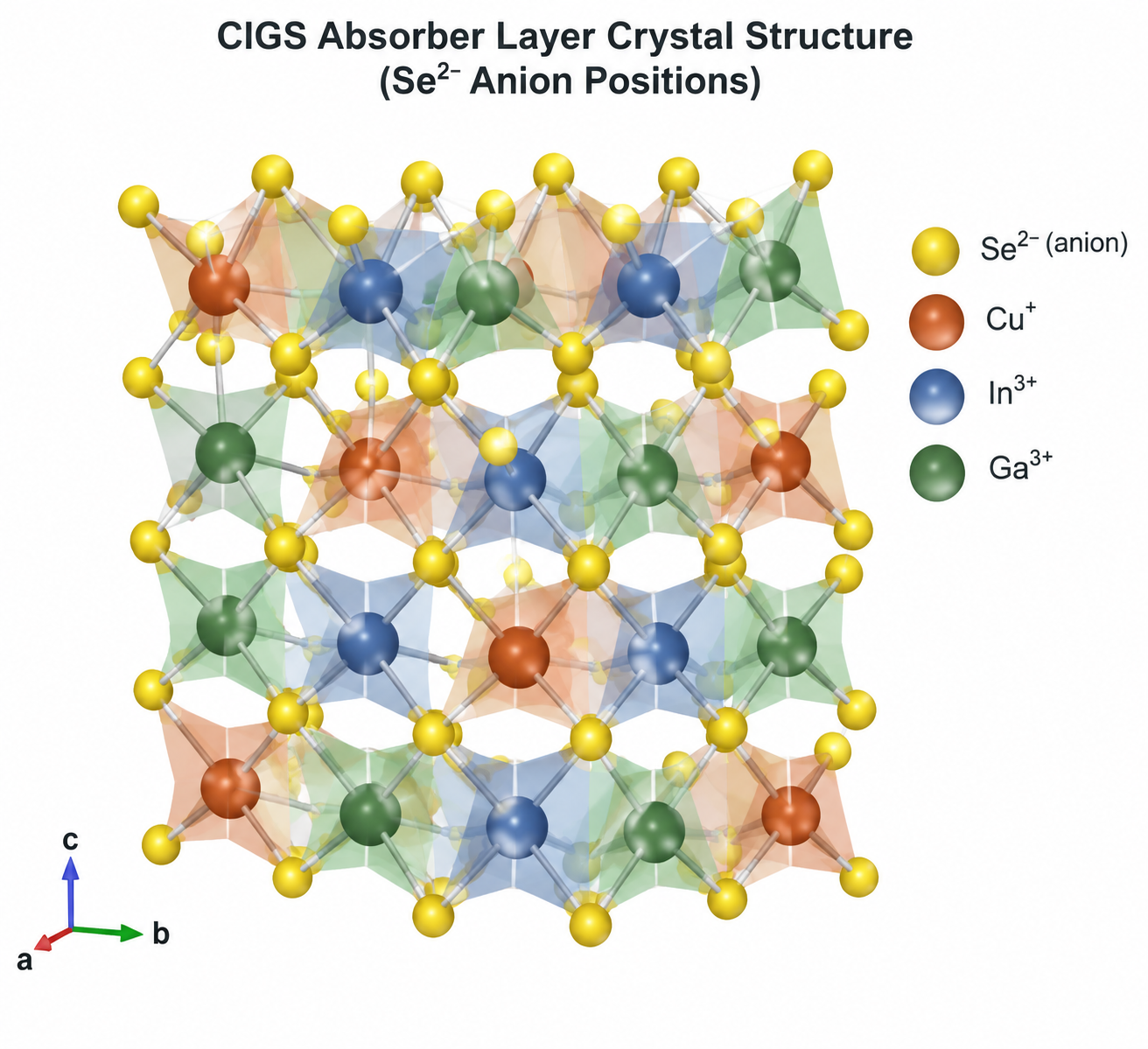
CIGS Thin-Film Solar Cells. In copper indium gallium selenide (CIGS) photovoltaic absorbers, selenium is a core constituent of the Cu(In,Ga)Se₂ crystal. Unlike elemental selenium (melting point 221°C, data source: USGS), selenium in CIGS exists as Se²⁻ anions integrated into the chalcopyrite lattice. CIGS solar cells have achieved power conversion efficiencies exceeding 23%, with tunable bandgap and outstanding environmental stability. CIGS technology avoids the use of toxic arsenic and cadmium, positioning it as an environmentally favorable photovoltaic platform.
4. Recycling and Secondary Resource Recovery
The environmental profile of selenium is strengthened by its recovery from secondary sources. Over 90% of global selenium supply originates from copper anode slime processing. Advanced recovery processes achieve selenium leaching rates of up to 98.0%, with flue gas treatment systems providing 99.5% dust removal efficiency and 95.0% desulfurization efficiency.
In CIGS photovoltaic module recycling, selenium recovery is achieved through low-temperature volatilization and subsequent flue dust collection, which offers relatively straightforward purification. Japanese researchers have demonstrated microbial recovery of selenium from spent CIGS panels using selenate-reducing microorganisms, a technology with dual application in pollution remediation and resource recovery.
5. Wastewater Treatment Technologies
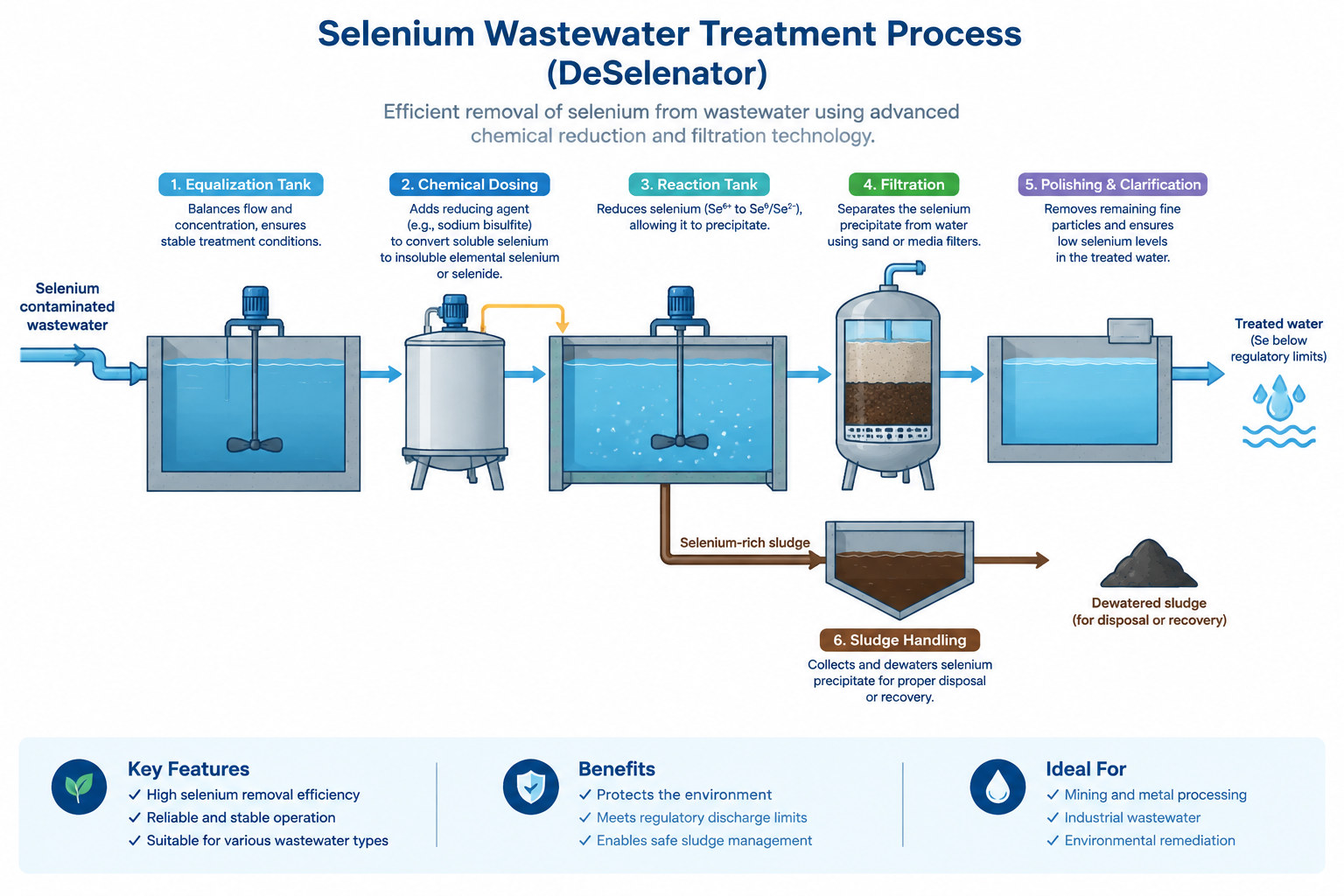
Industrial wastewater from mining, coal-fired power plants, and oil refining represents the primary pathway for selenium release into aquatic systems. The conversion of selenium oxyanions to elemental selenium (Se⁰) is recognized as an effective industrial approach, producing particles with low solubility and bioavailability. An advanced process known as DeSelenator, utilizing SO₄²⁻/SeO₄²⁻ cocrystallization coupled with anion-exchange resin and activated carbon treatment, has demonstrated the ability to reduce selenium concentrations to 5 ppb—meeting EPA regulatory limits.
6. Occupational Safety and Regulatory Standards
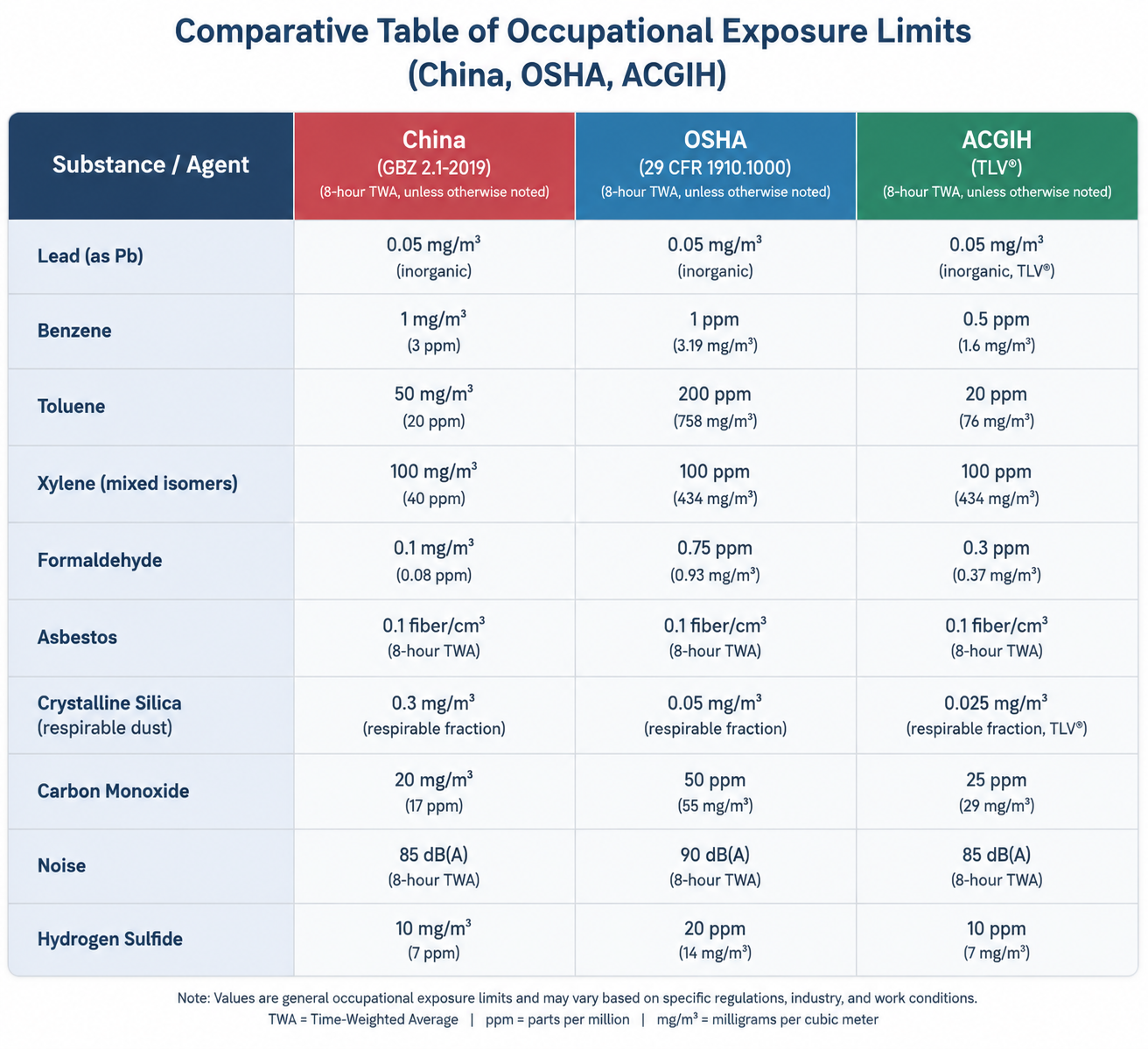
Occupational Exposure Limits. China’s National Occupational Health Standard GBZ 2.1-2007 establishes a PC-TWA of 0.1 mg/m³ for selenium (as Se) in workplace air. OSHA specifies an 8-hour permissible exposure limit of 0.2 mg/m³, consistent with the ACGIH TLV-TWA of 0.2 mg/m³.
Drinking Water Standards. China’s GB 5749-2022 sets the selenium limit in drinking water at 0.01 mg/L. The U.S. EPA Maximum Contaminant Level (MCL) for selenium in public drinking water is 50 μg/L.
Personal Protective Measures. Engineering controls—including local exhaust ventilation and general dilution ventilation—should be implemented as the primary exposure mitigation strategy. Personal protective equipment including dust masks, protective gloves, safety goggles, and appropriate protective clothing are recommended for handling selenium compounds.
7. Conclusion
Selenium occupies a distinctive position in industrial ecosystems. Its environmental significance derives not from bulk usage but from precise functional contributions at trace concentrations, combined with the imperative for rigorous containment and recovery throughout its lifecycle. As global demand for CIGS photovoltaic technology and high-performance alloys continues to grow, the development of cleaner recovery processes and lower-selenium process alternatives will shape the industry’s environmental trajectory.
