

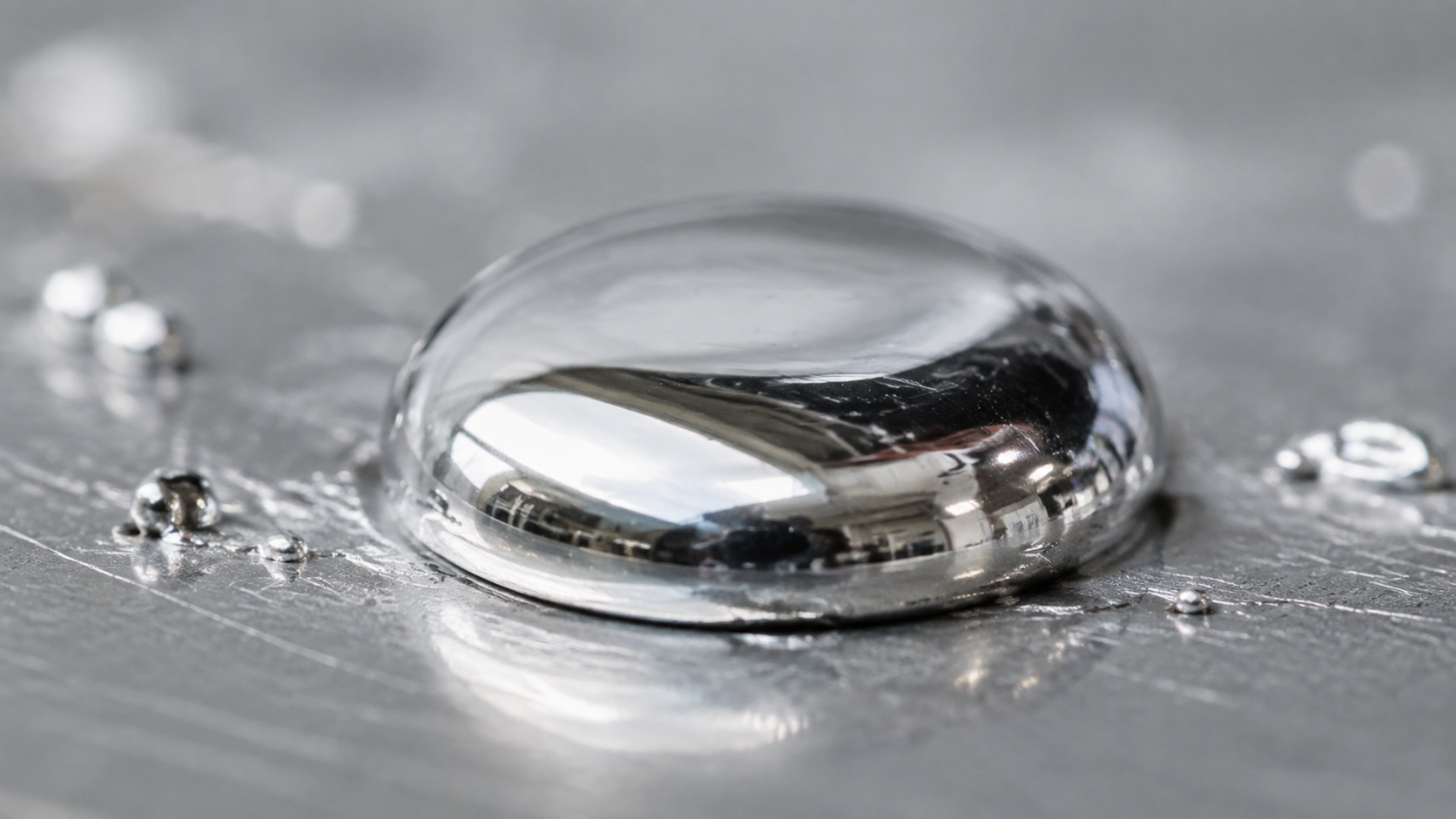
Gallium in Electronic Packaging Materials: Core Advantages of Liquid Metal in Thermal Management

As chip geometries continue to shrink and power densities rise, thermal management in electronic packaging has become a critical bottleneck limiting device performance and reliability. Against this backdrop, gallium (Ga) -based liquid metal materials have emerged as a transformative solution, redefining the boundaries of thermal interface materials and interconnection technologies in electronic packaging.
I. Physical Properties of Gallium: The “Innate Advantage” of Liquid Metal
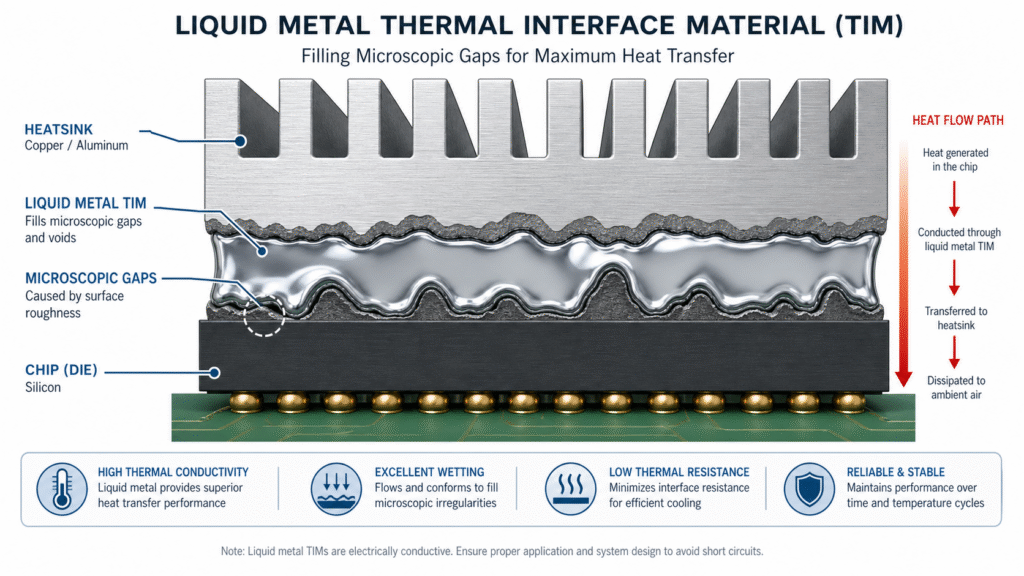
Gallium has a melting point of just 29.76°C, meaning it becomes liquid at slightly above room temperature. This unique property endows gallium-based materials with a powerful combination—room-temperature fluidity and metal-level thermal conductivity. Some gallium-based liquid metals achieve thermal conductivity exceeding 30 W/(m·K), far surpassing conventional thermal interface materials, while flowing like a liquid to completely fill microscopic surface irregularities, minimizing interfacial thermal resistance.
Gallium also features extremely low vapor pressure and good electrical conductivity, enabling it to serve dual functions of thermal and electrical interconnection in electronic packaging. Gallium-based alloys (such as eutectic gallium-indium EGaIn and gallium-indium-tin Galinstan) can achieve melting points as low as -19°C through composition tuning.
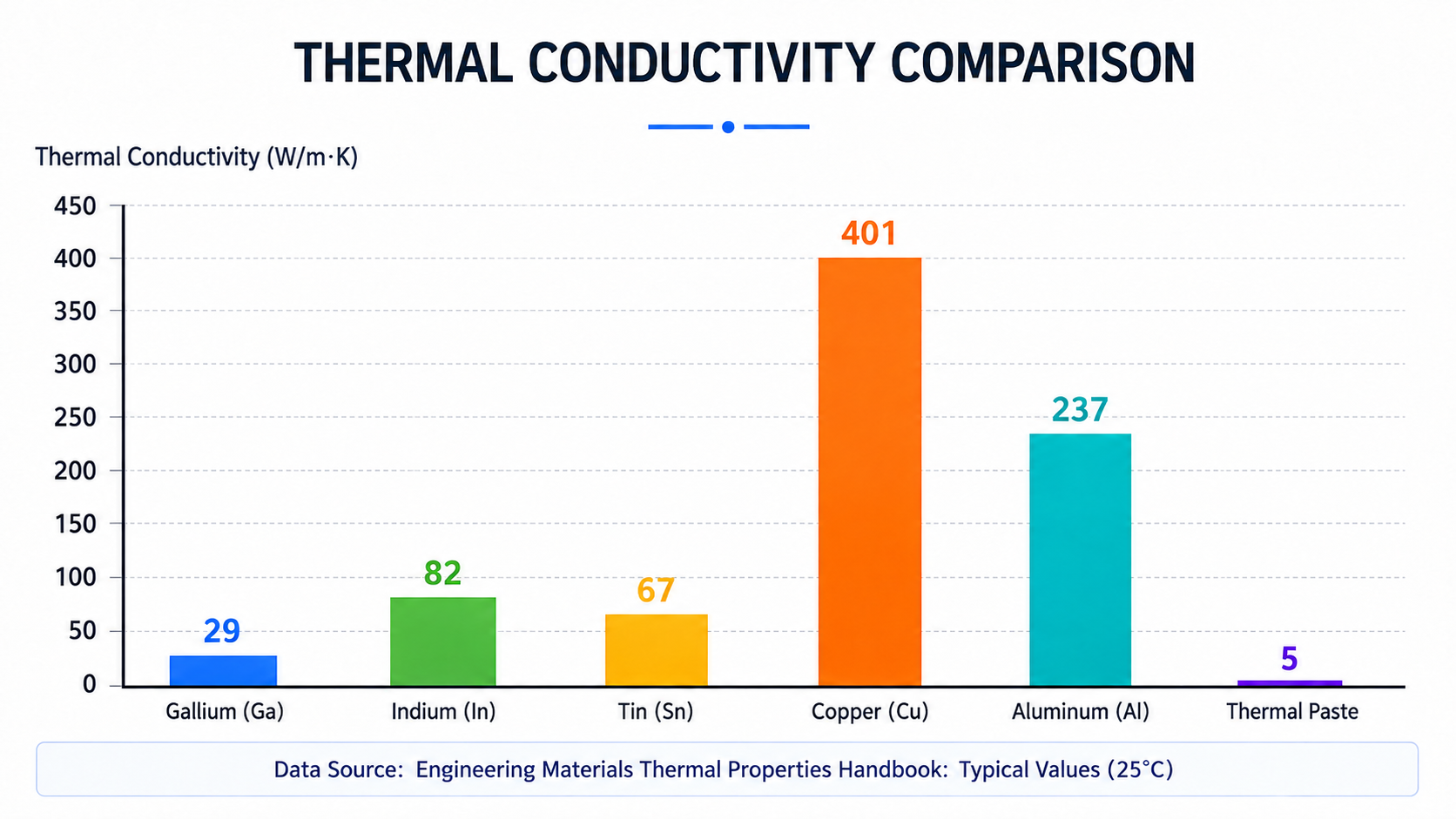
II. Thermal Conductivity Comparison with Other Metals
| Material | Thermal Conductivity W/(m·K) | Melting Point (°C) | State at RT | Key Advantage |
| Gallium (Ga) | ~29–40 | 29.76 | Liquid/near-liquid | Fluidity + conductivity |
| Indium (In) | 81.8 | 156.6 | Solid | Excellent conductivity, ductile |
| Tin (Sn) | 66.8 | 231.9 | Solid | Common solder |
| Copper (Cu) | 401 | 1084 | Solid | Excellent conductivity |
| Aluminum (Al) | 237 | 660 | Solid | Lightweight |
| Galinstan | 16.5 | -19 | Liquid | Ultra-low melting point- |
| Thermal Grease | 3–8 | — | Paste | Conventional TIM |
Key Insight: While gallium’s thermal conductivity is lower than solid metals like copper and aluminum, its superior interfacial filling capability—the ability to flow into microscopic gaps between chip and heatsink—eliminates air voids that create enormous thermal resistance. This combination of “liquid-like conformability + metal-like conductivity” makes gallium-based TIMs the ideal choice for high-power-density chip cooling.
III. Systematic Comparison with Other Electronic Packaging Materials
1. vs. Thermal Grease: Generational Advantage
Conventional thermal greases typically achieve 3–8 W/(m·K) and suffer from volatilization, drying, and pump-out issues over time. Gallium-based liquid metal TIMs offer 4–10× higher thermal conductivity with no drying issues. A 2025 study further developed self-healing liquid metal microdroplet composite phase-change TIMs—thermal conductivity increased by over 37.8% after damage healing.
2. vs. Indium (In): Fluidity as the Decisive Factor
Indium offers higher thermal conductivity (81.8 W/(m·K)) and excellent ductility, but its melting point of 156.6°C means it remains solid at normal operating temperatures, requiring thermal compression for gap filling. Gallium, being liquid at room temperature, achieves perfect interfacial contact with zero pressure—more friendly to fragile chips and精密 packaging structures.
3. vs. Tin (Sn): Low-Temperature Processing Advantage
Tin melts at 231.9°C. Gallium’s low-temperature processing (liquid at room temperature or near-room-temperature melting) avoids thermal damage to heat-sensitive components. Gallium-based materials also enable fluidic-state electrical interconnections, offering new pathways for 3D and heterogeneous integration.
4. vs. Copper/Aluminum: Flexibility and Processability
While copper and aluminum offer excellent thermal conductivity, they are rigid solids incompatible with flexible and stretchable electronics. Gallium-based liquid metals compounded with polymers yield composites with flexibility, stretchability, and thermal management capability. A 2026 review from Sichuan University and Harbin Institute of Technology systematically summarized recent progress in LMP composites for soft electronics.
IV. Latest Research Frontiers (2025–2026)
▶ Self-Healing Liquid Metal TIM (2025) : Published in Langmuir, a bio-inspired LM microdroplet composite phase-change TIM achieved >37.8% thermal conductivity improvement after damage healing.
▶ Dual-Function GLMs in Power Electronics (2026) : A Huazhong University of Science and Technology review systematically evaluated GLMs’ dual roles—thermal management (TIM + active cooling) and electrical interconnection (low-temperature bonding) in power electronics packaging.
▶ LMP Composites for Soft Electronics (2026) : A Sichuan University/HIT review highlighted LMP composites’ fluidic compliance, low toxicity, metallic conductivity, and outstanding thermal conductivity.
V. Market Trends and Strategic Value
Prices: In 2026, the gallium market has been shaped by export controls and rising demand. China, the world’s largest gallium producer, imposed export controls in 2025, tightening overseas supply and driving prices upward.
Strategic Significance: Gallium is classified as a strategic critical mineral by multiple countries. Its irreplaceability in electronic packaging, semiconductors, and optoelectronics makes it a core material for the “post-Moore era.”
