

Technical Report on Selenium Product Forms: Differential Analysis and Selection Guide for Powder vs. Granules

Executive Summary
Based on industry data, technical literature, and market research as of March 2026, this report systematically analyzes the physical characteristics, purity standards, application scenarios, operational safety, and cost structures of two selenium product forms: powder and granules. The report aims to provide a technical reference for procurement and technical personnel in sectors such as metallurgy, glass manufacturing, electronics, chemicals, and agriculture to facilitate informed material selection.
I. Product Definition and Physical Characteristics
1.1 Selenium Powder
Selenium powder exists in an amorphous form, appearing red-gray or black in color. The standard particle size is typically 200 mesh (approximately 74 microns) or finer. Its microstructure is glassy and amorphous, characterized by a large specific surface area, which imparts high surface activity and reaction rates.
1.2 Selenium Granules
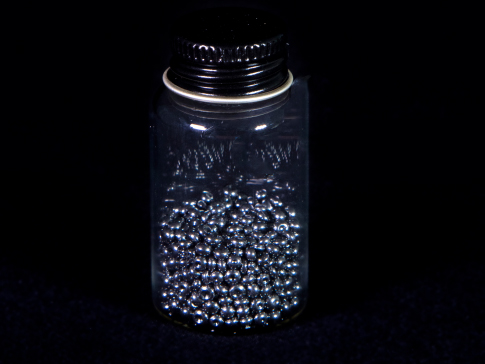
Selenium granules are in a semi-crystalline form, exhibiting a blue-gray metallic luster. The typical particle size ranges from 1 to 5 millimeters. Their structure is dense with a relatively small specific surface area, offering controllable reaction rates and suitability for high-volume automated feeding processes.
II. Purity Grades and Technical Specifications
| Purity Grade | Designation | Suitable Form | Application Areas |
|---|---|---|---|
| 99.9% | 3N | Powder, Granules | Industrial-grade glass, metallurgy |
| 99.99% | 4N | Powder, Granules | High-quality glass, alloys |
| 99.999% | 5N | Primarily Powder | CIGS photovoltaics, semiconductors |
| 99.9999% | 6N | Powder, Granules | High-end electronic materials |
| 99.99999% | 7N | Primarily Granules | Advanced semiconductors, infrared optics |
Source: Alibaba Sourcing Intelligence
III. Comparative Analysis of Application Scenarios
3.1 Applications Dominated by Selenium Powder
| Application Field | Technical Principle | Key Advantages |
|---|---|---|
| CIGS Thin-Film Photovoltaics | High-purity selenium powder as core raw material | Flexible, lightweight, effective under low light; conversion efficiency up to 24% |
| Semiconductors & Optoelectronic Devices | Photosensitive properties | Rectifiers, photoresistors, photoreceptor drums |
| Catalysts | High surface activity | Organic synthesis, rubber vulcanization |
| Animal Feed Additives | High bioavailability | Powdered selenium significantly increases liver selenium deposition |
| Fine Pigments | Uniform dispersion | Red glass, ceramic colorants |
3.2 Applications Dominated by Selenium Granules
| Application Field | Technical Principle | Key Advantages |
|---|---|---|
| Glass Industry | Decolorizing/coloring agent | Automated feeding, low dust generation |
| Metallurgical Additive | Improves machinability | Copper, stainless steel, lead-based alloys |
| Electrolytic Manganese Production | Replaces sulfur dioxide | Reduces energy consumption |
| Bulk Pigments | Automatic dosing | Low cost, high safety |
| Rubber Vulcanizing Agent | Controls vulcanization rate | Consistent batch quality |
IV. Safety and Operational Characteristics
4.1 Safety Considerations for Selenium Powder
- Dust Risk: High. Requires dust masks and localized exhaust ventilation during handling.
- Fire and Explosion: Dust can form explosive mixtures with air; static electricity prevention measures are essential.
- Storage: Airtight, dry, protected from light, and isolated from oxidizing agents.
- Regulations: OECD countries have reduced occupational dust exposure limits by 37%.
4.2 Safety Considerations for Selenium Granules
- Dust Risk: Low. Standard protective measures suffice.
- Fire and Explosion: Essentially no risk of dust explosion.
- Storage: Cool, dry, and within a standard chemical warehouse.
- Feeding Method: Suitable for automated conveying systems, reducing personnel contact.
V. Cost Structure Analysis
| Cost Item | Selenium Powder | Selenium Granules |
|---|---|---|
| Raw Material Cost | High | Medium |
| Processing Cost | Grinding, classification, packaging | Granulation, screening |
| Quality Cost | High purity requires refining | Relatively stable |
| Safety Cost | Dust control systems, training | Standard management |
| Unit Selling Price | Higher | Lower |
Premium high-purity (5N) selenium powder can command a price up to 300% higher than industrial-grade selenium granules.
VI. Selection Decision Matrix
| Requirement Type | Recommended Form | Decision Basis |
|---|---|---|
| Photovoltaic Thin-Film Materials | High-purity selenium powder (5N) | Purity and uniformity are critical |
| Architectural Glass Decolorization | Selenium Granules | Safety, cost, automation |
| Animal Feed Additives | Selenium Powder | High bioavailability |
| Precision Alloys | High-purity granules | Precise compositional control |
| Organic Synthesis Catalysts | Powder | Prioritizes reaction activity |
VII. Frontier Technology Update: Selenium Nanoparticles
Selenium nanoparticles (SeNPs) are ultra-fine selenium materials with particle sizes ranging from 20 to 100 nanometers, exhibiting unique physicochemical and biological properties.
7.1 Technological Advances
- Enshi Central Hospital discovered that SeNPs show significant efficacy against metabolic dysfunction-associated steatohepatitis (MASH).
- Enshi Deyuan Company completed space breeding of probiotics, achieving a 20-fold increase in their selenium-carrying capacity.
7.2 Application Prospects
- Medicine: Targeted cancer therapy, anti-inflammatory applications.
- Agriculture: Enriched fertilizers, capable of increasing selenium content in crops by over 30%.
- Environmental Protection: Heavy metal adsorption.
VIII. Conclusion
The choice between selenium powder and granules fundamentally involves a trade-off between reaction activity, operational safety, cost structure, and process compatibility. The powder form, with its high reactivity and uniform dispersion, dominates precision applications in electronics, catalysts, and animal nutrition. The granular form, leveraging its advantages in safety, stability, and cost, occupies the traditional high-volume markets in glass, metallurgy, and batch production. Enterprises should base their selection on specific process requirements, safety conditions, and cost budgets to ensure the optimal fit for their applications.
