

The Influence of Gallium Purity on Its Properties and Associated Detection Methods
Abstract
The purity of gallium directly determines its suitability for high-end technological applications and the resulting device performance. Gallium products are categorized by purity into metallic gallium (4N and below) and high-purity gallium (5N to 8N). The purity progression from 99.99% to 99.999999% corresponds to an exponential reduction in total impurity content, from hundreds of parts per million (ppm) to sub-parts per billion (ppb) levels. The influence of purity on gallium’s properties is manifested in several key areas: electrically, trace impurities significantly affect carrier mobility and resistivity; concerning crystal quality, impurities lead to lattice defects and distortion; regarding thermal stability, purity impacts melting point precision and phase change behavior; and concerning surface characteristics, it affects oxide layer formation and surface cleanliness. Different purity grades of gallium have distinct application fields: 6N gallium is used for gallium arsenide LEDs and infrared devices, 7N gallium for semi-insulating gallium arsenide microwave devices, and 8N gallium for molecular beam epitaxy (MBE) sourced superlattice devices. The core technologies for gallium purity detection are Glow Discharge Mass Spectrometry (GD-MS) and Inductively Coupled Plasma Mass Spectrometry (ICP-MS), achieving detection limits as low as 0.01 ppb. China has achieved a technological leap from 4N to 8N purity in the high-purity gallium sector, becoming a key link in the global high-purity gallium supply chain.
Main Text
1. Classification Standards and Definition of Gallium Purity
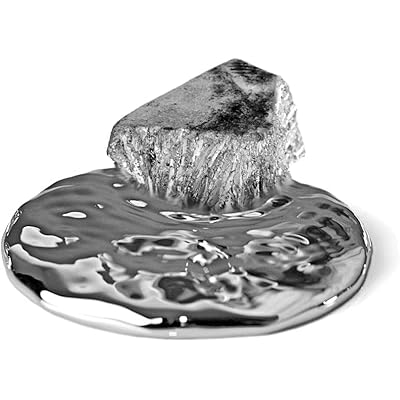
Gallium is a silvery-white, scarce metal with a unique combination of a low melting point (29.78°C) and a high boiling point (2403°C). In industrial applications, gallium products are classified into distinct grades based on purity:
• Metallic Gallium: Gallium with purities of 99.9% (3N) and 99.99% (4N) is referred to as metallic gallium, primarily used in lower-end applications.
• High-Purity Gallium: Generally refers to gallium metal with a total impurity content below 10⁻⁵ (i.e., 0.001%). It is further divided into four grades based on gallium content: 5N (99.999%), 6N (99.9999%), 7N (99.99999%), and 8N (99.999999%).
Quantifying purity implies stringent impurity control requirements. For 8N gallium, a purity of 99.999999% means that the total impurities in one metric ton of gallium must not exceed 0.01 grams – a level of purity comparable to having not a single grain of sand in a medium-sized lake.
2. Mechanisms of Purity’s Influence on Gallium Properties
1. Decisive Impact on Electrical Properties
Gallium’s primary application lies in compound semiconductors (such as Gallium Arsenide, Gallium Nitride), which demand exceptionally high electrical performance. Trace metallic impurities (e.g., Iron, Copper, Nickel) can act as carrier recombination centers or scattering centers, significantly reducing electron mobility and minority carrier lifetime. The resistivity of high-purity gallium exhibits significant anisotropy: at 0°C, the resistivity along the a, b, and c crystal axes is 1.75×10⁻⁶ Ω·m, 8.20×10⁻⁶ Ω·m, and 55.30×10⁻⁶ Ω·m, respectively. The residual resistivity ratio (RRR = ρ300K/ρ4.2K) for ultra-pure gallium can reach up to 55,000, serving as a crucial indicator of purity.
2. Crystal Quality and Structural Integrity
Impurity atoms can cause lattice distortion and dislocation defects within the gallium crystal. X-ray diffraction analysis requires that the lattice distortion rate be kept below 0.03%. In 8N grade gallium sources used for Molecular Beam Epitaxy (MBE), impurities can lead to defects in the epitaxial layer, directly impacting the performance of quantum well and superlattice devices.
3. Precise Control of Thermophysical Properties
The melting point of high-purity gallium must be strictly controlled within a range of 29.76°C ± 0.05°C to ± 0.1°C. For applications as a phase change material, the deviation in phase transition enthalpy must be ≤ 2%. Density measurements require precision achieving 5.904 g/cm³ ± 0.001 g/cm³ to ± 0.005 g/cm³.
4. Surface and Interface Characteristics
The thickness of the surface oxide layer on high-purity gallium must be controlled to ≤ 10 nm. Surface roughness requirements demand an Ra value ≤ 0.8 μm. In semiconductor manufacturing, the surface particle count must be ≤ 100 particles/cm², and organic residue must be ≤ 10 ng/cm².
3. Application Fields for Different Purity Grades of Gallium
A clear correspondence exists between purity levels and application areas, dictated by the intrinsic material requirements of different technologies:
| Purity Grade | Typical Applications | Performance Requirements |
|---|---|---|
| 6N Gallium (99.9999%) | Gallium Arsenide, Gallium Phosphide, Gallium Antimonide substrates; LED and infrared device manufacturing. | Metallic impurities ≤ 1 ppm, meeting fundamental requirements for optoelectronic devices. |
| 7N Gallium (99.99999%) | Semi-insulating Gallium Arsenide single crystals; high-speed optoelectronic integrated circuits and microwave devices. | Total impurities ≤ 0.1 ppm, ensuring semi-insulating properties and high-frequency performance. |
| 8N Gallium (99.999999%) | Gallium source for Molecular Beam Epitaxy (MBE); advanced semiconductor devices like superlattices and quantum wells. | Total impurities ≤ 0.01 ppm, meeting the demands of atomic-level epitaxial growth. |
Furthermore, semiconductor-grade gallium used in integrated circuit wafer manufacturing focuses on controlling trace metals like Iron and Copper to ensure specified electron mobility. Gallium for LED epitaxy prioritizes the control of non-metallic impurities such as Oxygen and Carbon (≤ 50 ppb) to guarantee optical performance. Gallium for solar cells emphasizes the detection of residual Silicon and Aluminum (≤ 15 ppb) and surface cleanliness to optimize photoelectric conversion efficiency.
4. Core Technologies for Gallium Purity Detection
Gallium purity detection acts as the “guiding eye for production,” with precision requirements analogous to “detecting a grain of dust in a handful of sand.” Mainstream detection techniques include:
1. Glow Discharge Mass Spectrometry (GD-MS)
GD-MS is considered the gold standard method for high-purity gallium analysis. It offers a resolution > 10,000 and achieves detection limits as low as 0.01 ppb. Some companies, for instance, have independently developed GD-MS methods certified by national metrology authorities, capable of controlling up to 26 impurity elements, far exceeding the 9 elements specified in some national standards. GD-MS can directly analyze solid samples, avoiding contamination introduced during sample preparation.
2. Inductively Coupled Plasma Mass Spectrometry (ICP-MS)
ICP-MS is the most widely used high-sensitivity detection method, with detection limits reaching 0.1 ppt and a mass range of 2-260 amu. ICP-MS equipped with collision/reaction cell technology effectively eliminates polyatomic interferences, enabling quantitative analysis of trace elements at the ppt level. It is suitable for determining over 12 trace elements, including Al, Fe, and Cu.
3. Atomic Absorption Spectrometry (AAS)
Employing a flame/graphite furnace dual-mode switching system, AAS is used to determine impurity elements in high-purity gallium, often following standard methods (e.g., GB/T 23362.1-2021). Detection limits can reach µg/L levels, making it suitable for routine quality control.
4. Other Supplementary Detection Techniques
• X-Ray Fluorescence Spectrometry (XRF): Used for rapid screening of elemental composition (typically 0.1-100 wt%).
• Oxygen/Nitrogen/Hydrogen Analyzer: Employs inert gas fusion for determining oxygen content, with detection limits around 0.05 ppm.
• Secondary Ion Mass Spectrometry (SIMS): Used for characterizing surface composition and depth profiling, often following international standards (e.g., ISO 18114:2021).
5. Synergy Between High-Purity Gallium Refining Processes and Detection
The production of high-purity gallium requires the combination of multiple refining processes:
• Axial Distillation Crystallization Process (ADCP): Research indicates that repeating axial crystallization six times under optimized conditions (e.g., cold end temperature around 15°C) can yield gallium meeting 6N standards. This process achieves efficient impurity segregation by controlling the shape of the melt-solid interface and the temperature gradient.
• Combined Processes: Techniques such as electrolytic refining, vacuum distillation, and zone melting are often combined to achieve the leap from 4N to 8N purity.
Detection technology and refining processes form a closed loop: precise analytical results provide direction for optimizing refining processes, while products improved through process modifications must undergo even more rigorous validation via detection.
6. Conclusion
The purity of gallium is the decisive factor determining its properties. The progression from 4N to 8N purity represents a qualitative transformation from a base metal to a cutting-edge semiconductor material. Different purity grades serve fundamentally distinct technological domains: 6N gallium underpins the LED industry, 7N gallium enables microwave communications, and 8N gallium is essential for frontier technologies like quantum devices. The core detection technologies – GD-MS and ICP-MS – have achieved detection limits in the sub-ppb range, providing reliable “eyes” for advanced manufacturing. China has transitioned from a follower to a key player in the field of high-purity gallium. The high-purity gallium products from certain Chinese enterprises now hold a leading domestic market share and are supplied to major semiconductor companies in Germany, the UK, Japan, and elsewhere. This marks China’s progress from being a “raw material supplier” towards becoming a “materials powerhouse,” with high-purity gallium serving as a prime example of this transformation.
