

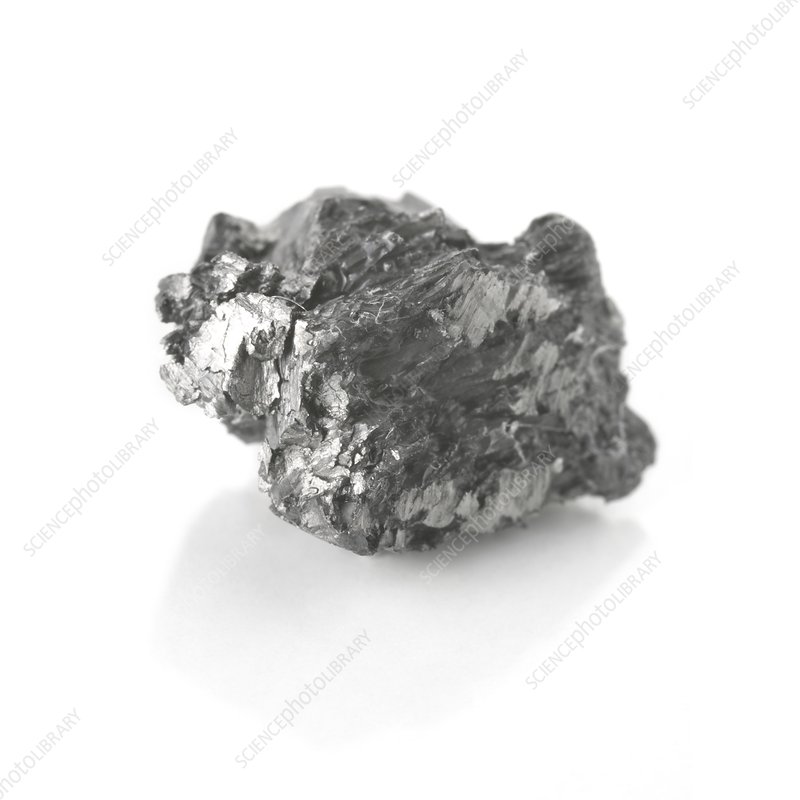
Terbium Oxidation States and Common Compounds
Abstract
Terbium is an important lanthide rare earth element whose primary oxidation state is the stable +3 state, with the ability to also exhibit a +4 state under specific conditions. This valence characteristic is fundamentally determined by its [Xe]4f⁹6s² electronic configuration. Losing three electrons to form Tb³⁺ ([Xe]4f⁸) is the most energetically favorable pathway. Forming Tb⁴⁺ ([Xe]4f⁷), which achieves the stable half-filled 4f⁷ configuration, is possible only under strong oxidizing environments or within specific solid compounds. Common terbium compounds include +3 state examples like Tb₂O₃, TbCl₃, and Tb(NO₃)₃, as well as +4 or mixed-valence state examples like TbO₂, Tb₄O₇, and TbF₄. Among these, trivalent terbium ions (Tb³⁺) are widely used in luminescent materials and biosensing due to their distinct green fluorescence, while tetravalent compounds demonstrate unique value in magnetic materials and catalysis. Understanding terbium’s valence behavior and compound properties is essential for its functional application in cutting-edge technologies.
1. Terbium Oxidation States: Stability and Electronic Structure Fundamentals
Terbium’s valence behavior is deeply rooted in its electronic structure. As a lanthanide element with atomic number 65, terbium’s ground-state electronic configuration is [Xe]4f⁹6s².
- Predominant +3 State: This is the most common and stable oxidation state for all lanthanide elements in chemical reactions, and terbium is no exception. Losing the two outermost 6s electrons and one 4f electron to form Tb³⁺ (electronic configuration [Xe]4f⁸) follows the general lanthanide ionization trend (tending toward near-empty, half-filled, or fully filled f-orbitals) and has the relatively lowest energetic cost. Consequently, the stable ionic form in aqueous solutions and the vast majority of simple terbium salts (e.g., halides, nitrates, sulfates) is Tb³⁺. Trivalent terbium salts are typically colorless, though its oxide Tb₂O₃ is white.
- Variable +4 State: Terbium is one of the few lanthanide elements capable of forming stable +4 compounds (others include cerium and praseodymium). The driving force is that further oxidizing Tb³⁺ (4f⁸) to Tb⁴⁺ (4f⁷) achieves the half-filled 4f⁷ electronic configuration, which is particularly stable. However, forming Tb⁴⁺ requires high ionization energy, making the +4 state far less stable than +3. It is extremely unstable in aqueous solution, undergoing rapid reduction, but can be stabilized in the solid state, specific ligand environments (e.g., fluoride, oxide ligands), or under strong oxidizing conditions. Research has confirmed that Tb⁴⁺ can be formed in aqueous solution using strong oxidants (e.g., peroxydisulfate, sodium periodate) in the presence of certain complexing agents like polyoxometalates.
2. Common Terbium Compounds and Their Properties
Based on its oxidation states, common terbium compounds are primarily categorized as follows, with key information summarized in the table below:
| Compound Category | Example Compound | Terbium Oxidation State | Key Properties & Characteristics | Typical Preparation & Uses |
|---|---|---|---|---|
| Oxides | Terbium(III) Oxide (Tb₂O₃) | +3 | White powder; exists in two crystal structures (defective fluorite-type and monoclinic). A basic precursor for other terbium compounds. | Prepared by thermal decomposition of terbium hydroxide, oxalate, etc. Used in magneto-optical glasses, phosphor additives. |
| Mixed-Valence Oxide (Tb₄O₇) | +3 / +4 (Mixed) | The most common commercial terbium oxide, typically brown. Its formula can be viewed as 2Tb₂O₃·TbO₂, a mixed oxide of Tb(III) and Tb(IV). | Obtained by direct oxidation of terbium metal in air. Widely used as a starting material for other compounds or functional materials. | |
| Terbium(IV) Oxide (TbO₂) | +4 | Represents the highest oxidation state oxide of terbium, requiring strong oxidizing conditions. | Prepared by methods like further oxidation of Tb₄O₇ under high oxygen pressure. | |
| Halides | Terbium(III) Fluoride (TbF₃) | +3 | White crystals, high melting point (1172°C). An important precursor for producing terbium metal (via calciothermic reduction) and magnetostrictive materials. | Prepared by precipitation from soluble terbium salts with fluoride ions. |
| Terbium(IV) Fluoride (TbF₄) | +4 | Yellow solid; has significant decomposition pressure even at room temperature under vacuum, easily loses fluorine. | Prepared by reacting TbF₃ with fluorine gas (F₂). | |
| Terbium(III) Chloride (TbCl₃) | +3 | Commonly found as the hexahydrate TbCl₃·6H₂O; a common laboratory terbium source. Highly soluble in water, Tb³⁺ ions exist in solution. | Used in synthesizing other terbium complexes or as a precursor for luminescent materials. | |
| Other Salts | Terbium(III) Nitrate (Tb(NO₃)₃) | +3 | Highly soluble in water; an important industrial and analytical terbium salt. | Prepared by dissolving Tb₄O₇ or Tb₂O₃ in nitric acid. |
| Terbium(III) Sulfate (Tb₂(SO₄)₃) | +3 | Colorless crystals; exhibits intense green fluorescence under UV light (e.g., 254 nm), a property widely utilized. | Used in areas like phosphor activators. | |
| Complexes & Special Compounds | Terbium(III) Organic Complexes | +3 | Formed with Tb³⁺ as the center coordinated by organic ligands like β-diketones, carboxylic acids. Exhibit excellent luminescent properties: long lifetime, narrow emission bands, large Stokes shift. | Commonly synthesized via hydrothermal or solution methods. Widely applied in fluorescent probes, biosensors, cellular imaging, anti-counterfeiting materials. |
| Terbium Oxifluoride (TbOF) | +3 | A mixed-anion compound where terbium is in the +3 state, coordinated to both oxide (O²⁻) and fluoride (F⁻) ions. | Belongs to the lanthanide oxyhalide family; possesses unique structure and properties. | |
| Terbium-containing Complex Salts | +3 / +4 | e.g., BaTbF₆, where terbium can exist in the +4 state stabilized within the crystal lattice. | Demonstrates the possibility of stabilizing high-valent terbium in specific host matrices. |
3. The Intrinsic Link Between Oxidation State and Performance/Application
The value of terbium compounds is closely tied to their oxidation state, with different states leading to distinct application directions.
- Core Applications of +3 Terbium: Green Luminescence and Sensing
The +3 state enables terbium’s signature photoluminescence. When Tb³⁺ is excited by UV light, 4f electron transitions occur, resulting in characteristic sharp-line emission spectra dominated by green light at ~543 nm. This makes Tb³⁺ an irreplaceable activator for green phosphors in trichromatic fluorescent lamps, LEDs, and displays. More importantly, by forming complexes with organic ligands, the “antenna effect” of the ligands can greatly enhance the luminescence efficiency and stability of Tb³⁺. This enables the development of highly sensitive fluorescent probes and biosensors for detecting biomolecules, metal ions, or for cellular imaging. - Applications of +4 and Mixed-Valence Terbium: Magnetism, Catalysis, and Solid-State Materials
Tetravalent terbium (4f⁷) possesses unpaired f electrons, leading to unique magnetic properties. Compounds containing Tb(IV) or mixed Tb(III)/Tb(IV) systems are important subjects for researching new magnetic materials and magneto-optical storage media (e.g., magneto-optical disks). Simultaneously, the variable valence makes terbium oxides (e.g., Tb₄O₇, TbO₂) promising in catalysis, such as in the catalytic decomposition of environmental pollutants. In solid-state devices, terbium-doped crystals (e.g., CaF₂:Tb, CaWO₄:Tb) can be used in laser materials or specialty optical components.
Conclusion
In summary, terbium’s most stable oxidation state is +3, with the possibility of forming specific +4 compounds driven by the pursuit of the stable half-filled 4f⁷ configuration. This valence behavior underpins the diversity of its compounds: from various +3 salts and complexes serving as basic precursors and luminescent cores, to +4 or mixed-valence oxides with special magnetic, optical, and catalytic functions. A profound understanding and precise control of terbium’s oxidation states and compound properties are key to continuously exploring and enhancing its performance in high-tech applications such as green lighting, biomedical detection, information storage, and advanced catalysis. Moving forward, with further elucidation of the luminescence mechanisms in terbium complexes and exploration of strategies to stabilize high-valent terbium, this rare earth element will continue to shine with its unique brilliance at the forefront of technology.
