

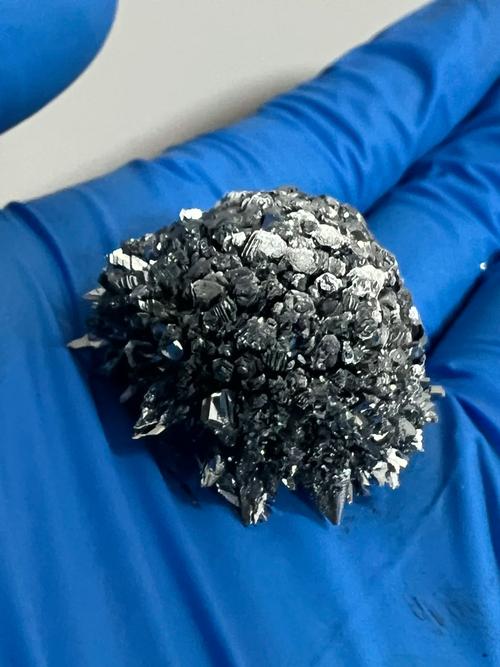
Recent Advances in Bioadsorption and Biodegradation Engineering for Tellurium Recovery
Abstract
Tellurium (Te) is a critical rare metal extensively used in photovoltaic and electronic industries. In recent years, significant breakthroughs have been achieved in employing bioadsorption and biodegradation technologies for tellurium recovery. Key advancements include: (1) genetic engineering of microorganisms to enhance tellurium adsorption capacity, enabling selective and efficient recovery; (2) enzymatic degradation techniques converting tellurium compounds into recoverable pure metal forms; (3) optimization of immobilized microbial systems improving processing efficiency and stability. These biotechnologies not only increase recovery rates and purity but also reduce environmental pollution, making them applicable for industrial wastewater and waste residue treatment.
- Background and Challenges in Tellurium Recovery
Tellurium, a rare metalloid, is widely applied in photovoltaic solar cells, thermoelectric materials, and electronic components. However, its extreme scarcity and uneven distribution in nature render recovery and recycling essential to ensure supply security. Traditional chemical and physical recovery methods suffer from high costs, low resource utilization, and environmental pollution. Consequently, biotechnological approaches for tellurium recovery have garnered substantial attention as a promising research frontier.
- Application of Bioadsorption in Tellurium Recovery
2.1 Fundamental Principles of Microbial Adsorption
- Mechanism and Function: Microbial adsorption relies on complexation reactions between chemical groups on microbial cell surfaces—such as polysaccharides, proteins, and lipids in cell walls—and metal ions, enabling heavy metal ion adsorption.
- Advantages: Bioadsorption offers high efficiency, strong selectivity, low energy consumption, and environmental friendliness, making it especially suitable for recovering low-concentration tellurium.
2.2 Genetically Engineered Microorganisms
- Enhanced Adsorption: Genetic modification can increase the density of anionic groups on microbial cell walls, thereby strengthening metal ion complexation and adsorption capacity.
- Improved Durability and Stability: Engineered microbes maintain high adsorption efficiency under extreme conditions such as variable pH and temperature.
2.3 Practical Applications of Bioadsorption
- Immobilized Microbial Systems: By fixing microbes onto carriers to form biofilms or bio-particles, mechanical stability and reusability are enhanced. This approach is widely utilized in tellurium-containing wastewater treatment.
- Industrial Examples: Bioadsorption has been successfully applied to recover tellurium from metallurgical waste liquors and electronic wastewater, achieving recovery rates exceeding 85% and effectively reducing processing costs.
- Breakthroughs in Biodegradation Technologies for Tellurium Recovery
3.1 Mechanisms and Methods of Biodegradation
- Enzymatic Reactions: Tellurium biodegradation primarily involves intracellular and extracellular enzymatic transformations of tellurium compounds into recoverable metallic forms. Key enzymes include sulfate reductases and sulfide-generating enzymes.
- Microbial Community Construction: Establishing specific microbial consortia accelerates decomposition and transformation of tellurium compounds, enhancing degradation efficiency.
3.2 Technological Progress
- Optimized Enzyme Systems and Genetic Engineering: Synthetic biology tools modify microbial metabolic pathways and enzyme repertoires to boost tellurium compound conversion efficiency.
- Environmental Adaptation: Development of microbes tolerant to diverse wastewater conditions (e.g., high salinity, coexisting heavy metals) broadens the applicability of biodegradation technologies.
3.3 Applied Case Studies
- Solar Panel Waste Treatment: In the photovoltaic industry, biodegradation has been employed to recover tellurium from discarded solar panels. Targeted enzyme and microbial combinations have pushed recovery rates up to 90%.
- Green Treatment of Electronic Waste: Biodegradation processing of tellurium compounds in e-waste significantly reduces consumption of chemical reagents and minimizes wastewater pollution.
- Future Development and Challenges
4.1 Integrated Multi-Technology Optimization
Combining bioadsorption and biodegradation into comprehensive treatment schemes can further enhance recovery efficiency and economic viability. Integration with physicochemical methods offers potential improvements in overall performance.
4.2 Scale-Up and Industrialization Challenges
Scaling biotechnologies for tellurium recovery faces challenges such as complex cultivation processes, cost control, and variability in wastewater composition affecting recovery effectiveness.
4.3 Policy Support and Market Drivers
Governmental policies and robust market demand create favorable conditions for expanding biotechnological applications in tellurium recovery. Encouraging R&D and technology transfer will accelerate progress in this domain.
Conclusion
Bioadsorption and biodegradation technologies demonstrate significant promise and vitality in tellurium recovery. Through genetic engineering and enzymatic system optimization, modern biotechnologies have enhanced recovery efficiency and purity while mitigating environmental impact. With ongoing innovation and refinement, these green technologies are poised to play increasingly vital roles in global sustainable resource utilization. Active policy promotion and industrial collaboration will be pivotal in advancing large-scale implementation.
