

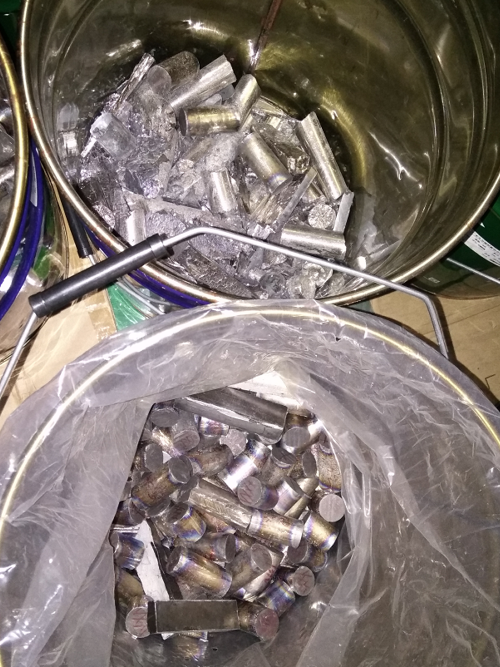
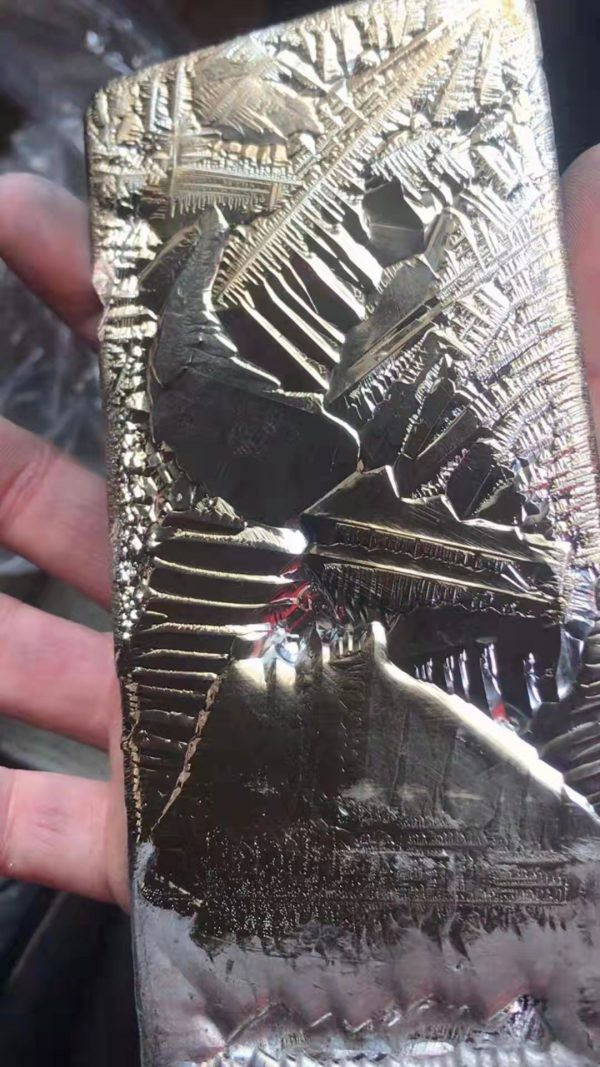


Tellurium Recycling
Tellurium recycling is a specialized industry focused on recovering the rare metalloid tellurium (Te) from various waste streams, particularly spent solar panels, electronic waste, and metallurgical byproducts. As a critical material in photovoltaics, semiconductors, and advanced alloys, tellurium’s scarcity (only 0.001 ppm in Earth’s crust) and growing demand drive the need for sustainable recycling solutions.
Tellurium Recycling Business Overview
Tellurium recycling is a specialized industry focused on recovering the rare metalloid tellurium (Te) from various waste streams, particularly spent solar panels, electronic waste, and metallurgical byproducts. As a critical material in photovoltaics, semiconductors, and advanced alloys, tellurium’s scarcity (only 0.001 ppm in Earth’s crust) and growing demand drive the need for sustainable recycling solutions. Below is a detailed breakdown of the business:
1. Key Sources of Tellurium
- Photovoltaic (PV) Waste:
Over 90% of global tellurium is used in cadmium telluride (CdTe) thin-film solar panels. As these panels reach their 25–30-year lifespan, recycling becomes essential. For example, 1 GW of CdTe panels contains ~150 tons of tellurium, and by 2030, 500,000 tons of end-of-life PV waste are projected globally . - Metallurgical Byproducts:
- Copper Anode Slimes: 90% of primary tellurium production comes from copper refining residues, where tellurium accumulates at 2–10% concentrations .
- Lead-Zinc Smelting Dust: Tellurium-rich dust from lead and zinc smelting processes is another significant source .
- Electronic Waste:
Discarded semiconductors, thermoelectric devices (e.g., Bi₂Te₃-based coolers), and industrial catalysts contain recoverable tellurium .
2. Recycling Processes
A. Industrial-Scale Techniques
-
Hydrometallurgical Methods:
- Acid/Alkali Leaching:
- Acid Leaching: Sulfuric acid (H₂SO₄) or hydrochloric acid (HCl) dissolves tellurium from CdTe panels or anode slimes. For example, CdTe is leached using H₂SO₄-H₂O₂, achieving 90% tellurium extraction .
- Alkali Leaching: Sodium hydroxide (NaOH) is used to dissolve tellurium oxides, followed by precipitation with sulfur dioxide (SO₂) .
- Solvent Extraction:
Organic solvents like tri-n-octylamine (TOA) selectively separate tellurium from leach solutions, improving purity to 99.99% .
- Acid/Alkali Leaching:
-
Pyrometallurgical Methods:
- Vacuum Distillation: High-temperature processing (800–1,000°C) separates tellurium from heavy metals like lead and copper in anode slimes .
- Smelting with Reductants: Carbon or hydrogen reduces tellurium oxides to metallic tellurium, often combined with slagging agents to remove impurities .
-
Emerging Technologies:
- Supercritical Fluid Extraction:
Using supercritical CO₂ (SC-CO₂) with chelating agents like TBP-HNO₃, tellurium dissolution rates increase 20-fold, achieving >98% recovery with minimal wastewater . - Electrochemical Refining:
Electrolysis of tellurium solutions (e.g., TeO₂ in NaOH) produces 99.999% pure tellurium, used in semiconductor applications .
- Supercritical Fluid Extraction:
B. Case Studies
- Silver Group (China):
Developed a 50-ton/year 高纯碲 (99.99%) production line from copper anode slimes, achieving 85% tellurium recovery through hydrometallurgical purification . - Shaoguan Yuntian Metal (China):
Uses a four-stage process (crushing-leaching-precipitation-electrowinning) to recover 78–82% of tellurium from CdTe panels, with cadmium 固化率 >99.5% .
3. Market and Economic Viability
- Global Demand:
Tellurium consumption is dominated by PV (40%), followed by thermoelectrics (30%) and metallurgy (15%) . The market is projected to grow at 6–8% annually, driven by renewable energy policies and 5G/semiconductor expansion . - Price Trends:
- 4N (99.99%) Tellurium: ~¥740,000/ton ($103,000/ton) in 2025 .
- High-Purity (6N) Tellurium: >¥2,000,000/ton ($280,000/ton) for semiconductor-grade applications .
- Cost Structure:
- Processing Costs: $4,500–$12,500/ton using advanced technologies (e.g., SC-CO₂), compared to $12,000/ton for traditional hydrometallurgy .
- Revenue Streams: Sales of purified tellurium, byproduct recovery (e.g., cadmium, silver), and government subsidies for resource efficiency .
4. Environmental and Policy Drivers
- Circular Economy Benefits:
- Resource Conservation: Recycling reduces reliance on primary mining, which causes habitat destruction and heavy metal pollution.
- Emission Reduction: For example, SC-CO₂ technology cuts energy use by 60% and wastewater by 90% compared to conventional methods .
- Regulatory Support:
- China: Offers VAT refunds (50%) and income tax incentives for resource recycling under the Circular Economy Promotion Law .
- EU: Mandates 85% PV panel recycling by 2030 under the New Battery Regulation.
- U.S.: The Inflation Reduction Act provides tax credits for domestic rare metal recycling .
5. Technical Challenges
-
Complex Feedstock:
- Impurities: Tellurium often coexists with selenium, lead, and cadmium, requiring advanced separation techniques .
- Heterogeneous Waste Streams: E-waste and PV panels vary in composition, complicating automated sorting .
-
Energy and Chemical Intensity:
Traditional hydrometallurgical processes consume large amounts of acids (e.g., 8 tons H₂SO₄/ton Te) and energy . -
Scalability:
While lab-scale recovery rates exceed 98%, industrial-scale operations often achieve 70–85% due to process inefficiencies .
6. Industry Players and Partnerships
- Major Producers:
- China: Jiangxi Copper, Baiyin Group, and Chinalco dominate primary and recycled tellurium production .
- International: First Solar (U.S.) recycles its own PV waste, while Umicore (Belgium) focuses on high-purity tellurium for semiconductors .
- R&D Collaborations:
Universities and companies are developing AI-driven sorting systems and bioleaching technologies to enhance efficiency .
7. Future Outlook
- Technology Integration:
- AI and Robotics: Automated sorting of e-waste and real-time process optimization via machine learning .
- Green Chemistry: Bioleaching using acidophilic bacteria to reduce chemical consumption .
- Market Expansion:
- Niche Applications: Tellurium-based topological insulators and phase-change memory materials (e.g., Te-based switches) are emerging high-value markets .
- Regional Growth: China and India will lead in PV recycling, while Europe focuses on semiconductor-grade tellurium .
Conclusion
Tellurium recycling is a critical but technically challenging industry that bridges environmental sustainability and high-tech material demand. By 2030, it could supply 40% of global tellurium needs, particularly as PV waste surges. Success hinges on scaling advanced technologies, leveraging policy support, and fostering cross-industry partnerships to unlock the full potential of this rare metal’s circular economy.
Be the first to review “Tellurium Recycling”Cancel Reply
Reviews
There are no reviews yet.