Palladium (chemical symbol: Pd, atomic number: 46) is a rare, silvery-white metal belonging to the platinum group metals (PGMs), which also includes platinum, rhodium, ruthenium, iridium, and osmium. Renowned for its exceptional catalytic properties, malleability, and resistance to corrosion, palladium plays a critical role in modern industry and technology. Here’s a detailed overview:
- Physical Traits: A soft, ductile metal with a bright silvery luster. It has a relatively low density (12.02 g/cm³, lighter than platinum) and a high melting point (1,554°C), with a boiling point of ~2,963°C. Palladium is highly malleable—one gram can be beaten into a thin sheet over a square meter—and conducts heat and electricity well. A unique feature is its ability to absorb large volumes of hydrogen gas (up to 900 times its own volume at room temperature), which makes it useful in hydrogen storage and purification.
- Chemical Behavior: Chemically stable at room temperature, resisting oxidation and corrosion by air, water, and most acids. However, it dissolves in concentrated nitric acid or hot, concentrated sulfuric acid. At high temperatures, it reacts with oxygen, sulfur, and halogens to form compounds like palladium oxide (PdO) and palladium chloride (PdCl₂).
Palladium was discovered in 1803 by English chemist William Hyde Wollaston, who isolated it from a sample of platinum ore. He named it after the asteroid Pallas, which had been discovered two years earlier (1801) and was itself named after Pallas Athena, the Greek goddess of wisdom. Wollaston initially kept his discovery secret to profit from selling the new metal, but he revealed it publicly in 1804.
- Natural Abundance: Extremely rare in Earth’s crust (~0.015 parts per million), rarer than gold. It occurs naturally in conjunction with other PGMs, primarily in sulfide ores (e.g., with nickel, copper, or platinum).
- Major Sources: Over 80% of global palladium production comes from two countries: Russia (via Norilsk Nickel, a leading miner) and South Africa. Smaller sources include Canada (Sudbury Basin) and the United States. It is typically mined as a byproduct of nickel and copper extraction.
- Extraction: Ores undergo complex processing, including crushing, froth flotation, and smelting to separate base metals (nickel, copper). PGMs like palladium are then extracted using chemical methods (e.g., leaching with acids or solvents) and purified via processes like ion exchange or fractional crystallization to achieve high purity (99.95% or higher).
- Automotive Catalytic Converters: The single largest use (over 80% of global demand) is in catalytic converters for gasoline-powered vehicles. Palladium catalyzes the conversion of harmful exhaust gases—carbon monoxide (CO), unburned hydrocarbons (HC), and nitrogen oxides (NOₓ)—into harmless carbon dioxide (CO₂), water (H₂O), and nitrogen (N₂), critical for meeting global emissions standards (e.g., Euro 6, EPA Tier 3).
- Jewelry: As a more affordable alternative to platinum, palladium is used in white gold alloys (to whiten gold without nickel, reducing skin allergies) and in standalone palladium jewelry (marked with “Pd” and purity, e.g., Pd950).
- Electronics: Its conductivity and corrosion resistance make it ideal for plating electrical contacts, connectors, and capacitors in smartphones, computers, and hybrid vehicles. It is also used in multi-layer ceramic capacitors (MLCCs), essential for miniaturized electronics.
- Chemical Catalysis: In industrial processes, palladium catalyzes reactions like hydrogenation (e.g., converting vegetable oils to margarine), dehydrogenation, and cross-coupling reactions (e.g., Suzuki-Miyaura reactions in pharmaceutical synthesis).
- Hydrogen Technology: Due to its ability to absorb hydrogen, palladium is used in hydrogen fuel cells (as a membrane for purifying hydrogen) and in sensors to detect hydrogen leaks.
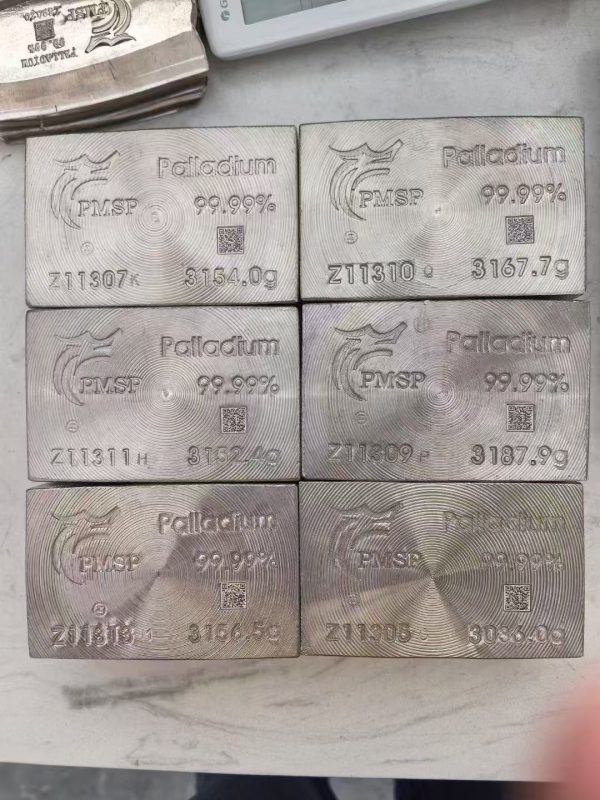
- Investment: Like other precious metals, palladium is traded as bars, coins, or exchange-traded funds (ETFs) as a hedge against inflation or currency fluctuations.
- Price Volatility: Palladium has historically shown extreme price swings due to tight supply-demand balances. For example, in 2020, prices surged above $2,800 per ounce—surpassing gold and platinum—driven by booming demand from the auto industry and supply disruptions (e.g., sanctions on Russian mining).
- Supply Risks: Dependence on Russia and South Africa makes supply vulnerable to geopolitical tensions, labor strikes, or mining restrictions.
- Sustainability: Recycling (e.g., from spent catalytic converters) is increasingly important to meet demand, with recycled palladium accounting for ~30% of global supply. Innovations in catalyst design (e.g., reducing palladium usage) also aim to mitigate supply pressures.
Metallic palladium is generally non-toxic, but soluble compounds (e.g., palladium chloride) can cause skin irritation or allergic reactions in sensitive individuals. Industrial exposure is regulated to prevent inhalation of palladium dust or fumes.
In summary, palladium’s unique catalytic properties and versatility have made it indispensable to the automotive, electronics, and chemical industries. Its role in reducing emissions and enabling clean technologies ensures its continued importance in a world focused on sustainability.



Reviews
There are no reviews yet.