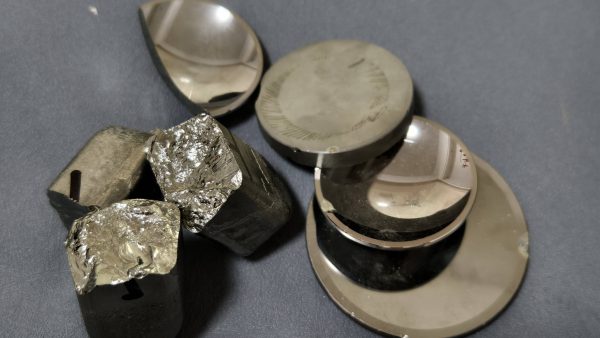
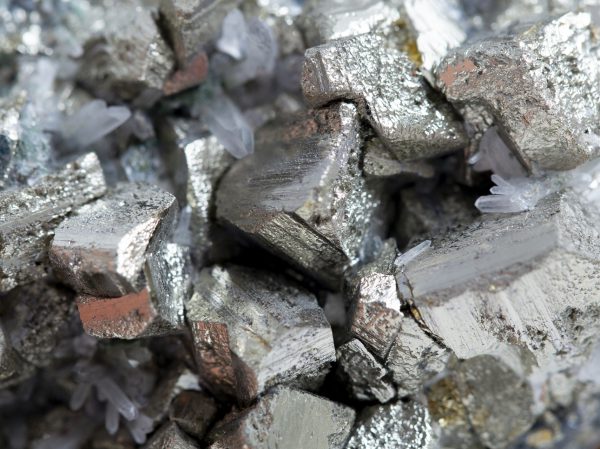
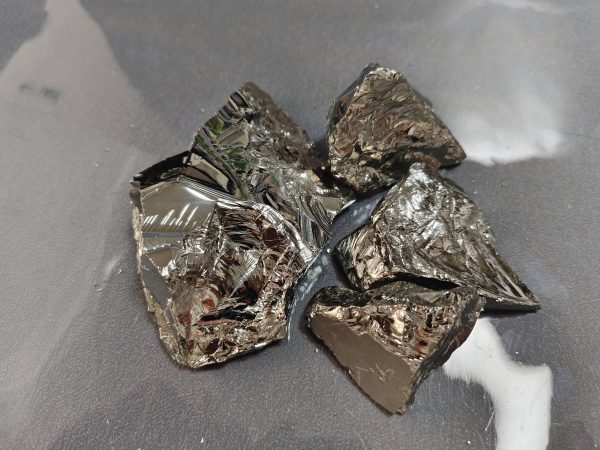
Germanium is a chemical element with the symbol Ge and atomic number 32. A metalloid belonging to Group 14 (carbon group) of the periodic table, it exhibits properties intermediate between metals and nonmetals, most notably its semiconducting behavior, which has made it pivotal in electronics and optoelectronics. Here’s a detailed overview:
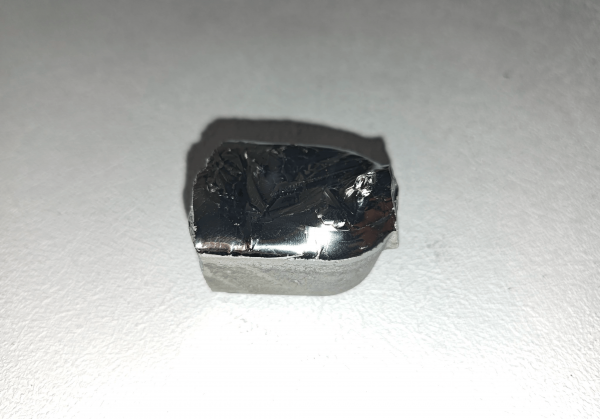
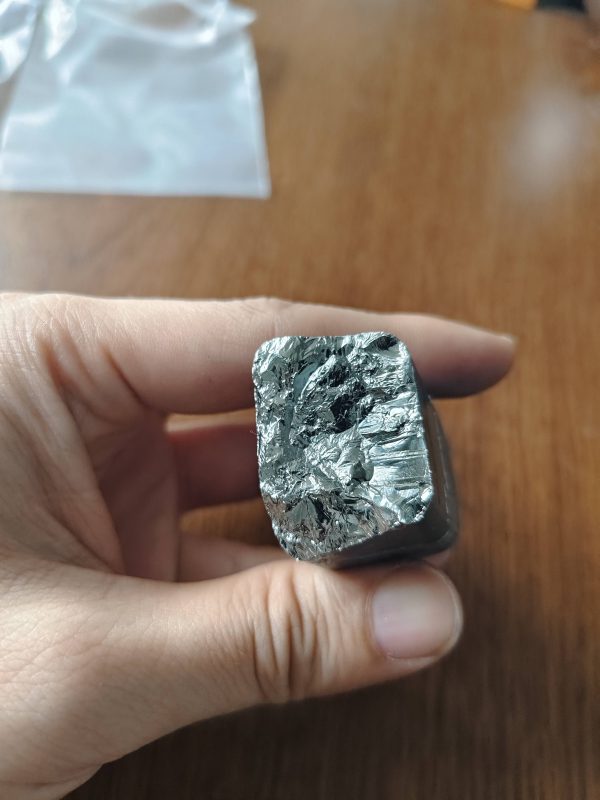
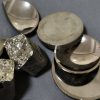
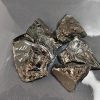
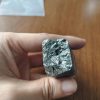
- Physical Traits: A hard, brittle, silvery-gray metalloid with a metallic luster. It has a melting point of ~938°C and a boiling point of ~2830°C, with a density of 5.323 g/cm³. A key characteristic is its semiconducting property—its electrical conductivity increases with temperature (unlike metals), a trait critical for electronic applications.
- Chemical Behavior: Relatively stable at room temperature, resisting oxidation in air and water. At high temperatures, it reacts with oxygen to form germanium dioxide (GeO₂), a white, insoluble solid. It dissolves in concentrated nitric acid or sulfuric acid and reacts with molten alkalis to form germanates.
Predicted in 1871 by Dmitri Mendeleev, who named it “eka-silicon” based on gaps in his periodic table, germanium was first isolated in 1886 by German chemist Clemens Winkler while analyzing a silver ore from Saxony. He named it “germanium” after his home country, Germany, to honor its discovery there.
- Natural Abundance: Rare in Earth’s crust, with an average concentration of ~1.5 parts per million (ppm). It rarely forms its own ores, instead occurring as a trace impurity in zinc ores (e.g., sphalerite), coal, and some silver or copper ores.
- Extraction: Recovered primarily as a byproduct of zinc smelting or coal processing. The ore is treated with acids to dissolve germanium compounds, which are then purified via distillation or zone melting to achieve high-purity germanium (up to 99.9999%).
- Semiconductors: Historically crucial in early transistors (replacing vacuum tubes in the 1950s–60s) due to its semiconducting properties. While largely replaced by silicon in mainstream electronics, it remains used in high-speed diodes, infrared detectors, and specialized semiconductors for high-frequency devices.
- Optoelectronics: High-purity germanium is transparent to infrared light, making it ideal for lenses, windows, and prisms in infrared spectroscopy, thermal imaging cameras, and fiber-optic communication systems.
- Solar Energy: Alloyed with other elements (e.g., gallium arsenide) in high-efficiency solar cells, particularly for space applications, where its ability to absorb a broad spectrum of light enhances performance.
- Alloys: Added in small amounts to metals like aluminum and magnesium to improve hardness and strength, used in aerospace components.
- Other Uses: In gamma-ray detectors, as a catalyst in chemical reactions, and in some medical imaging devices.
- Toxicity: Metallic germanium is relatively non-toxic, but some germanium compounds (e.g., germanium tetrachloride) can be irritants or harmful if ingested in large doses.
- Supply & Alternatives: Its reliance on zinc mining makes supply dependent on zinc production. While silicon dominates most semiconductor applications, germanium’s unique infrared transparency and high-frequency performance ensure its niche role in advanced technologies.
In summary, germanium’s status as a metalloid with semiconducting and optical properties has solidified its importance in electronics, energy, and sensing technologies, despite being overshadowed by silicon in mainstream use.





















Reviews
There are no reviews yet.