

Osmium Market Supply and Price Trend Analysis
Abstract
Osmium, as one of the rarest elements in the Earth’s crust, represents the precious metal with the lowest global production and consumption, with an annual output of approximately 2 tonnes. Its supply exhibits a highly concentrated bipolar pattern, with South Africa and Russia together accounting for approximately 94% of global production. Currently, global primary osmium supply is tightening, while the recycling market is accelerating its development. Regarding pricing, as of February 2026, domestic metallic osmium (99.9% purity) remained stable at 90 RMB/g, with expectations of continued stability in the short term. Osmium’s unique physical and chemical properties—extremely high density, hardness, and its tendency to form highly toxic oxides—confine its applications to niche sectors such as pen tip alloys, electrical contact materials, and specific chemical catalysts. Looking ahead, driven by growing demand for wear-resistant materials in advanced manufacturing, osmium’s market value is expected to steadily increase. However, constrained by extremely low production volumes and limited application scenarios, its market size will maintain niche characteristics.
Main Text
I. Fundamental Properties and Resource Characteristics of Osmium
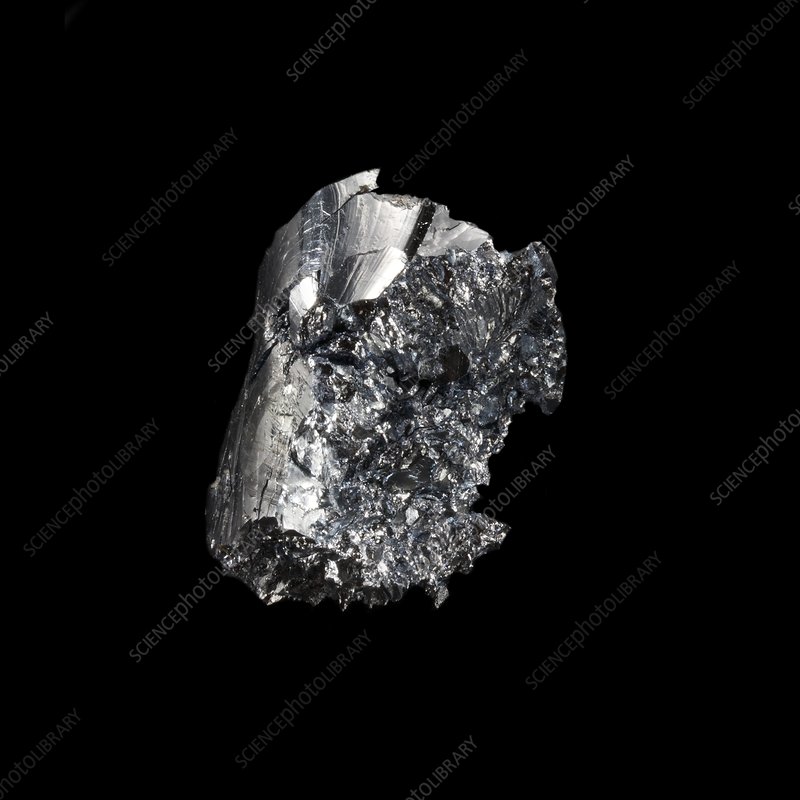
Osmium is one of the rarest members of the platinum group metals (PGMs). First discovered by British chemist Smithson Tennant in 1803, it was named for the pungent odor of its oxide (from the Greek “osme,” meaning smell). Osmium is located in Group VIII of the periodic table, with atomic number 76, atomic weight 192.2, and a hexagonal close-packed crystal structure.
Osmium possesses exceptionally unique physical properties: it is one of the densest metallic elements (22.61 g/cm³), second only to iridium. It is also the hardest among naturally occurring metals, with as-cast hardness reaching HV 8000 MPa, rendering it almost unmachinable by conventional means. Its melting point is as high as 3027°C, with a boiling point around 5020°C, demonstrating excellent high-temperature stability. Chemically, powdered osmium is soluble in strong oxidizing media such as nitric acid and hot concentrated sulfuric acid, and it readily oxidizes to form volatile osmium tetroxide (OsO₄), a compound characterized by strong irritancy and toxicity.
From a resource endowment perspective, osmium is one of the least abundant elements in the Earth’s crust, with an average concentration of only 0.001 g/t. Osmium almost never exists in independently minable deposits; its entire production comes from by-product recovery during the mining and smelting of other PGMs (primarily platinum and palladium). This “associated recovery” characteristic dictates that osmium supply is entirely dependent on the production scale of its host metals (PGMs) and cannot be independently adjusted based on its own market demand, resulting in extremely low supply elasticity.
II. Global Supply Pattern: A Highly Concentrated Bipolar Structure
Global osmium production is extremely limited, totaling approximately 2 tonnes annually, the lowest among all metallic elements. The geographical distribution of production exhibits a highly concentrated bipolar pattern:
- South Africa: The world’s largest osmium producer, accounting for approximately 47% of global output. The Bushveld Igneous Complex in South Africa hosts the world’s richest PGM deposits, where all six platinum group elements (platinum, palladium, rhodium, ruthenium, iridium, osmium) coexist共生 in specific ore-bearing layers. Osmium, as a by-product of PGM smelting, is primarily recovered from anode slimes and refining residues generated during platinum concentrate processing.
- Russia: The world’s second-largest osmium producer, also accounting for approximately 47% of global output. The Norilsk-Talnakh mining district in Russia represents another major PGM-producing region, with significant PGM resources associated with copper-nickel sulfide deposits. Osmium recovery here relies mainly on the precious metal refining systems of integrated metallurgical enterprises such as Norilsk Nickel.
- Other Countries: Other PGM-producing regions, including North America and Zimbabwe, collectively account for only about 6% of global production. Osmium output from these areas is typically highly unstable, contingent upon the economics of host metal production and the technical capabilities of by-product recovery facilities.
Notably, osmium trade flows are characterized by high opacity. Due to its minimal production volume and high value, international trade predominantly occurs through point-to-point long-term contracts, with scarce open market transactions. Major consuming countries (e.g., USA, Germany, Japan, China) secure supply either through direct imports of osmium-bearing PGM concentrates or by recovering osmium from smelting residues.
III. Price Trends and Influencing Factors
According to recent market data, as of February 2026, the domestic price of metallic osmium (99.9% purity) remained stable at 90 RMB/g. This price level reflects a continuation of prior stability, with market information indicating “tightening global primary osmium supply, stable domestic primary ore production, and accelerating development of the recycling market.”
Key factors influencing osmium prices include:
- Volatility in Upstream PGM Production: As a by-product, osmium supply is decisively influenced by market conditions for host metals like platinum and palladium. When PGM prices decline leading to mine production cuts, osmium supply passively contracts, and vice versa. This “passive supply” characteristic creates a strong correlation between osmium prices and the overall PGM market sentiment.
- Advances in Recycling Technology: Secondary resource recovery of osmium (e.g., from spent catalysts, alloy scrap) is accelerating, providing a supplementary channel to alleviate primary supply tightness. However, osmium recovery involves complex hydrometallurgical processes and stringent environmental protection requirements (due to the high toxicity of its oxide), presenting significant technical barriers.
- Stability of Downstream Demand Structure: Downstream applications for osmium are extremely niche and stable. Primary uses include osmium-iridium alloys for manufacturing wear-resistant components such as instrument pivots, pen tips, and electrical contacts, as well as osmium tetroxide serving as an oxidizing agent in organic synthesis and a staining agent in biological tissue preparation. Demand growth in these areas is gradual and lacks explosiveness, thus exerting limited impact on prices.
- Geopolitics and Trade Policy: Recent global rare metal markets have experienced price fluctuations due to export controls and supply chain security concerns. However, owing to its minimal production volume and opaque trade flows, osmium is less susceptible to macro-policy shocks compared to other strategic metals (e.g., gallium, germanium, rare earths).
In summary, the osmium market is expected to remain stable in the short term. Long-term price trends will depend on: (i) PGM mining policies and capacity changes in major producing countries like South Africa and Russia; (ii) growth in demand for osmium-based alloy wear-resistant materials in high-end manufacturing; (iii) expansion of osmium tetroxide applications in pharmaceuticals and chemicals; and (iv) the stringency of environmental regulations governing osmium-bearing waste treatment and recycling.
IV. Future Outlook and Conclusion
As the precious metal with the lowest global production, osmium’s market supply and pricing exhibit distinct niche characteristics. On the supply side, the bipolar dominance of South Africa and Russia is unlikely to change in the short term, and the current global production level of approximately 2 tonnes per year is expected to persist for the foreseeable future. Accelerated development of the recycling market will marginally alleviate supply tightness, but due to technical barriers and dispersed scrap sources, it is unlikely to fundamentally alter the supply pattern.
On the demand side, while osmium’s applications are limited, they possess irreplaceability. In fields requiring ultra-high hardness and wear resistance—such as precision instrument contacts, high-end pen tips, and electrochemical electrodes—osmium-iridium alloys remain the material of choice. The unique role of osmium tetroxide in organic synthesis and biological staining also ensures stable, albeit niche, demand. As global manufacturing advances toward higher-end applications, demand for such specialty materials is expected to grow modestly.
Regarding price trends, the current level of 90 RMB/g resides in a relatively stable range. Considering intensifying global resource security competition, the rising “security premium” for rare metals, and the overall PGM market outlook, osmium prices possess a certain support base. However, constrained by limited application volume and extremely low trading liquidity, the likelihood of drastic price fluctuations for osmium remains low.
In conclusion, the osmium market represents a quintessential high-end niche market, characterized by highly concentrated supply, extreme scarcity of production, and specialized application fields. For investors and industry stakeholders, monitoring PGM production capacity changes in major producing countries (South Africa, Russia), tracking progress in recycling technologies, and understanding demand trends for wear-resistant materials in high-end manufacturing are key dimensions for comprehending osmium market dynamics.
