

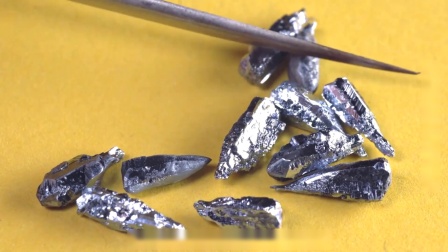
Major Industrial Applications of Osmium
Abstract
Osmium is a metal characterized by an exceptionally high density and chemical stability. Its industrial applications primarily encompass alloy manufacturing, chemical catalysis, and electronic devices. Alloys of osmium with platinum or iridium are commonly used in electrical contact materials and highly wear-resistant components, enhancing the lifespan and performance of equipment. Osmium catalysts optimize energy use and efficiency in organic synthesis reactions. Due to osmium’s excellent corrosion resistance and electrical conductivity, it finds extensive use in certain electronic components. Despite challenges posed by its rarity and supply constraints, osmium is expected to continue playing a critical role in high-precision industrial fields.
1.Unique Physical and Chemical Properties of Osmium
Osmium (Os), a transition metal, is renowned for its high density and chemical stability. These distinctive properties make osmium indispensable in certain industrial applications.
1.1 Physical Properties
1.1.1 Extremely High Density
Osmium is among the densest naturally occurring elements, with a density of approximately 22.59 g/cm³. This density renders it suitable for applications demanding exceptional wear resistance.
1.1.2 Hardness and Melting Point
Osmium possesses notable hardness and a high melting point (~3033°C), enabling it to maintain structural integrity under extreme conditions.
1.2 Chemical Properties
1.2.1 Strong Corrosion Resistance
Osmium exhibits outstanding corrosion resistance, maintaining stability in harsh chemical environments, which is crucial for long-term industrial equipment performance.
2.Main Industrial Applications of Osmium
Osmium’s special attributes enable it to play significant roles across multiple industrial sectors.
2.1 Alloy Manufacturing
2.1.1 Wear-Resistant Alloys
Osmium is typically alloyed with platinum or iridium to produce alloys used in manufacturing highly wear-resistant electrical contact materials and industrial components. These alloys are noted for their high-temperature endurance and chemical stability, delivering exceptional durability under demanding conditions.
2.1.2 Arc Lamp Filaments
Alloys of osmium with tungsten or molybdenum serve as filaments in arc lamps, ensuring lamp efficiency and longevity in high-temperature environments and constituting core materials in high-performance lighting equipment.
2.2 Catalyst Applications
2.2.1 Organic Chemistry Catalysis
Osmium catalysts optimize reaction conditions in organic chemistry, particularly in oxidation and hydrogenation reactions, enhancing energy efficiency and product purity. Moreover, osmium is frequently employed in highly selective organic synthesis processes.
2.2.2 Environmentally Friendly Chemistry
By reducing by-product formation and improving reaction efficiency, osmium catalysts contribute to the advancement of green chemistry and promote more environmentally sustainable synthetic routes.
2.3 Electronic Products and Devices
2.3.1 Electronic Component Materials
Owing to its excellent electrical conductivity and stability, osmium is widely used in high-precision electronic components as contact materials, improving device performance and durability.
2.3.2 Aerospace and Military Equipment
Osmium is employed in the manufacture of precision connectors and contacts for aerospace and military devices, where its reliability and stability are critical.
2.4 Other Applications
2.4.1 Geological Exploration and Tracing
Osmium’s radioactive properties have potential applications in geological exploration as radiotracers to determine mineral formation processes and ages.
2.4.2 Chemical Analytical Instruments
Osmium compounds enhance the accuracy and sensitivity of chemical analysis instruments, making osmium indispensable in laboratory settings.
3.Challenges in Osmium Applications
Despite its valuable industrial uses, osmium faces several challenges.
3.1 Resource Scarcity
3.1.1 Extraction and Purification Difficulties
Osmium is extremely rare, and its extraction and processing are complex and costly, limiting expanded industrial utilization.
3.1.2 Market Supply Constraints
Limited osmium resources restrict market availability, impacting broad adoption across industries.
3.2 Economic and Environmental Considerations
3.2.1 High Cost Challenges
The high costs associated with osmium development and utilization strain its economic feasibility, especially for applications not requiring extreme material properties.
3.2.2 Sustainable Development Requirements
Driven by environmental regulations, improved recycling and reuse methods for osmium must be developed to mitigate environmental impacts during extraction.
4.Future Directions and Outlook
Despite challenges, osmium’s future development prospects remain broad.
4.1 Technological Innovation and Development
4.1.1 Development of Novel Alloys
New osmium-based alloys are being developed to further enhance material performance, particularly in high-temperature and corrosion-resistant applications.
4.1.2 Enhanced Catalytic Efficiency
Through innovative synthesis and process optimization, osmium catalyst efficiency in organic synthesis can be improved, fostering greener production methods.
4.2 Resource Management and Sustainability
4.2.1 Recycling and Reuse Technologies
Advancing osmium recycling technologies will alleviate scarcity concerns and enhance economic and environmental benefits.
4.2.2 Cross-Disciplinary Integrated Applications
Collaborative applications across multiple fields will broaden osmium’s role within industrial and technological sectors, providing sustainable solutions.
Conclusion
With its exceptional density, hardness, and corrosion resistance, osmium is a key material in various industrial domains. Although its rarity limits widespread application, osmium’s use in alloys, catalysts, and electronic components drives the advancement of high-performance industrial equipment. As technologies evolve and resource management strategies improve, osmium will continue to play an essential role in cutting-edge industrial applications.
