

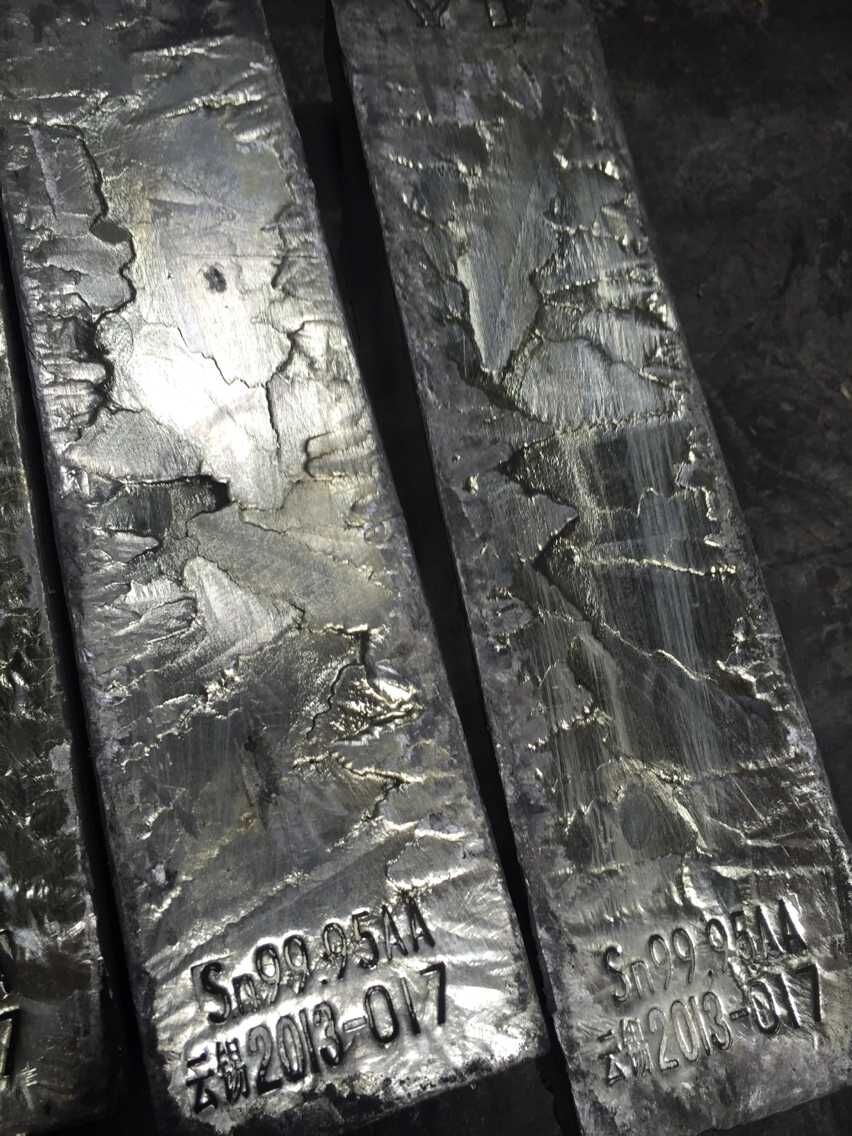
Main Uses and Application Fields of Tin
Abstract
Tin is an important metal with favorable physical and chemical properties, widely applied across multiple industrial sectors. Its primary uses include the manufacture of alloy materials such as bronze and solder, extensively employed in electronic packaging and welding. Tin is also used as a protective coating to prevent corrosion and serves as a catalyst and PVC stabilizer in chemical production. Additionally, tin is a key material in food packaging, such as tin cans, and in cosmetic containers due to its corrosion resistance and safety. With technological advancements, the application scope of tin continues to expand, providing diverse solutions for modern industry.
1.Physical and Chemical Properties of Tin and Its Industrial Importance
Tin (chemical symbol Sn) is a soft, silvery-white metal. Due to its unique physical and chemical characteristics—including good ductility, corrosion resistance, and excellent alloying ability with other metals—tin has become indispensable in many industrial and everyday applications.
1.1 Physical and Chemical Properties
Tin has a relatively low melting point (232°C) and excellent ductility. It exhibits good resistance to acidic and alkaline substances. Naturally, tin forms an oxide protective layer that further enhances its corrosion resistance, making it suitable for long-term preservation of materials.
1.2 Industrial Importance
Tin’s ability to form various alloys safely and non-toxically makes it a core component in diverse industrial applications, including electronic devices, food packaging, and chemical catalysis.
2.Major Application Fields of Tin
Due to its multifunctional properties, tin is extensively used in the following industrial and consumer product areas:
2.1 Alloy Materials
·Bronze
Tin combines with copper to form bronze alloys, which possess superior mechanical properties and corrosion resistance. Bronze is widely used in casting sculptures, pipe fittings, and mechanical parts.
·Solder
Tin forms strong metallic bonds, making it an essential solder material in electronic component welding and integrated circuit packaging, ensuring conductivity and structural stability.
2.2 Tin Coating Protection
·Tin Plating of Steel
Applying tin coatings to steel products provides corrosion protection and is a crucial process in manufacturing food containers such as cans. Tin’s corrosion resistance and non-toxicity ensure food safety.
·Metal Surface Treatment
Electroplating with tin is widely used for rust prevention on cosmetic containers, protective covers, and small parts, enhancing durability and aesthetics.
2.3 Chemical Applications
·Catalysts
Tin compounds serve as catalysts in chemical reactions, improving efficiency and product quality, commonly applied in plastics, fibers, and rubber processing.
·PVC Stabilizers
Organotin compounds like dioctyltin act as efficient PVC stabilizers, extending polymer lifespan and enhancing thermal stability during processing.
2.4 Electronics Industry Applications
·Semiconductors and Integrated Circuits
Tin is employed as a conductive substrate material in semiconductors, vital for chip and transistor manufacturing due to its excellent conductivity and stability.
·Electronic Packaging Materials
Tin-lead alloys are used for electronic device packaging and contacts, ensuring connection stability and durability.
2.5 Consumer Goods and Packaging
·Food Can Packaging
Tin cans are widely used in food processing and long-term storage sectors due to their corrosion resistance and environmental durability.
·Cosmetic Packaging
Tin combined with other metals provides stable, high-quality packaging materials, offering reliable storage solutions for the cosmetics industry.
3.Challenges and Innovations in Tin Industrial Applications
3.1 Resource Scarcity and Environmental Challenges
Despite broad applications, tin’s natural resources are relatively scarce. Mining and smelting activities pose environmental impacts that require sustainable development and technological improvements.
·Resource Management
Enhancing resource utilization through more efficient mining and recycling technologies is essential.
·Green Smelting Technologies
Developing environmentally friendly smelting processes and waste reduction techniques is critical for environmental protection.
3.2 Technological Advancement and Application Expansion
With the development of new technologies and growing industrial demands, tin’s market requirements continue to evolve.
·New Material Development
Cutting-edge technologies such as nanotechnology enable the creation of tin-containing high-performance materials, strengthening tin’s role in high-tech applications.
·High-Efficiency Conductive Materials
Improving tin’s performance in conductive materials facilitates ultra-fast transmission in new energy batteries and electronic devices.
Conclusion
Tin’s unique physical and chemical properties make it an irreplaceable material across many industrial fields. From alloy manufacturing and electronic packaging to chemical catalysis, tin contributes significantly to modern industrial progress. However, resource management and environmental concerns remain challenges. Through ongoing scientific research and technological innovation, tin’s applications will become broader and more mature while supporting the implementation of green manufacturing processes to promote sustainable development across industries. Looking ahead, innovations in new materials and environmentally friendly applications of tin warrant close attention and will accelerate the transformation and advancement of modern industrial systems.
