

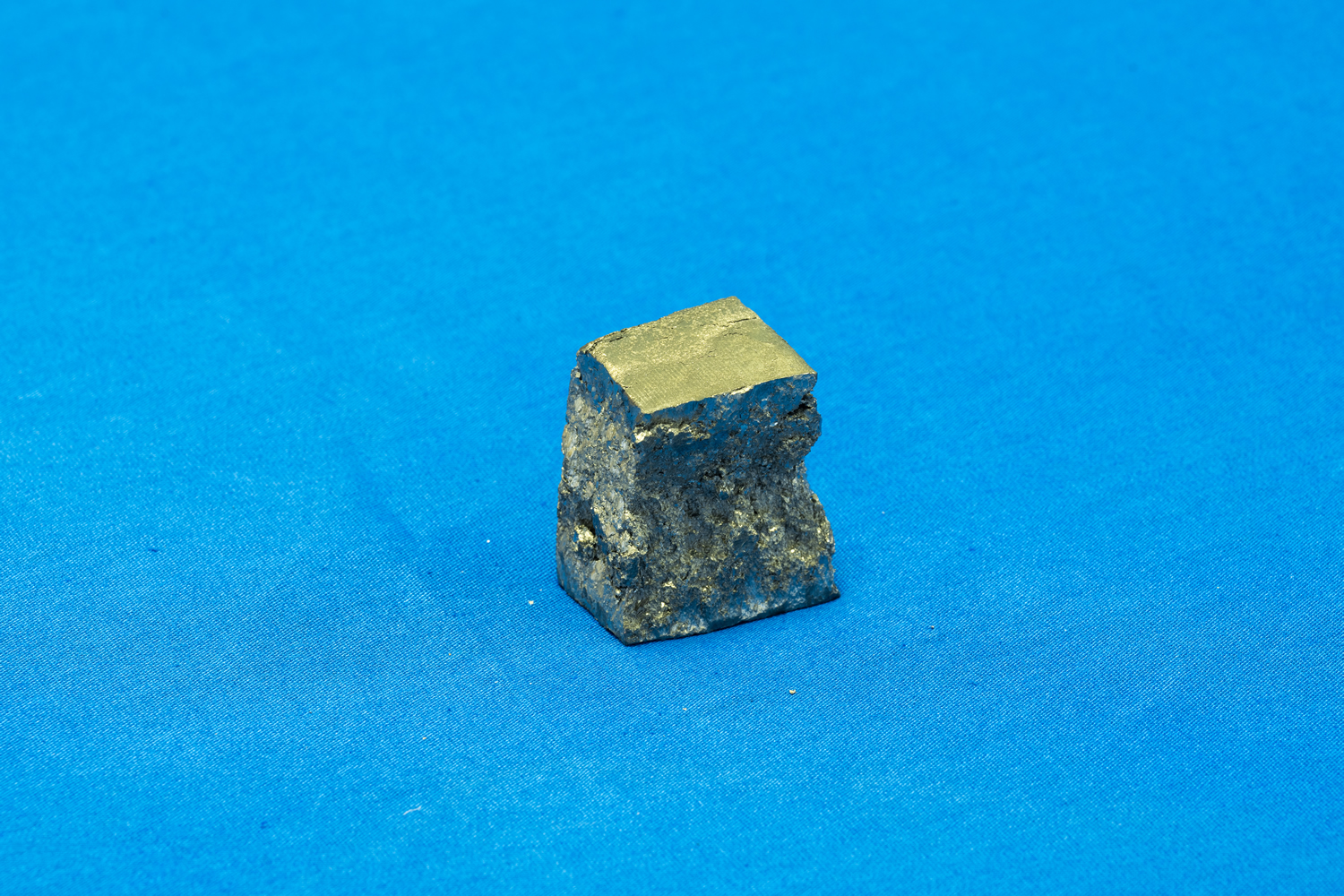
Main Physical and Chemical Properties of Terbium
Abstract
Terbium (Tb) is a silvery-gray rare earth metal that plays a significant role in modern technology due to its unique physical and chemical properties. Terbium exhibits moderate hardness and good ductility, maintaining stability at high temperatures. Chemically, terbium forms various compounds, predominantly exhibiting a +3 oxidation state. Terbium and its compounds are widely applied in luminescent materials, lasers, and magnetocaloric alloys due to their excellent performance in luminescence and magnetism. Looking ahead, terbium shows vast potential in clean energy and advanced materials science.
- Physical Properties of Terbium
1.1 Basic Physical Characteristics
1.1.1 Appearance
Terbium displays a silvery-gray metallic luster typical of rare earth metals, with certain ductility.
1.1.2 Density and Melting/Boiling Points
Terbium has a density of 8.23 g/cm³, a melting point of 1356°C, and a boiling point of 3230°C. These properties confer excellent stability and application potential in high-temperature environments.
1.1.3 Hardness and Ductility
Terbium possesses moderate hardness and good ductility, facilitating ease of processing and shaping, which is important for manufacturing applications.
1.2 Electrical and Magnetic Properties
1.2.1 Electrical Conductivity
Terbium is a good electrical conductor, with conductivity slightly lower than some other metals but comparatively high among rare earth metals.
1.2.2 Magnetic Properties
Terbium exhibits antiferromagnetism at low temperatures and paramagnetism at higher temperatures. Its distinctive magnetic behavior underpins its widespread use in magnetocaloric technologies.
- Chemical Properties of Terbium
2.1 Chemical Behavior
2.1.1 Oxidation States
Terbium primarily exists in the +3 oxidation state across many of its compounds. It forms stable compounds with certain elements, such as terbium oxide (Tb₂O₃).
2.1.2 Chemical Reactivity
Terbium readily oxidizes in air to form terbium oxide and reacts with water at elevated temperatures to produce terbium hydroxide. It also reacts with acids to form various terbium salts.
2.2 Common Compounds and Applications
2.2.1 Terbium Oxide (Tb₂O₃)
An important terbium compound widely used as a green phosphor in fluorescent lamps, providing efficient light output.
2.2.2 Terfenol-D (Terbium-Iron-Cobalt Alloy)
This alloy exhibits significant magnetostrictive effects and finds important applications in acoustic and ultrasonic technologies.
2.2.3 Terbium Compounds in Displays
Terbium sulfide-based materials serve as green light emitters in high-efficiency flat-panel displays.
- Terbium Resources and Extraction
3.1 Resource Reserves and Distribution
Terbium belongs to the rare earth element family and is found as an associated element in rare earth minerals such as bastnäsite. Major producing countries include China, the United States, and several Commonwealth of Independent States (CIS) countries.
3.2 Extraction Processes
Separating and purifying terbium from rare earth ores requires complex processes including dissolution, precipitation, solvent extraction, and ion exchange. The complexity and high cost of these processes limit large-scale application of terbium.
- Applications of Terbium
4.1 Luminescence and Display Technologies
4.1.1 Phosphors
Terbium compounds are used to produce green phosphors widely employed in color televisions, LEDs, and displays, enhancing color reproduction and luminous efficiency.
4.1.2 Laser Technology
Terbium-based materials are used in lasers for emission and measurement at specific wavelengths, applicable in medical and research equipment.
4.2 Magnetic Applications
4.2.1 Magnetocaloric Technology
Terbium-based alloys perform excellently in magnetocaloric refrigeration, enabling efficient cooling through magnetization and demagnetization cycles, offering an environmentally friendly alternative to conventional compression refrigeration.
4.2.2 Data Storage
Terbium’s outstanding magnetic properties make it suitable for high-stability, high-density data storage media, driving innovations in modern information technology.
4.3 Other Industrial Applications
4.3.1 Alloy Strengtheners
Terbium additions enhance corrosion resistance and mechanical properties of high-strength alloys, showing notable performance in aerospace and marine engineering.
4.3.2 Oxidation Catalysts
Terbium compounds act as effective oxidation catalysts in certain chemical reactions, improving synthesis efficiency.
- Future Prospects and Research Trends
5.1 Development of New Materials
Growing demand for high-performance and energy-efficient materials drives research into terbium-based nanomaterials and alloys aimed at breakthroughs in energy, environment, and technology sectors.
5.2 Sustainability and Environmental Protection
Reducing environmental impact and improving resource utilization during mining and processing are critical. Development of recycling technologies and alternative solutions is vital for sustainable development.
5.3 Technological Innovation and Expanded Applications
Terbium holds great potential in emerging fields such as quantum computing, advanced medical imaging, and green chemistry. Through innovation and interdisciplinary collaboration, terbium is expected to realize broader applications.
Conclusion
As a key rare earth element, terbium’s unique physical and chemical properties enable it to play a crucial role across multiple fields, especially in luminescent materials and magnetic applications. With technological advances and evolving application demands, terbium’s utilization potential continues to expand. Although limited resource availability poses challenges, scientific extraction methods and innovative application strategies will allow terbium to unleash its considerable potential and value in the advancement of modern science and technology.
