

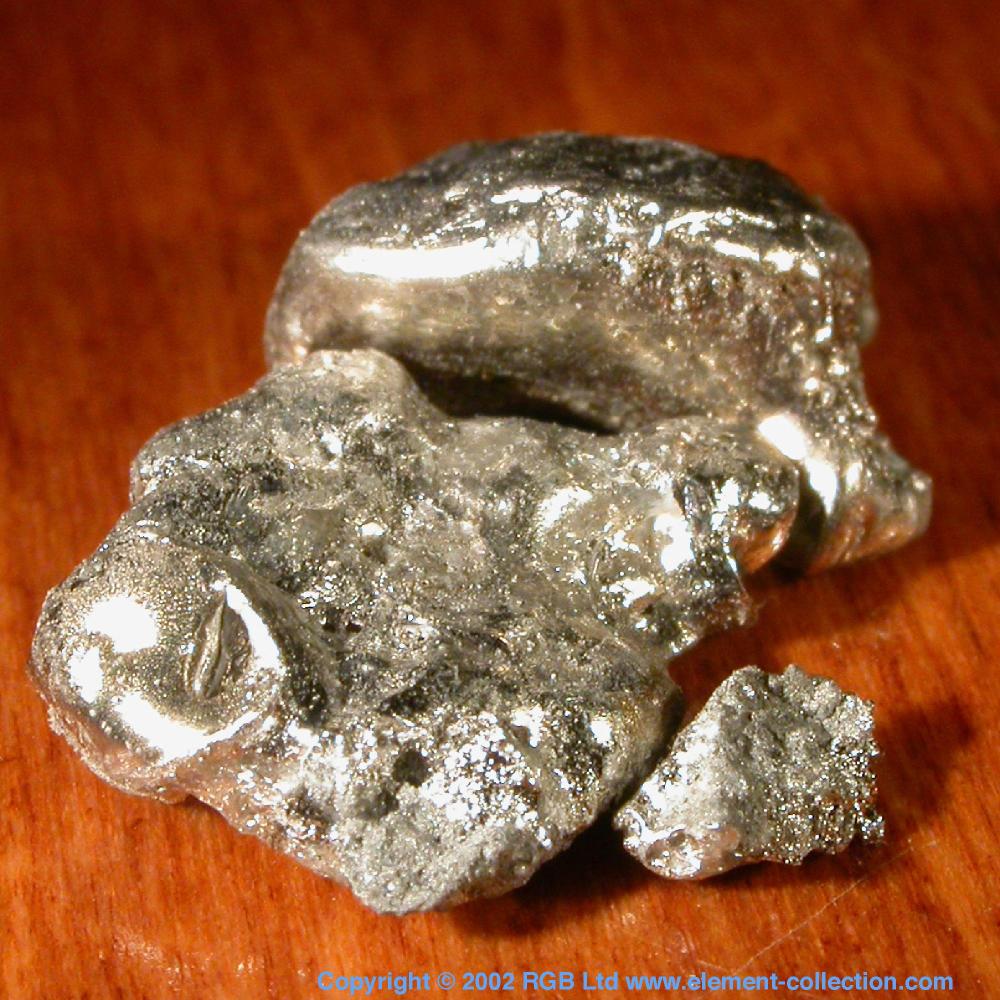
Main Physical and Chemical Properties of Iridium
Abstract
Iridium (Ir) is a transition metal with an extremely high density and a silvery-white luster, renowned for its exceptionally high melting point and corrosion resistance. Owing to its chemical stability and excellent corrosion resistance under acidic conditions, iridium is widely used as an industrial catalyst. Its common oxidation states include +3 and +4, which are suitable for complex chemical reactions. Additionally, iridium’s high-temperature resistance endows it with significant application potential in electronics, aerospace, and medical fields. These physical and chemical properties establish iridium as an important element in modern technology.
1.Physical Properties of Iridium
1.1 Basic Characteristics
1.1.1 Appearance and Structure
Iridium is a silvery-white metal exhibiting a strong metallic luster. It crystallizes in a face-centered cubic (FCC) structure, which imparts exceptional mechanical strength, enabling it to withstand intense physical pressure.
1.1.2 Density and Melting/Boiling Points
Iridium has an extremely high density of 22.56 g/cm³, making it one of the densest elements on Earth. Its melting point is as high as 2446°C, with a boiling point of 4130°C. These extraordinarily high melting and boiling points grant iridium superior stability in extreme application environments.
1.1.3 Hardness and Ductility
Iridium exhibits considerable hardness while maintaining some ductility, allowing it to be processed into thin sheets and fine wires. This makes it suitable for manufacturing equipment that requires high temperature resistance and wear resistance.
1.2 Electrical Conductivity and Thermal Stability
1.2.1 Electrical Conductivity
Iridium is a good electrical conductor. Although not the metal with the highest conductivity, it maintains stable electrical performance under high-temperature conditions, which is critical for designing high-temperature electronic devices.
1.2.2 Thermal Stability
Iridium maintains its structure and performance in high-temperature environments. Its thermal stability is widely utilized in aerospace, especially in thermocouples and other high-temperature measuring instruments.
2.Chemical Properties of Iridium
2.1 Chemical Behavior
2.1.1 Oxidation States
Iridium commonly exhibits +3 and +4 oxidation states, displaying complex chemical reactivity. Iridium compounds such as iridium dioxide (IrO₂) demonstrate excellent catalytic activity in chemical reactions.
2.1.2 Oxidation Resistance and Corrosion Resistance
Iridium shows extremely strong resistance to oxidation and corrosion, particularly under acidic and high-temperature conditions. It remains stable and is not easily oxidized or corroded, making it an ideal material for chemical processing equipment.
2.2 Compounds and Applications
2.2.1 Catalysts
Iridium compounds are widely used to develop highly efficient catalysts. Particularly in automotive exhaust purification and chemical synthesis, iridium catalysts significantly reduce harmful gas emissions and improve reaction efficiency.
2.2.2 Electronic Compounds
Due to iridium’s high-temperature stability, its compounds have great potential in high-performance electronic devices, such as materials used for high-temperature electrical contacts.
3.Applications of Iridium
3.1 Industrial Catalysts
3.1.1 Automotive Industry
Iridium catalysts serve as catalytic converters in automobile exhaust systems, helping to reduce harmful emissions and supporting the development of environmentally friendly automotive technologies.
3.1.2 Chemical Synthesis
In complex chemical reactions, iridium catalysts enhance reaction selectivity and speed, playing an important role in the synthesis of fine chemicals.
3.2 Electronics and Electrical Equipment
3.2.1 High-Temperature Electronic Devices
Iridium is employed in manufacturing components that withstand high temperatures in electronic products. Its stability ensures reliable operation under extreme conditions.
3.2.2 Aerospace Applications
Iridium alloys are used in aircraft engines and spacecraft components, providing material stability and wear resistance, effectively extending service life.
3.3 Medical and Scientific Instruments
3.3.1 Medical Diagnostics
Iridium is utilized in advanced medical diagnostic instruments, where its compounds enhance instrument sensitivity, enabling precise pathological detection and diagnosis.
3.3.2 Research Equipment
In spectroscopic instruments, iridium serves as a high-reflectivity mirror material, improving system optical efficiency and measurement accuracy.
4.Iridium Resources and Extraction
4.1 Resource Distribution and Mining
Iridium typically occurs together with platinum ores, with major production regions including South Africa, Russia, and Canada. The extraction and collection of iridium require complex smelting technologies and involve high costs.
4.2 Refining Technologies
Iridium refining involves multiple chemical and physical separation steps, including dissolution, precipitation, and electrochemical separation, representing a process with high technological barriers.
2.Future Development and Innovation
5.1 New Material Development
With growing demand for efficient high-temperature materials, research on iridium alloys and nanomaterials will promote its broader application in industry.
5.2 Resource Utilization and Environmental Protection
Improving iridium recycling rates and optimizing extraction technologies can reduce production costs and environmental impacts, supporting ecological material management and sustainable industrial development.
5.3 Expanding Application Prospects
Through technological innovation, iridium is expected to play a broader role in emerging fields such as green energy and advanced manufacturing, driving scientific and technological progress.
Conclusion
Thanks to its unique physical and chemical properties, iridium demonstrates significant application value in modern industry and technology. Its high density, high-temperature resistance, and corrosion resistance make it an indispensable material across various sectors. With ongoing advancements in related technologies and applications, iridium will continue to play a key role in high-tech industries, opening wide prospects for future industrial applications.
