

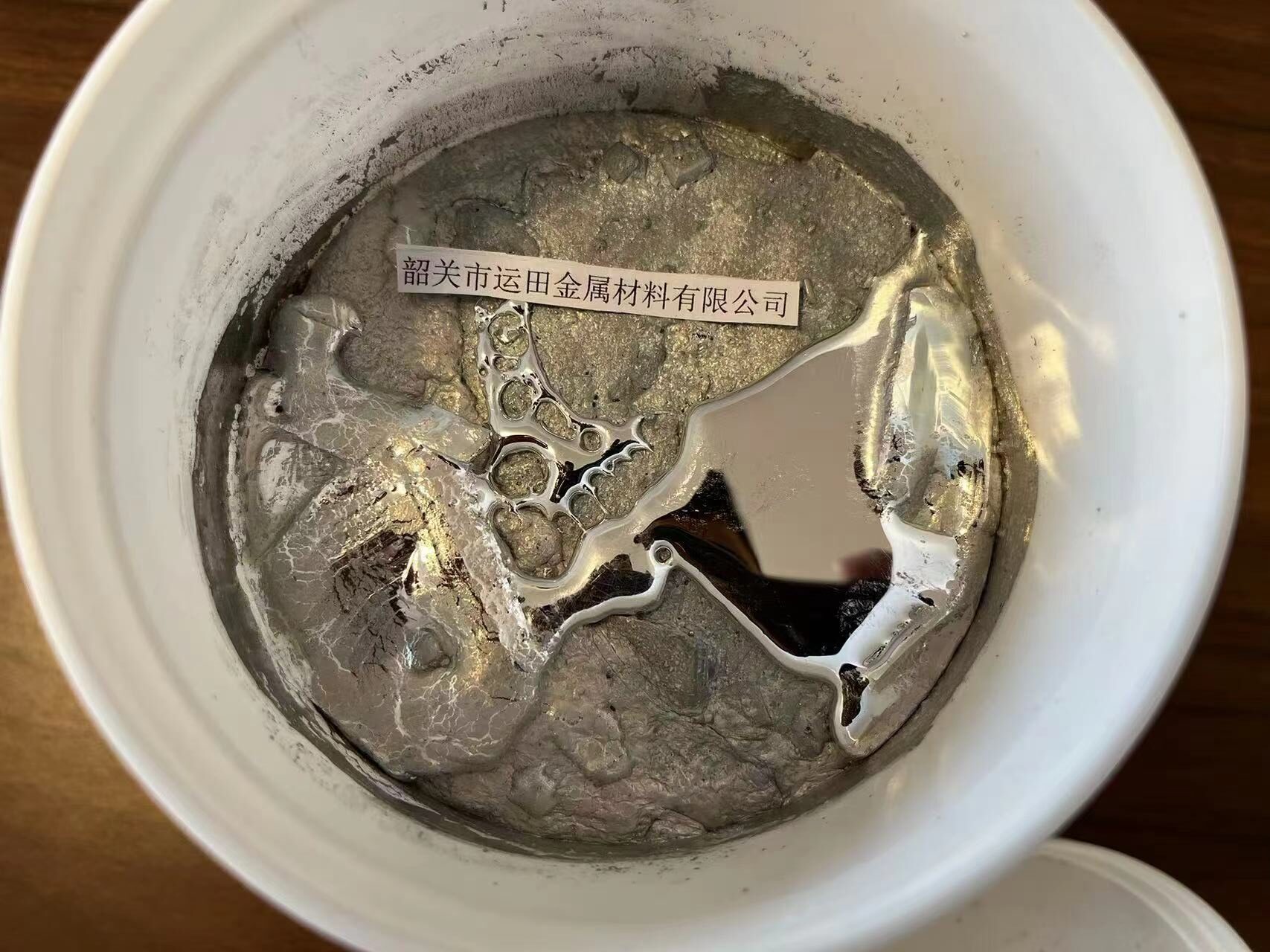
Main Physical and Chemical Properties of Gallium
Abstract
Gallium is a silvery-white metal renowned for its unique physical and chemical properties. It exists as a solid at room temperature, yet its low melting point (approximately 29.76°C) allows it to melt in the hand, while its high boiling point (2400°C) ensures stability in high-temperature applications. Gallium’s ability to wet glass and ceramics, combined with its stability in air and its reactive behavior with acids and bases, makes it widely used in the electronics industry and alloy manufacturing. Particularly notable are gallium’s semiconductor characteristics, making it a key element in the production of optoelectronic materials and high-performance electronic devices.
1.Physical Properties of Gallium
Gallium (chemical symbol Ga) is a group III element in the periodic table, drawing considerable attention due to its distinctive physical properties, which hold significant importance in science and industry.
1.1 Metallic Appearance and Structure
1.1.1 Silvery-White Metallic Luster
Gallium is characterized by a bright silvery-white metallic sheen, visually similar to aluminum. Its smooth surface and good machinability make it suitable for precision mechanical and electronic manufacturing.
1.1.2 Crystalline Structure
At room temperature, gallium maintains a stable solid-state with a unique orthorhombic crystal structure, which facilitates its application in microelectronic device fabrication.
1.2 Melting and Boiling Points
1.2.1 Low Melting Point: Challenges and Applications
Gallium’s melting point is only 29.76°C, lower than many common metals. This low melting point allows it to liquefy under mild thermal conditions, making it suitable as a temperature indicator and as part of liquid metal alloys.
1.2.2 High Boiling Point Stability
With a boiling point reaching up to 2400°C, gallium remains exceptionally stable in electronics and high-temperature industrial environments, tolerating harsh conditions without degradation.
1.3 Wetting Characteristics
1.3.1 Ability to Wet Glass and Ceramics
Gallium can wet glass and ceramic surfaces, a property crucial in the manufacture of high-performance bonding materials and conductive films, thereby playing an important role in electronic and optical applications.
2.Chemical Properties of Gallium
Gallium’s chemical properties are equally distinctive, contributing to its popularity across diverse industrial uses.
2.1 Stability and Reactivity
2.1.1 Stability in Air
Gallium is relatively stable in dry air and resists oxidation, enabling long-term stable operation in electronic devices. Under higher humidity, a protective oxide layer may form on its surface, yet overall it maintains metallic stability.
2.1.2 Reactivity with Acids and Bases
Gallium reacts actively with acids to form gallium salts such as gallium sulfate and forms gallium hydroxide in alkaline solutions. These reaction characteristics make it an important material for chemical synthesis and catalytic applications.
2.2 Semiconductor Properties
2.2.1 Composition of Semiconductor Alloys
Gallium arsenide (GaAs), formed by combining gallium with arsenic, is a vital semiconductor compound widely used in high-performance electronic devices such as microwave integrated circuits and optoelectronic components. Its excellent electronic and optical properties suit high-speed and high-frequency circuits.
2.2.2 Optoelectronic Material Applications
Gallium nitride (GaN), formed by gallium with indium and nitrogen, features a wide bandgap that supports efficient light-emitting diodes (LEDs) and laser diodes (LDs), serving as core materials in modern lighting and display technologies.
3.Applications and Future Prospects of Gallium
Although gallium is a relatively uncommon element, its unique physical and chemical properties have unlocked broad application prospects across multiple fields.
3.1 Applications in the Electronics Industry
3.1.1 Manufacturing of High-Performance Electronic Devices
Due to its superior electrical conductivity and thermal stability, gallium is indispensable in fabricating high-frequency, high-speed electronic components, especially in mobile communications and radar equipment.
3.1.2 Future Technological Development
Driven by increasing demands for more efficient energy use and advanced electronic devices, gallium and its compounds will continue to play a pivotal role in fostering new high-performance material innovations.
3.2 Environmental Protection and Sustainable Development
3.2.1 Enhancement of Energy Efficiency
Gallium-based compounds contribute significantly to improving photovoltaic conversion and light emission efficiency, aiding in the achievement of lower energy consumption and sustainable development goals.
3.2.2 Recycling and Sustainable Utilization
Advancements in recycling techniques and process optimization promote the sustainable use of gallium, addressing raw material supply challenges faced in industrial applications.
Conclusion
Gallium, with its near-ideal combination of physical and chemical properties, plays an important role in modern science and industrial applications. Its combination of low melting point and high boiling point, coupled with unique chemical reactivity, renders it highly valuable in electronics, optoelectronics, and alloy manufacturing. Looking forward, as technology progresses and novel applications emerge, gallium is expected to contribute its distinct advantages across an expanding array of cutting-edge fields.
