

Main Applications of Dysprosium
Abstract
Dysprosium (Dy) is a rare earth element of significant industrial value, widely utilized across various fields due to its unique magnetic and optical properties. Its primary applications include enhancing high-temperature performance in neodymium-iron-boron (NdFeB) permanent magnets, serving as a dopant to improve laser efficiency in laser technologies, acting as a neutron absorber material in nuclear reactor control rods, and improving performance stability in data storage devices. Additionally, emerging applications encompass magnetic refrigeration technology and high-performance lighting. With ongoing technological advancements and industry development, the demand for dysprosium is expected to maintain an upward trajectory.
- Physical and Chemical Properties of Dysprosium
Dysprosium (Dy) is one of the rare earth metals, possessing a series of unique physical and chemical characteristics that position it as an essential material in multiple high-tech sectors.
1.1 Physical Properties
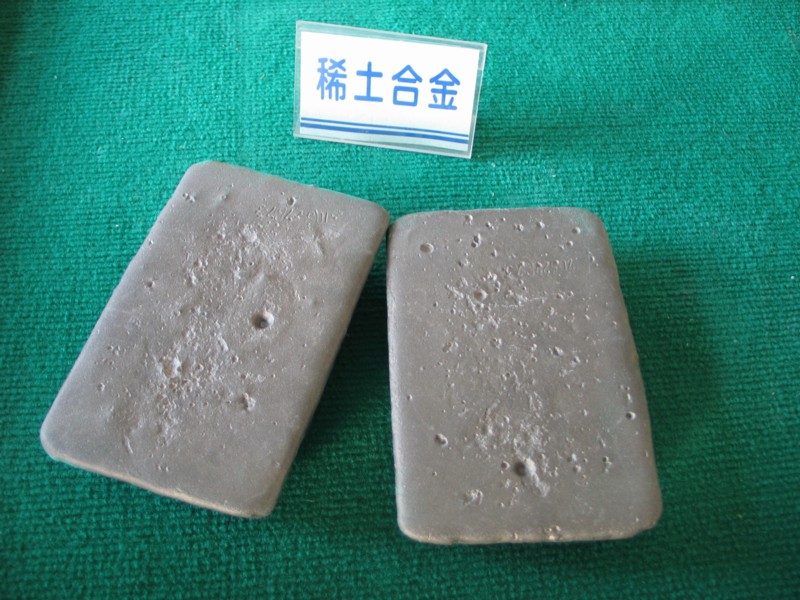
- Structure and Density: Dysprosium is a silvery-white metal with a hexagonal close-packed crystal structure and a density of 8.54 g/cm³.
- Thermal and Magnetic Properties: It has a melting point of 1407°C and a boiling point of 2562°C. Dysprosium exhibits strong magnetism as a soft magnetic material and turns paramagnetic at liquid helium temperatures.
1.2 Chemical Properties
Dysprosium shows relatively high chemical stability and is resistant to oxidation in air. It primarily exists in the +3 oxidation state as oxides and salts. Dysprosium reacts with water and acids to release hydrogen gas and form dysprosium salts.
- Major Applications of Dysprosium
2.1 Applications in Permanent Magnet Materials
- NdFeB Magnet Enhancer: Dysprosium’s critical use is as an additive in NdFeB permanent magnets to improve demagnetization resistance and high-temperature stability. In high-temperature applications such as wind turbines and electric vehicle motors, doping with 2–5% dysprosium substantially increases the Curie temperature and resistance to demagnetization.
- Market Demand: The development of clean energy and electric vehicles has driven increased demand for high-performance magnets, propelling the growth of dysprosium applications. Global demand is expected to continue rising, especially in emerging economies.
2.2 Optical and Laser Technologies
- Laser Material Dopant: Dysprosium is used as a dopant in laser materials to enhance emission efficiency and stability. Dysprosium-doped lasers are widely employed in industrial cutting, medical instruments (such as laser surgery), and measurement devices.
- Optical Performance Enhancement: In certain phosphors and optical fiber applications, dysprosium’s luminescent properties improve light output brightness and range, making it suitable for high-precision optical instruments.
2.3 Applications in the Nuclear Industry
- Nuclear Reactor Control Materials: Due to dysprosium’s high neutron absorption cross-section, it is extensively used in control rods to regulate neutron flux, maintaining chain reaction stability and safety.
- Enhancement of Nuclear Safety: Dysprosium exhibits excellent thermal stability and radiation resistance in high-radiation environments, making it indispensable in nuclear energy, especially reactor design. Its importance is expected to grow with the expansion of nuclear power applications.
2.4 Data Storage and Electronic Devices
- Hard Disk Drives: In digital storage, dysprosium is incorporated into alloy components of hard disk drives to enhance magnetic stability and read/write speed. Its high coercivity helps increase storage density.
- Optical Storage Media: Dysprosium’s thermal resistance and optical activity make it well-suited for use in optical storage media such as DVDs and Blu-ray discs, improving data fidelity and lifespan.
- Potential Application Areas and Future Development
3.1 Magnetic Refrigeration Technology
- Fundamental Research and Application Prospects: Magnetic refrigeration technology, based on dysprosium’s magnetocaloric effect, offers environmentally friendly and efficient cooling. Studies indicate dysprosium alloys could replace traditional refrigerants like chlorofluorocarbons, reducing greenhouse gas emissions.
- Market Potential: Due to its efficiency and eco-friendliness, magnetic refrigeration is increasingly regarded as a key sustainable technology, with broad prospects for dysprosium application.
3.2 High-Performance Lighting
New dysprosium-based lighting materials can enhance color rendering and efficiency of solid-state light sources such as LEDs, playing a greater role in future intelligent lighting technologies.
3.3 Green Technologies and Eco-Friendly Materials
The stability and corrosion resistance of dysprosium alloys and compounds provide opportunities to develop durable green materials. These materials have potential applications in high-temperature superconductors, electric vehicle batteries, and smart grids.
- Industry Development Challenges
4.1 Resource Supply and Price Fluctuations
Dysprosium is primarily sourced from China, and its mining and supply are susceptible to policy and market changes, causing price volatility in the international market. Global cooperation is needed to develop more stable supply chains and explore new dysprosium resources.
4.2 Environmental Impact and Technological Innovation
Environmental impacts from dysprosium mining and processing require mitigation through greener production technologies. Technological innovations are also necessary to improve dysprosium recycling rates, reducing dependence on primary resources.
Conclusion
As a vital rare earth element, dysprosium plays an indispensable role in high-tech fields due to its unique magnetic and optical properties. With technological progress and increased demand for sustainable energy, dysprosium’s applications in permanent magnets, laser technology, nuclear energy, and data storage are expected to expand significantly. To address future challenges, global efforts must focus on enhancing dysprosium resource efficiency and actively developing new application areas.
