

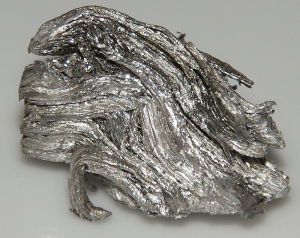
Key Technical Indicators in the Smelting Process of Praseodymium-Neodymium Metals
Abstract
The smelting process of praseodymium-neodymium (Pr-Nd) metals holds a significant position in the rare earth industry, primarily applied in the production of high-performance permanent magnet materials. The key technical indicators include raw material purity, reduction reaction temperature, reaction time, control of the smelting atmosphere, and stability of Pr-Nd content in the final product. These factors directly influence the yield and purity of Pr-Nd metals. By improving raw material quality and optimizing the reduction and refining processes, product performance can be maximized to meet the demands of advanced manufacturing industries, thereby promoting sustainable development in the rare earth sector.
1.Background and Importance of Praseodymium-Neodymium Metal Smelting
Praseodymium-neodymium metals are critical rare earth materials widely used in manufacturing permanent magnets (such as NdFeB magnets), hydrogen storage materials, and other high-tech fields, with continuously growing demand. Producing high-purity Pr-Nd metals is a prerequisite for ensuring their application performance. This process involves a series of complex chemical and physical reactions and must meet stringent technical requirements.
1.1 Characteristics of Praseodymium-Neodymium Metals
As alloys of rare earth elements, Pr-Nd metals possess excellent magnetic properties and machinability. They are especially suitable for manufacturing high-performance magnetic materials, supporting rapid development in wind power generation, automotive motors, and related sectors.
1.2 Core Role of the Smelting Process
The smelting process determines not only the impurity content and purity of Pr-Nd metals but also affects the physical and chemical properties of the final product. Therefore, establishing reasonable process parameters and optimizing key technical indicators are crucial for improving the quality of Pr-Nd metals.
2.Smelting Process Flow of Praseodymium-Neodymium Metals
Pr-Nd metal smelting typically employs electrolytic and metallothermic reduction methods, with metallothermic reduction being the most common. The process includes raw material preparation, reduction reaction, refining, and forming steps. Each stage requires strict technical control to achieve the desired outcome.
2.1 Raw Material Preparation
Purity of Rare Earth Raw Materials
Pr-Nd oxides are the primary raw materials for smelting Pr-Nd metals, and their purity directly determines the final metal quality. Therefore, prior purification to remove impurities is necessary, typically ensuring rare earth oxide purity above 99.5%.
Selection and Quality of Reducing Agents
Common reducing agents include metallic calcium or magnesium, which must meet industrial standards for content and activity. Impurity levels (such as iron and silicon) in reducing agents must be strictly controlled to avoid interference during smelting.
2.2 Reduction Reaction
Reaction Temperature and Heating Process
Reduction reactions usually occur at very high temperatures, typically controlled between 900°C and 1100°C. Temperatures that are too high or too low adversely affect reduction efficiency and product purity.
Appropriate Reaction Time
The reaction time during smelting must be optimized according to specific process parameters and raw material conditions. Insufficient time leads to incomplete reduction, while excessive duration increases impurity content and energy consumption.
Atmosphere Control during Smelting
To prevent oxidation, smelting must be conducted under vacuum or inert gas atmospheres (such as argon), thereby reducing oxygen content and improving metal yield.
2.3 Product Refining
Impurity Removal Techniques
Adding fluxes (e.g., calcium chloride) and employing high-temperature distillation further removes residual impurities produced during reduction, enhancing the purity of Pr-Nd metals.
Melt Homogenization
After smelting, thorough stirring of the molten metal ensures uniformity, and controlled cooling rates help achieve optimal metal microstructures.
2.4 Forming and Processing
Casting and Ingot Formation
The refined Pr-Nd metal melt is poured into molds and cooled to form ingots, facilitating subsequent cutting, machining, and use.
Quality Testing and Analysis
After casting, the metal’s microstructure, impurity content, and compositional uniformity must be rigorously tested to ensure compliance with industrial application requirements.
3.Key Technical Indicators in Praseodymium-Neodymium Metal Smelting
In industrial production, the following key technical indicators are critical to smelting quality.
3.1 Raw Material Purity
Rare Earth Oxide Purity
The purity of Pr-Nd oxides directly impacts the quality of the reduced metal. Technically, the oxide purity is generally maintained between 99.5% and 99.9%.
Reducing Agent Purity
Reducing agents (such as metallic calcium and magnesium) should have purity above 98%, with low impurity levels. Excess impurities may enter the final product during smelting, affecting performance.
3.2 Reduction Efficiency
Reduction Rate
The efficiency of converting rare earth oxides to metals via electrolysis or metallothermic reduction should reach ≥95% to reduce production costs.
Energy Consumption Control
Energy consumption per unit output should be minimized by optimizing process parameters, while avoiding equipment damage or metal evaporation loss caused by excessive temperature.
3.3 Oxygen and Impurity Content
Oxygen Content
Residual oxygen content in Pr-Nd metals must be below 0.03% to ensure electrical and magnetic performance, with especially strict control required in magnetic materials.
Impurity Content
Impurities such as iron and silicon introduced by reducing agents must be kept at ppm levels. For example, iron content should be ≤0.01%, as higher levels may adversely affect magnetic properties.
3.4 Compositional Stability
Pr-Nd Ratio
The chemical ratio of Pr to Nd in the metal is critical for applications. For magnetic materials, Nd content typically ranges from 75% to 80%, and Pr from 20% to 25%, adjusted according to specific requirements.
Compositional Uniformity
The chemical composition must be uniformly distributed throughout the melt to avoid localized enrichment that could affect subsequent processing.
4.Technological Development and Outlook for Praseodymium-Neodymium Metal Smelting
With the advancement of advanced manufacturing and new energy industries, Pr-Nd metal smelting technology must further improve yield and quality to meet industry demands.
4.1 Improvement of Purification Processes
Optimization of Separation and Purification
Develop more efficient Pr-Nd oxide separation and purification technologies to enhance raw material purity and provide high-quality feedstock for smelting.
Research on Green and Environmentally Friendly Processes
Introduce eco-friendly extractants and optimize processes to replace traditional methods with greener technologies to reduce pollution.
4.2 Enhancement of Smelting Automation
Process Monitoring
Apply modern industrial control technologies to achieve real-time monitoring of smelting parameters, improving operational accuracy and reaction efficiency.
Intelligent Production Lines
Build intelligent smelting production lines to minimize manual intervention, further enhancing product quality and production efficiency.
4.3 Strengthening Product Development and Deep Processing
Expansion of Application Fields
Gradually extend the application of Pr-Nd metals from traditional magnetic materials to new energy and smart device sectors.
Integration with Nanotechnology
Combine with nanotechnology to develop more efficient Pr-Nd metal materials that meet future technological demands.
Conclusion
The smelting process of praseodymium-neodymium metals is a key link in the rare earth materials industry, directly affecting the performance and application of rare earth products. By optimizing raw material purity, improving reduction and refining technologies, and enhancing production automation, the quality and output of Pr-Nd metals can be significantly increased, meeting the stringent requirements of modern industry and high-tech fields. In the future, this sector will rely on technological innovation and environmentally friendly processes to continuously supply high-value materials for the global industrial system.
