

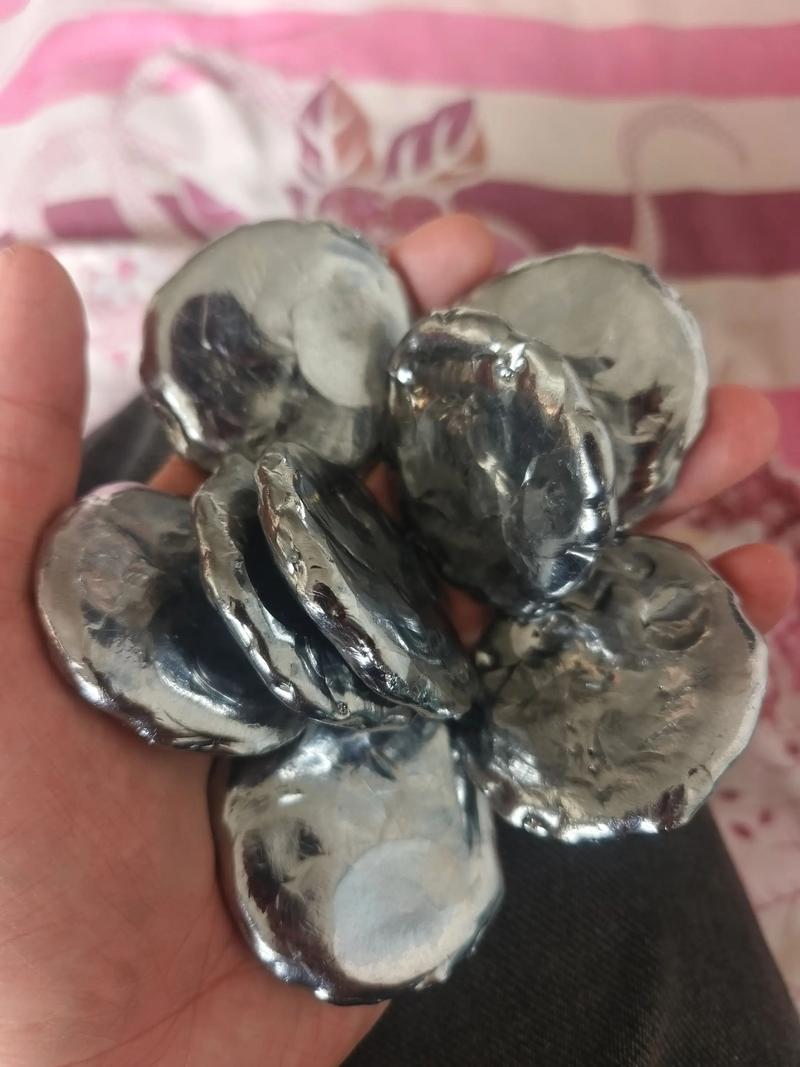
Industrial Preparation Methods of Rhenium Metal
Abstract
Rhenium (Re), a high-melting-point rare metal, is primarily recovered from byproducts of copper-molybdenum smelting, flue dust, and spent catalysts. Industrial production relies on hydrometallurgical processes, including:
- Chemical precipitation (selective sulfide separation for initial enrichment),
- Solvent extraction (e.g., N235/TBP systems for efficient ReO₄⁻ separation),
- Ion exchange (suitable for deep purification of low-concentration Re solutions).
Additional pyrometallurgical roasting activation is often employed for pre-treatment. High-purity rhenium (≥99.99%) is obtained via hydrogen reduction or electrolytic refining.
1. Rhenium Resources and Pre-Treatment
(1) Resource Types
- Copper-molybdenum smelting byproducts: Rhenium accumulates as Re₂O₇ in flue dust or waste acid (0.001%–0.1% Re content).
- Flue dust: Contains 0.05%–0.3% Re, often co-existing with molybdenum. Requires roasting (400–600°C) to convert to soluble Re₂O₇.
- Spent catalysts: Platinum-rhenium catalysts contain 1%–5% Re, requiring acid/alkali leaching for extraction.
(2) Pre-Treatment Processes
- Roasting activation: Converts refractory Re compounds (e.g., ReS₂ → Re₂O₇), increasing leaching efficiency to >95%.
- Acid/alkali leaching:
- Sulfuric acid (10%–20%) or NaOH (3–5 mol/L) selectively dissolves Re.
- pH control minimizes co-dissolution of impurities.
2. Main Extraction Technologies
(1) Chemical Precipitation
- Sulfide Precipitation
- Na₂S₂O₃ or Na₂S is added to form ReS₂ precipitate (Ksp = 2.4×10⁻¹⁰), achieving >99% Re recovery.
- Limitations: Co-precipitation of As/Pb (As removal rate: ~47%), resulting in low-grade Re concentrate (0.8%–1.4%).
- Stepwise Precipitation Optimization
- Pre-removal of Cu (99.7% CuS precipitation) before Re recovery, improving Re concentrate grade to 0.836%.
(2) Solvent Extraction
- Amine-Based Extraction (N235)
- At pH 2–3, N235 selectively binds ReO₄⁻, achieving >99.4% recovery via three-stage countercurrent extraction.
- Advantages: Direct processing of highly acidic waste (pH = -0.5); <20% Mo co-extraction.
- Phosphorus-Based Extraction (TBP)
- High-acidity conditions (8 mol/L HCl) extract Re, with >99.9% purity after stripping.
(3) Ion Exchange
- Resin Adsorption
- Strong-base anion resins (e.g., Dowex 1-X8) adsorb ReO₄⁻; elution with NaCl yields NaReO₄ (Re recovery >98%).
- Best for: Low-concentration Re solutions (<100 ppm).
3. High-Purity Refining
(1) Hydrogen Reduction
- Ammonium perrhenate (NH₄ReO₄) is reduced at 800°C under H₂, yielding ≥99.99% pure Re powder.
(2) Electrolytic Refining
- Perrhenic acid solution is electrolyzed to deposit high-purity Re (oxygen content ≤50 ppm).
4. Industrial Challenges & Optimization
(1) Impurity Control
- Key issue: Separation from As/Mo.
- Solution: Selective chelating agents (e.g., thiourea derivatives) reduce co-extraction.
(2) Green Process Development
- Ionic liquid extraction (e.g., [N₈₈₈₁][ReO₄]) replaces toxic organic solvents.
Conclusion
Rhenium production requires tailored “leaching-enrichment-purification” processes based on feedstock characteristics. Future trends focus on:
- High-selectivity separation (e.g., molecular recognition extraction),
- Low-carbon metallurgy,
to meet aerospace superalloy demands for ultra-high-purity Re (≥99.995%).
