

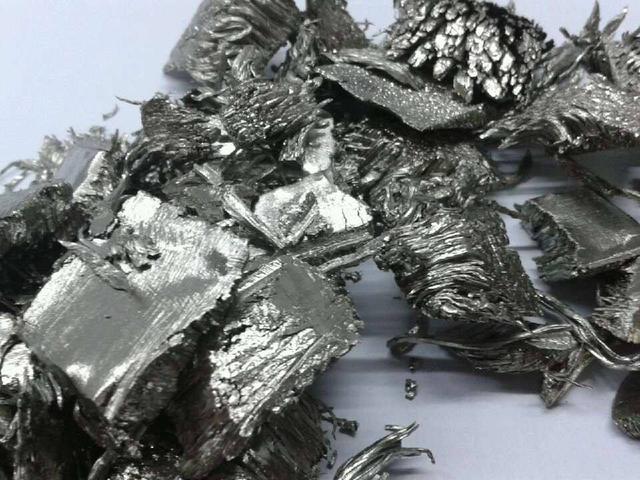
Identification and Coating Process Quality Control of High-Purity Metallic Dysprosium: Standards, Techniques, and Applications
Abstract
As a critical rare earth functional material, the purity of metallic dysprosium directly determines the performance of cutting-edge products such as NdFeB permanent magnets and magnetostrictive alloys. The scientific identification of dysprosium purity is primarily based on national and industry standards, determining the main component and trace impurities through chemical and spectroscopic methods. For its core application—magnetron sputtering coating—ensuring quality requires building a comprehensive control system covering target preparation, vacuum coating processes, and subsequent heat treatment. The key lies in achieving uniform, efficient, and controlled diffusion of dysprosium, thereby enhancing material performance while significantly reducing the consumption of this expensive heavy rare earth element.
1. Purity Identification of Metallic Dysprosium: Standards, Metrics, and Detection Methods
1.1 Purity Grades and Product Standards
The purity of metallic dysprosium is not a single concept but is strictly defined by a series of national and industry standards based on product form and end-use, mainly falling into two categories:
- Dysprosium Ingots/Blocks: Governed by the Chinese National Standard 《GB/T 15071-2008 Metallic Dysprosium》. This standard applies to metallic dysprosium produced by methods such as calciothermic reduction. Grades are classified by the mass fraction of dysprosium relative to the total rare earth content (Dy/TREM), ranging from 99.0% to 99.99%. For example, grade 104040 represents a Dy/TREM not less than 99.99%. Such products are primarily used for alloy preparation or as raw material for further processing.
- High-Purity Metallic Dysprosium and Targets: For higher-end applications like magneto-optical recording materials, high-performance alloys, and coating targets, more stringent industry standards are required. The now-obsolete industry standard 《XB/T 301-2013 High-purity Metallic Dysprosium》 once governed such products. Crucially, as the core consumable in coating processes, the quality of dysprosium metal targets directly determines coating performance. The industry standard 《XB/T 512-2020 Dysprosium and Terbium Metal Targets》, implemented in 2021, specifically regulates the chemical composition, microstructure (e.g., grain size, density), and physical specifications of targets.
For clarity, the key differences between various grades of dysprosium products are summarized below:
| Product Category | Applicable Standard | Typical Purity Requirement (Dy/TREM) | Key Application Areas |
|---|---|---|---|
| Dysprosium Ingot | GB/T 15071-2008 | 99.0% – 99.99% | Preparation of NdFeB alloys, magnetostrictive alloys, etc. |
| High-Purity Metallic Dysprosium | XB/T 301-2013 (Obsolete) | ≥99.99% (Example) | Dysprosium lamps, giant magnetostrictive alloys, magneto-optical recording materials |
| Dysprosium Metal Target | XB/T 512-2020 | ≥99.9% (TREM), Dy/TREM ≥99.99% | Magnetron sputtering coating for NdFeB magnets |
1.2 Identification Methods and Quality Control
Identifying the purity of metallic dysprosium essentially involves the precise determination of its main component content and various impurity element levels.
- Chemical Analysis: This traditional and fundamental analytical method is used to determine the total rare earth content (TREM) and major non-rare earth impurities. The national standard GB/T 15071-2008 details the chemical testing methods for various indicators, serving as the statutory basis for factory inspection.
- Spectroscopic Analysis: For high-purity metallic dysprosium and targets, controlling trace impurities at ppm (parts per million) or even ppb (parts per billion) levels is crucial. The industry typically employs high-sensitivity modern instruments such as Glow Discharge Mass Spectrometry (GD-MS) and Inductively Coupled Plasma Mass Spectrometry (ICP-MS). These methods can comprehensively scan and accurately quantify dozens of metallic and non-metallic impurity elements, forming the core technology for determining purity grades like “4N5” (99.995%) and higher.
- Physical and Microstructural Testing: For targets, physical properties are as critical as purity. These include:
- Density: Typically required to be >99.5% to reduce porosity and particle spitting during sputtering.
- Grain Size: The average grain size needs fine control (e.g., <200μm) to ensure coating thickness uniformity.
- Surface Roughness: Lower surface roughness (e.g., <2μm) facilitates stable and uniform plasma glow discharge.
2. Quality Control in the Coating Process
Transforming high-purity dysprosium into a functional coating, especially in the “grain boundary diffusion” process for high-performance NdFeB permanent magnets, is a systems engineering task. Ensuring coating quality requires meticulous control across three stages: target source, coating process, and diffusion treatment.
2.1 Target Fabrication: The Foundation of Coating Quality
The dysprosium target for magnetron sputtering is the source of the coating. Its quality control extends far beyond purity to its microstructure:
- Clean Melting and Plastic Working: Employing improved vacuum melting and casting technologies ensures high metal purity with low oxygen content. Subsequent plastic working (e.g., forging, rolling) further densifies the material and refines grains, enhancing the target’s mechanical and electrical properties.
- Precision Machining and Bonding: The target blank is precision-machined to the required shape (round, rectangular, etc.) and dimensions. It is then firmly bonded to a backing plate (typically copper) via methods like high-temperature brazing. This ensures excellent thermal and electrical conductivity during sputtering, preventing target cracking due to localized overheating.
2.2 Coating Process: Achieving Uniform and Controlled Deposition
Magnetron sputtering is a physical process where argon ions bombard a dysprosium target in a vacuum chamber, causing dysprosium atoms to be ejected and deposited onto the NdFeB substrate surface. Key control points include:
- Vacuum Level and Atmosphere Control: An extremely high base vacuum (typically better than 5.0×10⁻⁴ Pa) is a prerequisite for avoiding contamination. Introducing high-purity argon as the working gas and precisely controlling its pressure are fundamental to maintaining stable glow discharge and deposition rates.
- Process Parameter Optimization: Parameters such as sputtering power, substrate bias voltage, substrate temperature, and target-to-substrate distance collectively determine the coating’s thickness, uniformity, density, and adhesion to the substrate. Optimizing this parameter combination through extensive experimentation is key to obtaining the ideal coating.
- Process Innovation: The latest technological frontier extends beyond traditional coating on bulk magnets to coating on magnet precursors (such as strip cast flakes or magnetic powder). This “precursor coating” technology enables uniform dysprosium encapsulation at an earlier stage of material preparation, creating more ideal conditions for subsequent sintering and diffusion. It is considered a breakthrough direction for manufacturing large-sized, high-performance magnets.
2.3 Diffusion Heat Treatment: The Final Step in Performance Realization
The pure dysprosium film deposited on the surface requires subsequent vacuum high-temperature heat treatment to diffuse into the magnet’s internal grain boundaries and enhance coercivity.
- Temperature and Time: The diffusion temperature is typically below the sintering temperature of the NdFeB main phase but must be high enough to drive rapid dysprosium atom diffusion along grain boundaries. The holding time needs precise control to achieve the desired diffusion depth and concentration profile, avoiding over-diffusion which can degrade magnetic properties.
- Atmosphere and Cooling: The entire process must be conducted under an inert gas atmosphere or vacuum to prevent magnet oxidation. The cooling regimen also influences the final microstructure and properties.
Conclusion
In summary, the purity identification of metallic dysprosium is a scientific analytical system based on national standards, while ensuring its quality in coating applications is a precision engineering task spanning material preparation and process technology. With the implementation of new standards like 《Dysprosium and Terbium Metal Targets》 and continuous innovation in advanced processes like Physical Vapor Deposition (PVD), China is progressively establishing comprehensive quality control capabilities across the entire chain—from high-purity dysprosium raw materials to high-end coating products. This not only directly enhances the performance and reliability of end-use products like high-speed rail and new energy vehicle drive motors but also provides a solid technical foundation for reducing dependence on scarce heavy rare earth resources, enabling industrial upgrading and sustainable development. Future advancements will continue to focus on more efficient coating/diffusion processes, more precise process control technologies, and the development of specialized equipment for new processes, thereby continuously driving rare earth functional materials towards higher added value.
