

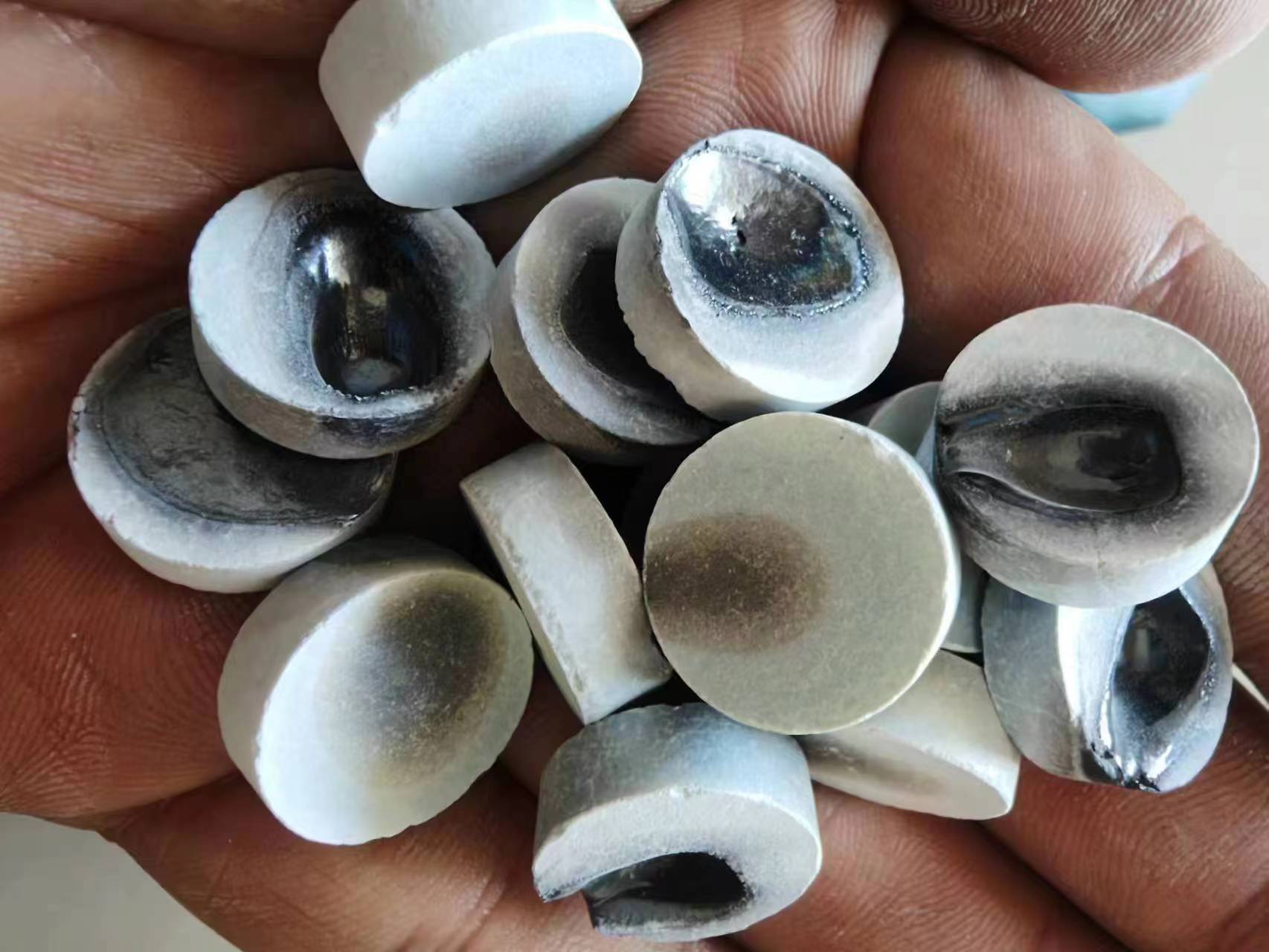
Hafnium Alloys: Performance Optimization and Cutting-Edge Applications
Introduction
Hafnium (Hf), a rare high-melting-point metal, exhibits irreplaceable value in high-tech industries due to its unique nuclear properties, exceptional thermal stability, and superior corrosion resistance. By alloying with other metals, hafnium’s performance can be precisely tailored to meet extreme demands—from nuclear environments to high-temperature aerospace applications. This article systematically reviews major hafnium alloy systems and explores their applications in nuclear energy, aerospace, corrosion-resistant equipment, and emerging technologies.
1. Major Hafnium Alloy Systems and Their Characteristics
(1) Nuclear-Grade Hafnium Alloys
Nuclear-grade hafnium alloys (pure Hf or Hf with <4.5% Zr, Sn, Fe, Cr, Ni) are the preferred material for control rods in nuclear reactors.
Key Properties:
- Extremely high thermal neutron absorption cross-section (~105 barns), far exceeding other metals.
- Excellent resistance to high-temperature water/steam corrosion, mechanical strength, and workability.
Representative Alloys:
- Westinghouse’s Hf-2, Hf-4, and Hf-6 series incorporate trace Sn, Fe, and Cr to enhance corrosion resistance and mechanical stability in reactor conditions.
(2) Hafnium in High-Temperature Superalloys
Hafnium (1–3%) is a critical strengthening element in nickel-/cobalt-based superalloys for aerospace engines.
Strengthening Mechanisms:
- Grain refinement & intergranular strengthening via segregation during solidification.
- Promotes carbide formation, improving creep resistance, thermal fatigue resistance, and ductility.
Key Alloys:
- PWA 1480, Rene N5, CMSX-4 (used in turbine blades) rely on Hf for high-temperature durability (>1000°C).
(3) Other Hafnium Alloy Systems
- Hf-Nb Alloys: Solid-solution strengthened with high melting points, used in ultra-high-temperature components.
- Hf-Ti Alloys: Enhance strength and heat resistance in aerospace structural parts.
- Hf-Cu Alloys: Improve hardness and thermal stability while retaining conductivity for specialized electrodes.
2. Core Applications
(1) Nuclear Energy: Indispensable Control Material
Primary Uses:
- Control rods in PWRs/BWRs (precise neutron absorption for reaction rate modulation).
- Burnable poison assemblies & neutron sources.
Advantages Over Alternatives (e.g., B₄C, Ag-In-Cd):
- Superior radiation resistance, compatibility with cladding, and extended service life (aligned with reactor core lifespans).
(2) Aerospace: Powering the Future
Role in Turbine Blades:
- Hf-doped single-crystal superalloys withstand centrifugal stress, thermal cycling, and hot corrosion at >1000°C.
- Inhibits crack propagation along grain boundaries, boosting engine efficiency (thrust-to-weight ratio) and reliability.
(3) Corrosion & High-Temperature Components
Industrial Applications:
- Chemical reactors, valves, pumps (resistant to acids/alkalis).
- Vacuum furnace heating elements & thermal shields.
Emerging Use in Semiconductors:
- HfO₂ (high-κ dielectric) replaces SiO₂ in sub-45nm CMOS transistors.
3. Challenges & Future Outlook
Current Limitations:
- High cost (low abundance, complex extraction).
- Difficult processing (requires vacuum/inert atmospheres).
- Competition from alternative neutron absorbers (e.g., Gd, Er).
Future Directions:
- Performance enhancement: Multi-element microalloying, powder metallurgy, additive manufacturing.
- New applications: Hypersonic thermal protection, next-gen nuclear reactors (e.g., lead-cooled fast reactors).
- Resource efficiency: Improved recycling technologies.
Conclusion
Hafnium alloys serve as neutron “absorbers,” high-temperature “guardians,” and corrosion “defenders” in nuclear safety, aerospace propulsion, and advanced manufacturing. From reactor cores to jet engines, their applications push material limits. Future breakthroughs will depend on alloy design innovation, advanced processing, and exploration of untapped potentials—ensuring hafnium’s strategic role in tomorrow’s technologies.
