

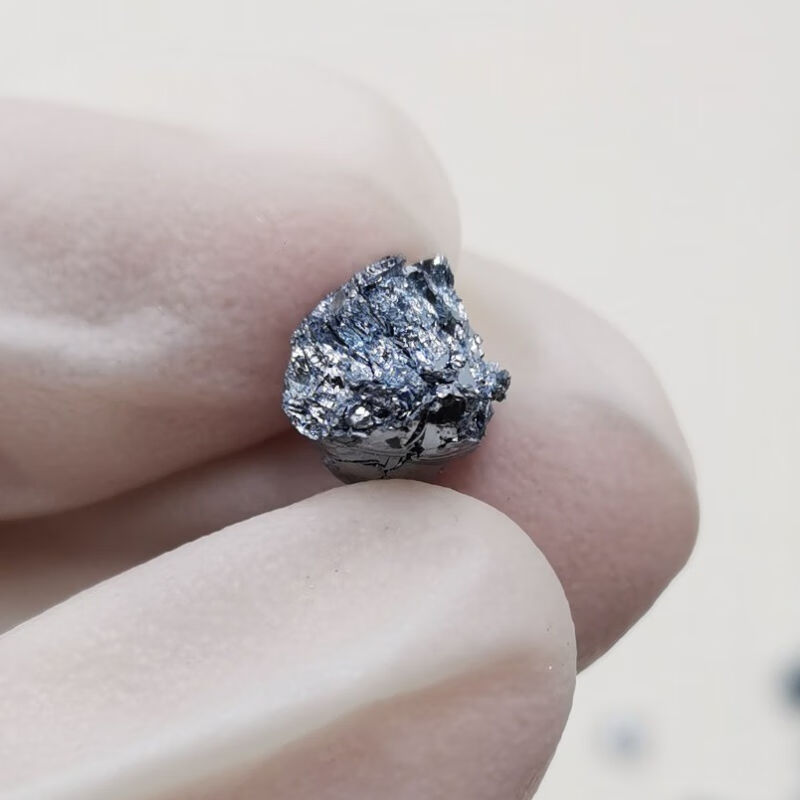
Extraction and Purification Processes of Osmium
Abstract
The extraction and purification of osmium (Os) primarily rely on oxidative distillation, combined with chemical reduction techniques such as sodium sulfide precipitation, ammonium chloride precipitation, and formic acid reduction. To preferentially separate osmium from platinum group metal (PGM) concentrates, sodium peroxide fusion activation is employed, followed by oxidative distillation of volatile osmium tetroxide (OsO₄) in sulfuric acid or alkaline systems. The OsO₄ is then absorbed in hydrochloric acid or sodium hydroxide solutions. The purification stage involves pH control, selection of reducing agents (e.g., formic acid, hydrogen gas), and high-temperature calcination (700–900°C) to obtain high-purity osmium powder. The entire process must be conducted under air-free conditions to prevent spontaneous oxidation and combustion.
1. Extraction Processes of Osmium
(1) Oxidative Distillation Methods
- Chlorine Distillation in Alkaline Medium
- The osmium-bearing material is slurried in a pH 6–8 NaOH solution, and chlorine gas is introduced to generate sodium hypochlorite, which oxidizes osmium to volatile OsO₄ gas.
- Distillation continues for 6–8 hours, and the OsO₄ is absorbed in NaOH solution to form sodium osmate (Na₂OsO₄).
- This method is cost-effective but may suffer from efficiency loss due to base metal precipitation encapsulation.
- Sulfuric Acid–Sodium Bromate Method
- Suitable for liquid-phase systems, available in two modes:
- Hydrolytic Distillation: The osmium-containing solution is neutralized to form hydroxide precipitates, which are then oxidized with NaBrO₃ in 6 mol/L H₂SO₄ at 95–100°C to distill OsO₄.
- Concentrated Distillation: Direct oxidation in concentrated sulfuric acid, which is more efficient but highly corrosive.
- Suitable for liquid-phase systems, available in two modes:
- Hydrochloric Acid Distillation
- Used for refractory osmium-bearing materials (e.g., sulfide ores or alloys).
- The OsO₄ is absorbed in hydrazine hydrate solution, simplifying subsequent reduction steps.
(2) Absorption and Primary Purification
- Absorption Solution Selection
- Alkaline Absorption: NaOH solution absorbs OsO₄ to form Na₂OsO₄, suitable for subsequent sodium sulfide or ammonium chloride precipitation.
- Acidic Absorption: HCl absorbs OsO₄ to form H₂OsCl₆, which is concentrated before precipitating (NH₄)₂OsCl₆.
2. Purification Processes of Osmium
(1) Chemical Precipitation Methods
- Sodium Sulfide Precipitation
- Sodium sulfide is added to low-concentration osmium solutions to form OsS₂ precipitate, which is filtered, dried at 80°C, and reduced in hydrogen at 700°C to yield osmium powder.
- Ammonium Chloride Precipitation
- Alkaline route: Adding NH₄Cl to Na₂OsO₄ forms [OsO₂(NH₃)₄]Cl₂ yellow precipitate, reduced at 800°C in H₂ to osmium powder.
- Acidic route: Concentrated H₂OsCl₆ solution is treated with NH₄Cl to form (NH₄)₂OsCl₆, reduced at 900°C in H₂.
- Formic Acid Reduction
- Sodium osmate solution is adjusted to pH 6–7 with HCl, then reduced with formic acid or hydrazine hydrate at 80°C to form OsO₂·nH₂O, which is further reduced at 900°C in H₂.
(2) High-Temperature Reduction and Protection
- All osmium powders must be calcined in hydrogen (700–900°C) and cooled under inert conditions to prevent spontaneous oxidation into volatile OsO₄.
3. Process Optimization and Challenges
- Efficiency Improvements
- Double distillation–hydrazine hydrate reduction shortens process time and improves recovery rates.
- Optimizing oxidant (e.g., NaBrO₃) concentration and temperature control reduces impurity encapsulation.
- Environmental and Safety Concerns
- OsO₄ is highly toxic—operations require closed systems and exhaust gas treatment.
- Development of low-corrosivity media (e.g., weak alkaline systems) reduces equipment wear.
- Resource Utilization
- Osmium is a byproduct of platinum mining, with extraction yields below 60%.
- Improved spent catalyst recycling (current recovery ~35%) is needed to enhance supply sustainability.
Conclusion
Osmium extraction and purification rely heavily on oxidative distillation and chemical reduction synergy. Future advancements should focus on:
- Ultra-high-purity (≥6N) processes
- Green solvent alternatives
- Efficient recycling technologies
to address osmium’s scarcity and strategic importance.
