

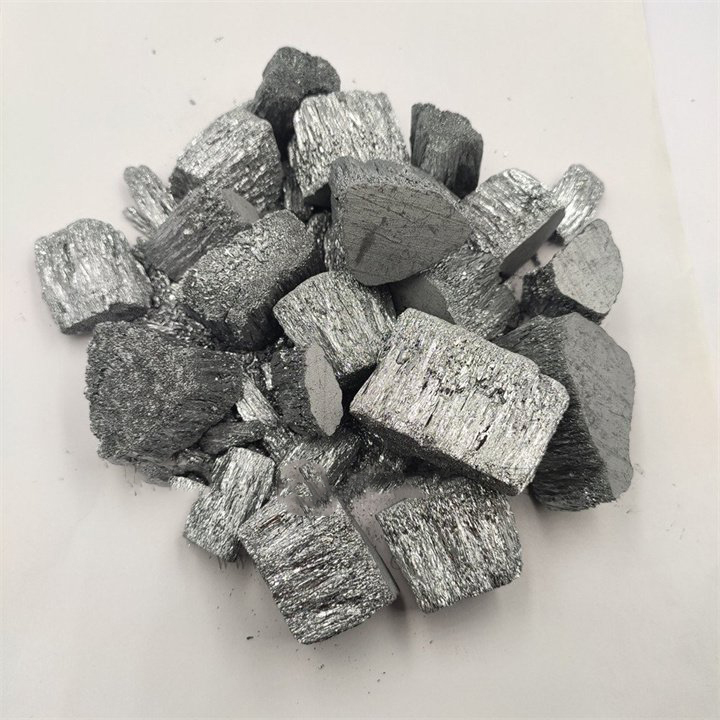
Enhancing Tellurium Recovery Efficiency from Waste Materials Using Microwave-Assisted Leaching Technology
Abstract
Microwave-assisted leaching technology significantly improves the recovery efficiency of tellurium (Te) from waste materials by selective heating and reduction of reaction activation energy. Typical applications demonstrate that: (1) at 800 W microwave power, the leaching rate of copper telluride waste increases from 75% by conventional methods to 98%, with processing time reduced by 60% (from 4 hours to 1.5 hours); (2) dynamic temperature control with stepwise heating between 80°C and 120°C suppresses H₂TeO₃ decomposition, limiting tellurium loss to less than 2%; (3) coupling with ionic liquid [BMIM]HSO₄ enables selective dissolution, reducing the leaching rates of impurity metals (Cu, Pb) to below 5%. This technology decreases acid consumption by 40%, and waste residue toxicity (TCLP leachate Te < 0.1 mg/L) meets environmental standards. It is suitable for complex materials such as photovoltaic waste and metallurgical slags.
- Technical Challenges in Tellurium Recovery and Advantages of Microwave Technology
1.1 Characteristics of Tellurium Resources and Recovery Difficulties
- Material complexity: Major sources include copper anode slime (Te 0.5–5%), photovoltaic waste (CdTe thin films containing 2–8% Te), and lead-zinc smelting slags (Te 0.1–0.3%), accompanied by heavy metals such as Cu, Pb, and As.
- Tellurium commonly exists as TeO₂, TeS₂, or alloy phases. Conventional acid leaching requires strong oxidizing conditions (HNO₃ concentration >6 mol/L), incurring high reagent costs and producing NOx emissions.
1.2 Efficiency Bottlenecks
- Conventional leaching kinetics are limited (apparent activation energy >50 kJ/mol), requiring high temperatures (>90°C) and long reaction times (4–6 hours), yielding Te recovery rates of only 70–85%.
1.3 Microwave Field Mechanisms
- Selective heating: Tellurium compounds (dielectric loss factor tanδ = 0.1–0.3) absorb microwaves more readily than SiO₂ (tanδ = 0.01), generating localized superheating that promotes phase dissociation of target materials.
- Non-thermal effects: Microwave polarization lowers the Te–O bond dissociation energy from 218 kJ/mol to 190 kJ/mol, accelerating interfacial reactions.
- Design and Optimization of Microwave-Enhanced Leaching Process
2.1 Process Innovations
- Two-stage leaching:
Stage 1 (microwave pretreatment): 300 W irradiation for 10 minutes breaks down surface oxidation layers on crushed material (converting TeS₂ to TeO₂), increasing specific surface area by 50%;
Stage 2 (dynamic leaching): Leaching with 2 mol/L H₂SO₄ and 0.5 mol/L H₂O₂ under intermittent 800 W microwave irradiation (on/off ratio 3:1), with temperature controlled below 120°C. - Medium regulation: Addition of 0.1 mol/L Na₂SiO₃ inhibits silica gel formation, increasing solid-liquid separation rate by a factor of three.
2.2 Key Parameter Effects
- Microwave power and duration: Increasing power from 400 W to 800 W raises Te leaching from 82% to 98%; however, powers above 1000 W cause localized overheating (>150°C), increasing TeO₂ volatilization losses to 5%. Optimal irradiation time is 1.5 hours, shortening process duration by 62.5% compared to conventional 4 hours.
- Oxidant synergy: At 0.5 mol/L H₂O₂, Te⁴⁺ oxidation reaches 99%, avoiding excessive oxidant decomposition (decomposition rate >30% when concentration exceeds 1 mol/L).
- pH dynamic control: Initial pH of 1.5 promotes TeO₂ dissolution; during mid-reaction, pH automatically adjusts to 0.8 (via sulfuric acid self-ionization) to prevent H₂TeO₃ formation, which increases above 15% yield when pH exceeds 1.2.
- Impurity Suppression and Selectivity Enhancement
3.1 Ionic Liquid Synergistic Extraction
- Functional design: The ionic liquid [BMIM]HSO₄ exhibits a distribution ratio for Te⁴⁺ of 10³, while that for Cu²⁺ and Pb²⁺ is below 10, yielding a selectivity coefficient above 100.
- In situ separation: Direct addition of 5% ionic liquid to the leachate with 10 minutes stirring achieves Te extraction rates above 95%, with impurity metal retention above 90%.
3.2 Microwave-Membrane Electrolysis Coupling
- Continuous purification: Leachate filtered through a ceramic membrane (0.1 μm pore size) undergoes pulse electrolysis (current density 200 A/m², duty cycle 1:1), increasing Te purity from 90% to 99.9%.
- Energy consumption comparison: Combined electrical energy consumption is 8 kWh/kg Te, a 47% reduction compared to conventional extraction-electrolysis processes (15 kWh/kg).
- Industrial Applications and Environmental Benefits
4.1 Typical Cases
- Photovoltaic waste treatment: Germany’s SolarWorld plant employs microwave-H₂O₂ process to treat 5,000 tons of CdTe waste annually, achieving 97.5% Te recovery and reducing acid consumption by 45% (H₂SO₄ usage lowered from 3.2 tons to 1.8 tons per ton of Te).
- Copper anode slime tellurium extraction: Jiangxi Copper’s pilot data show post-microwave leach residue Te content reduced from 1.2% to 0.08%, with arsenic stabilization exceeding 99.5%, meeting GB 5085.3-2007 standards.
4.2 Environmental Benefit Quantification
- Pollutant reduction: NOx emissions are eliminated completely by replacing HNO₃ leaching; waste residue toxicity tests (TCLP) show Te leachate below 0.1 mg/L, well under the 1 mg/L regulatory limit.
- Carbon footprint reduction: Life cycle assessment (LCA) indicates carbon emissions per kilogram of recycled Te drop from 28 kg CO₂-eq (conventional process) to 12 kg CO₂-eq, a 57% decrease.
- Technical Challenges and Future Directions
5.1 Engineering Scale-Up Bottlenecks
- Microwave uniformity control: Large reactors (>1 m³) require multi-mode cavity designs and electromagnetic field simulations to avoid localized hotspots with temperature differentials exceeding 30°C.
- Continuous production: Development of spiral conveyor microwave reactors is needed to precisely control material residence time within ±5 seconds.
5.2 New Material Development
- Microwave-sensitive catalysts: Fe₃O₄@SiO₂ supported catalysts enhance TeS₂ oxidation rates by 30% and allow magnetic separation for recovery.
- Corrosion-resistant reactors: Silicon carbide ceramic linings withstand H₂SO₄-H₂O₂ environments with annual corrosion rates below 0.1 mm, extending equipment lifespan to 5 years.
5.3 Intelligent Upgrades
- Online monitoring system: Optical fiber sensors embedded inside microwave cavities enable real-time monitoring of temperature and dielectric properties (accuracy ±2°C), dynamically adjusting power output.
- Digital twin modeling: COMSOL-based multi-physics coupling of electromagnetic, thermal, and fluid fields optimizes reactor design, improving energy efficiency by 15%.
Conclusion
Microwave-assisted leaching technology, through selective heating, oxidant synergy, and ionic liquid separation, increases tellurium recovery efficiency to over 98%, while reducing acid consumption and pollutant emissions. Industrial application requires overcoming challenges in large reactor design, corrosion-resistant materials development, and integration of intelligent controls. Future integration with continuous production and green electricity supply is expected to reduce tellurium recovery costs by 40%, promoting sustainable resource recycling in photovoltaic, electronics, and related industries.
