

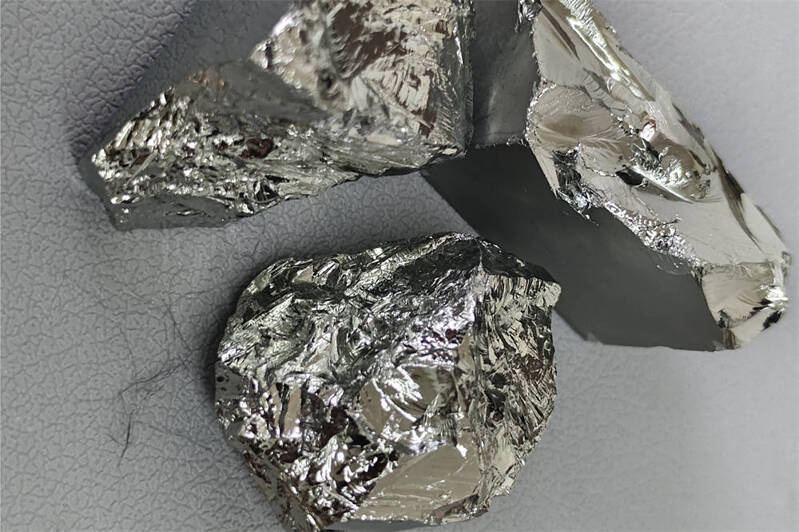
How can we achieve green and low-carbon goals in the germanium recovery process?
The core pathways to achieve green and low-carbon germanium recycling include: 1) Pyrometallurgical process transformation (oxygen-enriched smelting reducing energy consumption by 30% + flue gas waste heat power generation); 2) Hydrometallurgical system optimization (low-concentration leaching reducing acid consumption by 40% + bioleaching reducing carbon by 65%); 3) Renewable energy replacement (photovoltaic power supply covering 30% of energy consumption); 4) Full waste recycling (heavy metal solidification rate >99% + wastewater reuse rate 90%). Through technology integration, the comprehensive energy consumption per ton of germanium can be reduced from 18,000kWh to 11,000kWh, CO₂ emissions can be reduced from 12 tons to 4.2 tons, while the germanium recovery rate can be increased to over 95%.
I. Carbon Emission and Energy Consumption Analysis of Germanium Recycling Processes
(Ⅰ) Carbon Footprint Composition of Traditional Processes
| Process Link | Energy Consumption (kWh/kg Ge) | Carbon Emission (kg CO₂/kg Ge) | Main Emission Sources |
|---|---|---|---|
| Pyrometallurgical enrichment | 8,000-10,000 | 6.5-8.0 | Coke combustion (3.18kg CO₂/kg) |
| Hydrometallurgical leaching | 3,500-4,500 | 2.2-3.0 | Sulfuric acid production (0.3t CO₂/t acid) |
| Electrolytic refining | 2,000-3,000 | 1.8-2.5 | Dependence on thermal power (0.85kg CO₂/kWh) |
| Waste gas/water treatment | 1,200-1,800 | 0.5-1.0 | Limestone consumption (0.5kg CO₂/kg) |
(Ⅱ) Key Pollution Links
- Pyrometallurgical smelting: Coke reduction generates CO₂ and SO₂, with energy consumption for flue gas treatment accounting for 15%;
- Acid leaching process: Large consumption of high-concentration sulfuric acid (6mol/L) makes waste acid treatment difficult;
- Electrolysis power supply: Dependence on grid thermal power, with indirect carbon emissions accounting for over 40% of the total.
II. Low-Carbon Transformation of Pyrometallurgical Processes
(Ⅰ) Oxygen-Enriched Side-Blown Smelting Technology
- Process optimization:
Oxygen concentration increased from 21% to 35%, smelting temperature reduced from 1250℃ to 1100℃, and coke consumption reduced by 40%;
Germanium volatilization rate remains >95%, with energy consumption per ton of germanium reduced to 5,600kWh (30% lower than traditional blast furnaces). - Graded waste heat utilization:
800℃ flue gas generates power through a waste heat boiler (thermal efficiency 85), generating 120kWh of electricity per ton of raw material;
Medium and low-temperature waste heat is used for solution preheating, increasing comprehensive thermal utilization rate from 35% to 68%.
(Ⅱ) Hydrogen Reduction Replacing Coke
- Microwave-assisted hydrogen reduction:
Hydrogen as reducing agent, reaction formula: GeO₂ + 2H₂ → Ge + 2H₂O (efficiency >98% at 1000℃);
Compared with coke reduction, CO₂ emissions per ton of germanium are reduced by 4.2 tons.
III. Green Upgrading of Hydrometallurgical Processes
(Ⅰ) Low Acid Consumption Leaching System
- Sulfuric acid-hydrogen peroxide synergistic leaching:
Sulfuric acid concentration reduced from 6mol/L to 2mol/L, H₂O₂ addition optimized to 8vol%, reaction temperature reduced from 90℃ to 70℃;
Germanium leaching rate remains >90%, energy consumption per ton of liquid treatment reduced by 30%, and acid mist emissions reduced by 60%. - Ultrasound-enhanced leaching:
40kHz ultrasonic cavitation accelerates mineral dissociation, leaching time shortened from 4h to 1.5h, and power consumption reduced by 55%.
(Ⅱ) Bioleaching Technology
- Microbial breeding:
Acidithiobacillus ferrooxidans (A. ferrooxidans) with 10% inoculum, leaching solution pH=1.8, germanium leaching rate >85% in 7 days;
Replacing traditional acid leaching, sulfuric acid consumption reduced by 70%, and carbon emissions reduced by 65%. - Bacterial solution regeneration and recycling:
Fe³+ regeneration in bio-oxidation tanks, with iron ion reuse rate >80%, reducing new acid addition.
IV. Energy Structure and Resource Recycling Optimization
(Ⅰ) Renewable Energy Replacement
- Photovoltaic-energy storage system:
PERC modules (efficiency 22.5%) installed on factory roofs, equipped with 2MWh lithium batteries, covering 30% of electricity for electrolysis;
Annual CO₂ emission reduction of 1,200 tons per 10,000㎡ of photovoltaic panels. - Green hydrogen production:
Hydrogen production by water electrolysis (efficiency 70%) for reduction processes, with 10kg CO₂ emission reduction per kg of hydrogen.
(Ⅱ) Full Resource Utilization of Waste
- Acidic wastewater treatment:
Three-stage neutralization + reverse osmosis (RO membrane recovery rate 90%), heavy metal solidification rate >99.9%, wastewater reuse rate increased to 95%. - Comprehensive utilization of waste residues:
Smelting slag used for building materials (30% incorporation), red mud CO₂ mineralization to generate CaCO₃ (sequestration rate >60%).
V. Intelligentization and Process Innovation
(Ⅰ) Digital Twin Optimization
- Multi-physics field modeling:
COMSOL simulation of smelting furnace temperature-flow field coupling, real-time adjustment of oxygen-material ratio (error ±0.5%), reducing excessive oxygen energy consumption. - AI predictive control:
LSTM algorithm predicts germanium concentration in leaching solution (MAPE <2%), dynamically adjusting acid addition to reduce reagent waste.
(Ⅱ) New Separation Materials
- MOFs adsorbent materials:
UiO-66-NH₂ has an adsorption capacity of 380mg/g for Ge⁴+, with selectivity 150 times higher than that for Fe³+. - Ionic liquid extractants:
[BMIM]PF₆ system increases germanium distribution ratio to 1200, and stripping acidity reduced from 4mol/L to 1.5mol/L.
VI. Industrial Practice and Benefits
(Ⅰ) A Low-Carbon Transformation Project of a Germanium Enterprise in Yunnan
- Technical transformation:
Oxygen-enriched side-blown smelting + bioleaching + photovoltaic power supply;
Energy consumption per ton of germanium reduced from 18,000kWh to 11,200kWh, CO₂ emissions reduced from 12t/t to 5.1t/t. - Economic benefits:
| Index | Value |
|---|---|
| Annual coke cost savings | 12 million yuan |
| Waste heat power generation revenue | 8 million yuan/year |
| Carbon trading income | 3.5 million yuan/year (50 yuan/t) |
(Ⅱ) H.C. Starck Bioleaching Plant in Germany
- Process route:
Bacterial leaching (7 days) → solvent extraction → ion membrane electrolysis;
Acid consumption per ton of germanium reduced from 4.5 tons to 1.2 tons, with carbon emissions of only 3.8t/t.
VII. Policy Coordination and Industrial Ecology
(Ⅰ) Standard System Construction
- Low-carbon process certification:
Formulation of “Technical Specifications for Green Germanium Recycling”, specifying energy consumption limits (<12,000kWh per ton of germanium) and carbon emission caps (<6t). - Carbon credit incentives:
Enterprises can obtain 0.5 carbon credits for each ton of CO₂ reduced (1 credit = 100 yuan), promoting technological upgrading.
(Ⅱ) Industrial Chain Synergy
- Upstream-downstream coupling:
CO₂ from pyrometallurgical flue gas supplied for microalgae cultivation (carbon sequestration rate 20t/ha·year), with algae used for bioleaching agent production.
Conclusion
Green and low-carbon germanium recycling requires multi-technology coupling: Pyrometallurgical oxygen-enriched smelting and hydrogen reduction (30% energy reduction + 4.2t/t carbon reduction) + hydrometallurgical bioleaching (70% acid consumption reduction) + photovoltaic/green hydrogen replacement (40% emission reduction) form the core pathway. Through intelligent control (AI prediction error <2%) and full resource recycling (wastewater reuse rate >95%), CO₂ emissions per ton of germanium can be reduced to <4.2t, while improving economic benefits (carbon trading income >3.5 million yuan/year). Policy guidance and industrial chain synergy will accelerate technology implementation, promoting the germanium recycling industry towards near-zero carbon transformation.
