

Dispersed Metals: Physical Properties, Sources, and Applications of Gallium, Germanium, Indium, Tellurium, and Cadmium
1.Overview of Dispersed Metals
Dispersed metals typically refer to a group of chemical elements including gallium (Ga), germanium (Ge), selenium (Se), indium (In), tellurium (Te), rhenium (Re), and thallium (Tl); some definitions also encompass rubidium, hafnium, scandium, vanadium, and cadmium. These elements are classified as dispersed metals primarily due to the following reasons:
(1)Similar physical and chemical properties: These elements share comparable physical and chemical characteristics, which group them together.
(2)Occurrence form: They commonly exist as isostructural phases within related mineral deposits, making it difficult to form independent ore bodies with standalone economic value.
(3)Low crustal abundance: Their average concentration in the Earth’s crust is low, and they rarely form independent deposits. Instead, they are typically associated with primary metal ores such as aluminum, lead-zinc, and copper ores, with recovery achieved mainly through integrated processing of base metals.
Dispersed metals hold critical importance as components of contemporary high-tech materials. They find wide application in new energy, compound semiconductors, optoelectronic materials, special alloys, novel functional materials, and organometallic compounds. For example, gallium, with its low melting point, high boiling point, superconductivity, ductility, and thermal expansion characteristics, is extensively used in semiconductors, photovoltaics, communications, optoelectronics, and aerospace. Germanium is primarily applied in fiber optics and photovoltaic materials, while indium is widely utilized in ITO targets and related applications.
China possesses abundant dispersed metal mineral resources, providing favorable conditions for the development of the dispersed metals industry. However, their scarcity and dispersed distribution pose significant challenges in mining and recycling. Therefore, improving metallurgical efficiency, increasing production, reducing costs, and achieving green manufacturing are key challenges and development trends in the rare metals metallurgy sector.
2.Gallium: A Third-Generation Semiconductor Material
Gallium (Ga) plays a pivotal role in third-generation semiconductor materials, which include advanced materials such as silicon carbide (SiC), gallium nitride (GaN), indium gallium phosphide, and aluminum gallium phosphide. Compared to first- and second-generation semiconductors, these materials exhibit higher breakdown electric field strength, superior thermal conductivity, and wider bandgaps.
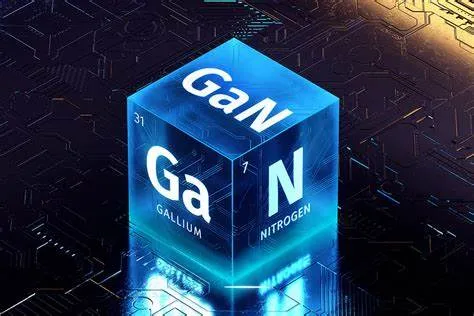
Gallium nitride (GaN), a compound of gallium and nitrogen, is a representative third-generation semiconductor. Compared to traditional semiconductors like silicon and germanium, GaN offers advantages such as high power handling, radiation resistance, efficiency, and high-frequency performance, making it a research focus in semiconductors.
Gallium’s high electrical conductivity—among the highest in common semiconductors—renders it ideal for high-frequency electronic devices. It is employed in transistors and headphones as micro radio-frequency (RF) switches to control signal amplification and modulation. Gallium’s excellent noise characteristics make it the preferred choice for low-noise amplifiers and other sensitive electronics. Moreover, gallium maintains stable operation in extreme cold and heat, exhibiting excellent high-temperature tolerance.
GaN’s broad application prospects include:
(1)Power Electronics: GaN’s high power and efficiency enable fabrication of high-performance power electronic devices such as power converters and inverters, enhancing energy utilization.
(2)Optoelectronics: GaN is widely used to manufacture high-performance lasers and light-emitting diodes (LEDs), meeting demands in high-speed communication and lighting.
(3)Wireless Communications: GaN’s high-frequency properties make it ideal for RF front-end components like power amplifiers and low-noise amplifiers, improving wireless system performance and reliability.
(4)New Energy: GaN and related compounds contribute to new energy sectors such as electric vehicles and solar cells, e.g., producing high-efficiency solar cells to improve photovoltaic conversion efficiency.
Gallium is mainly recovered as a byproduct during the refining of aluminum and zinc ores.
China dominates global supply of low-purity gallium, accounting for 98.4%, and has designated gallium as a strategic reserve metal while implementing export controls on gallium-related products.
3.Germanium: Applications in Fiber Optics and Photovoltaics
Germanium (Ge) finds extensive application in fiber optics and photovoltaic materials:
In fiber optic communications, germanium is a key raw material in fiber preforms, which determine transmission speed and capacity. Due to its high refractive index, germanium is used as a dopant to enhance transmission speed and capacity. It also improves tensile strength and high-temperature resistance of fibers, thus increasing system reliability and stability. Germanium-doped fibers exhibit high absorption and low dispersion, maintaining signal stability and quality during transmission.
In photovoltaics, germanium is an important solar cell material. Its chemical stability, high refractive index, and good conductivity significantly boost photovoltaic conversion efficiency. Germanium also enhances solar cell durability and lifespan. Additionally, germanium can serve as a bottom reflective layer to reduce back-reflection, further improving light absorption and conversion.
Overall, germanium’s unique advantages underpin its growing applications in fiber optics and photovoltaics. As technology advances and market demand rises, germanium’s role in these fields will expand.
Germanium is a gray-white metalloid with luster and hardness, exhibiting non-metallic properties. It primarily occurs in silicate, sulfide, and coal deposits.
Global germanium reserves are scarce, with the United States holding 45% and China 41%. China is the world’s largest germanium producer, contributing 67.9% of output.
Germanium’s main applications span semiconductors, aerospace, fiber optics, optics, and photovoltaics:
Tetrachlorogermanium (GeCl4) is a precursor for fiber preforms; germanium substrates are used in photovoltaics and satellite internet sectors.
4.Indium: ITO Target Material
Indium is a soft, highly ductile, malleable metal with a low melting point and low resistivity, exhibiting strong corrosion resistance. It primarily occurs in iron ores, zinc-lead ores, and sulfide deposits.
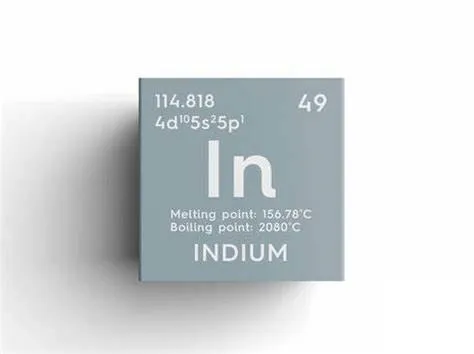
China holds the world’s largest indium reserves (72.0%) and is also the leading refined indium producer.
Indium is widely applied in aerospace, electronics, medical, and new energy fields. Its main uses include ITO targets, semiconductor materials, and alloys, with targets accounting for about 70% of consumption:
(1) ITO thin films, produced via sputtering from ITO targets, are used in computer displays, liquid crystal watches, panels, and smartphones.
(2) In heterojunction (HJT) solar cell fabrication, indium tin oxide (ITO) is commonly used as the sputtering target during the transparent conductive oxide (TCO) deposition stage.
Indium plays a critical role in ITO (indium tin oxide) targets—a widely used transparent conductive material mainly composed of indium oxide (In2O3) and a small percentage (2–10%) of tin oxide (SnO2).
Indium’s primary function in ITO targets is to provide high transparency. Being soft and ductile with a melting point of approximately 156.6°C, the indium-to-tin ratio in ITO critically influences electrical conductivity and transparency. Fine-tuning this ratio optimizes ITO target performance for various applications.
Thanks to excellent optical transparency, high electrical conductivity, and chemical stability, ITO targets are extensively used in flat-panel displays, solar panels, energy-efficient glass, and semiconductor devices. Specifically, in photovoltaic cells, the ITO layer ensures effective light transmission and provides necessary conductive pathways. ITO targets are also key materials in third-generation perovskite solar cells.
ITO target fabrication involves complex physical and chemical processes, including sputtering target preparation and electron beam evaporation. Sputtering is a common technique wherein high-energy particles bombard solid ITO targets, ejecting atoms that deposit as thin films on substrates.
With the continuous introduction of new display products and accelerated product iteration, global demand for indium resources in ITO targets is expected to rise. Furthermore, indium-based materials such as indium phosphide have promising applications in 5G communications, data centers, next-generation displays, autonomous driving, wearable devices, and aerospace.
5.Tellurium and Cadmium: Materials for Building-Integrated Photovoltaics
Tellurium (Te) and cadmium (Cd) play key roles in building-integrated photovoltaics (BIPV), especially in cadmium telluride (CdTe) thin-film solar cells, also known as CdTe photovoltaic glass—a crucial BIPV material.
Technically, CdTe photovoltaic glass consists of a CdTe thin-film solar cell deposited on conventional glass. Its main structure includes a glass substrate, transparent conductive oxide (TCO) layer, cadmium sulfide (CdS) window layer, CdTe absorber layer, back contact, and back electrode. By converting ordinary glass into a power-generating solar cell, it achieves seamless integration of photovoltaics with architecture.
CdTe photovoltaic glass offers several advantages: excellent weak-light generation performance enables stable power output under low-light conditions, providing reliable energy supply for buildings; good thermal performance maintains efficiency at high temperatures; and adjustable transmittance tailored to architectural requirements allows versatile light conditions.
In BIPV applications, CdTe photovoltaic glass can be integrated into building facades, windows, and roofs, reducing energy consumption and costs, lowering CO₂ emissions, and alleviating electrical demand. For example, the Xiong’an New Area People’s Hospital project employed 40% transmittance hollow low-E CdTe photovoltaic glass, achieving energy-saving thermal insulation and visual transparency alongside clean energy generation.
Moreover, CdTe photovoltaic glass can be fabricated into lightweight, flexible films, broadening its application scope. These portable solar cells reduce transportation and deployment costs, holding promising prospects in solar-powered drones, spacecraft, and satellites.
Raw Material Sources:
(1) Tellurium is a metalloid generally obtained as a byproduct from anode slimes during electrolytic copper refining. China is the world’s largest tellurium producer, with other sources in Russia, the USA, and Canada.
(2) Cadmium is a soft, wear-resistant, ductile metal mainly found in zinc ores. It is used in nickel-cadmium batteries, plastics, electroplating, and tires. China is the largest global cadmium producer, with additional sources in South Korea, Japan, and Canada.
CdTe is the largest demand sector for tellurium and cadmium. As the most commercially mature BIPV material, CdTe is well-suited for thin-film solar cells installed on building facades.
This translation provides a professional and comprehensive English overview of the physical properties, sources, and applications of gallium, germanium, indium, tellurium, and cadmium as dispersed metals.
