

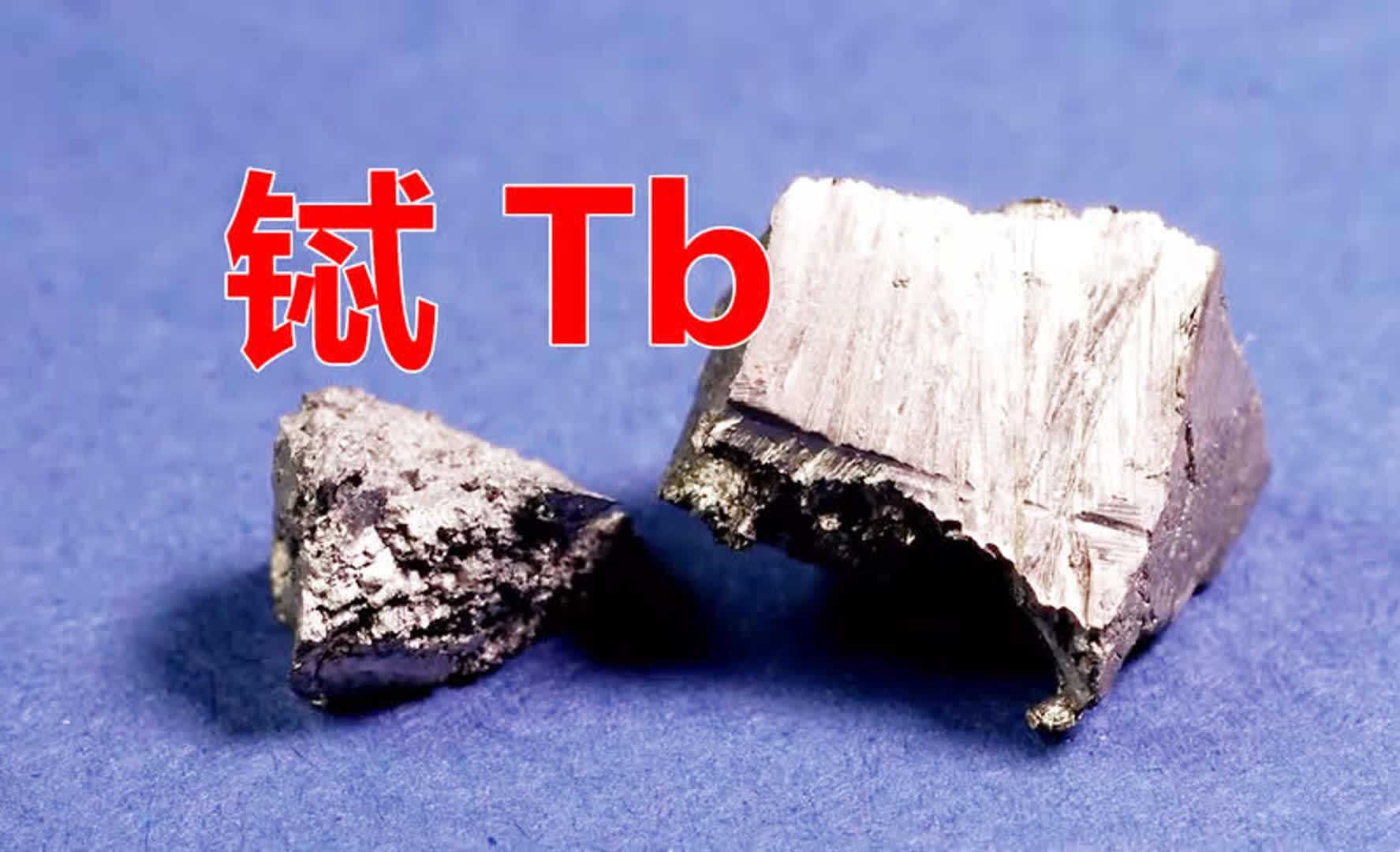
Common Methods for Extraction and Separation of Terbium Element
Abstract
The extraction and separation processes of terbium play a vital role in the processing of rare earth resources and are widely applied in high-tech fields. Common methods include pyrometallurgical processes, hydrometallurgical techniques, and solvent extraction separation technologies. Hydrometallurgy, as the primary method, involves steps such as acidic dissolution, precipitation separation, and solvent extraction to extract terbium while enhancing its purity. Separation from other rare earth elements mainly relies on solvent extraction, ion exchange, and precipitation methods. Despite challenges due to the high difficulty of separation, ongoing technological optimization and development of green processes are continuously improving the efficiency of terbium extraction and separation, ensuring sustainable utilization of this scarce resource.
1.Basic Characteristics of Terbium and the Importance of Its Extraction and Separation
Terbium (Tb) is one of the rare earth metals widely used in green phosphors, permanent magnets, magneto-optical storage, and laser devices within advanced technology sectors. Due to its low natural abundance and presence mainly in complex compounds, terbium extraction and separation present significant technical challenges. Improving extraction efficiency and purity of terbium is crucial to advancing modern technologies and enhancing rare earth resource utilization.
2.Sources of Terbium and Common Extraction Processes
Terbium is primarily found in mixed rare earth minerals such as monazite, bastnäsite, and xenotime. It exists in these minerals mostly as oxides or other compounds in small quantities, requiring complex processing for purification. The commonly applied basic extraction processes are as follows:
2.1 Pyrometallurgical Methods
Pyrometallurgy is a traditional yet still effective method often combined with other techniques.
·Roasting
High-temperature roasting of rare earth ores with chemical additives (e.g., sodium sulfate) converts terbium-containing minerals into soluble salts, preparing them for subsequent separation.
·Reduction Smelting
At elevated temperatures, reducing agents such as carbon, hydrogen, or calcium convert rare earth oxides into metallic forms. Due to terbium’s high melting point, this process requires high-temperature conditions.
·Molten Salt Electrolysis
Purified terbium oxides undergo molten salt electrolysis using fluoride or chloride electrolytes to produce metallic terbium. Key factors include controlling appropriate current density and electrolysis temperature to prevent byproduct formation and contamination.
Advantages of Pyrometallurgy: suitable for processing large quantities of rare earth minerals and efficient extraction of metals like terbium.
Limitations: relatively high energy consumption, complex procedures, and environmental concerns.
2.2 Hydrometallurgical Methods
Hydrometallurgy is currently the most widely used industrial method for terbium extraction, combining dissolution, chemical precipitation, and solvent extraction.
·Acidic Dissolution
Crushed rare earth ores are treated with acids such as nitric, hydrochloric, or sulfuric acid to dissolve rare earth minerals and form solutions containing rare earth ions. Heavy rare earths including terbium dissolve well in acidic media.
·Selective Precipitation
By adjusting pH in acidic solutions, rare earth ions can be selectively precipitated stepwise. Terbium ions (Tb³⁺) can be precipitated as oxalates via oxalic acid treatment, enabling preliminary separation from other rare earths.
·Solvent Extraction Separation
This is the crucial step in terbium extraction. Using highly selective extractants (e.g., catechol-type compounds), terbium can be efficiently separated from solution.
Advantages of Hydrometallurgy: high efficiency, low energy consumption, suitable for large-scale industrial production.
Drawbacks: stringent requirements for liquid waste treatment and environmental protection measures.
3.Separation Methods of Terbium from Other Rare Earth Elements
Due to the close chemical similarities among rare earths and their coexistence in complex mineral matrices, terbium separation is challenging. Common techniques include:
3.1 Solvent Extraction
·Principle
Based on differences in distribution coefficients of rare earth complexes between organic solvents and aqueous phases, multi-stage extraction separates terbium from other rare earth elements.
·Common Solvents
Phosphoric esters, carboxylic acids, and phosphine oxide derivatives with high selectivity are used to preferentially transfer terbium into the organic phase.
·Process Optimization
Multi-stage counter-current extraction towers (up to dozens of stages) greatly enhance separation precision and efficiency.
3.2 Ion Exchange Resin Method
·Principle
Separation and purification are achieved by ion exchange reactions between rare earth ions and functional groups on ion exchange resins.
·Procedure
Pretreated rare earth solutions pass through ion exchange columns where resins selectively adsorb terbium ions. Subsequent elution with solvents of varying desorption strength recovers terbium from the resin.
·Advantages
Ion exchange is suitable for small-scale, high-purity terbium production, especially in laboratory settings.
3.3 Precipitation Method
·Principle
Based on differing solubilities of terbium and other rare earth oxides or salts, chemical reagents induce precipitation to selectively separate terbium.
·Process
Control of pH, temperature, and reagent concentration forms insoluble terbium compounds such as terbium oxalate or basic yttrium terbium salts.
·Applications
Primarily used for preliminary separation in combination with solvent extraction or ion exchange.
4.Key Technical Indicators in Terbium Extraction and Separation
·Raw Material Purity
Terbium content in rare earth ores and oxides should be as high as possible, with impurities like phosphorus, iron, and silicon strictly minimized.
·Extraction Rate and Yield
Extraction efficiency (content recovery) and product yield are critical metrics, typically requiring extraction rates above 90%.
·Purity Control
Final terbium products must achieve high purity levels, industrially often requiring 4N (99.99%) or higher.
·Environmental Protection
Wastewater and gas emissions generated during processing must be treated rigorously to meet national environmental standards.
Future Development Directions for Terbium Extraction Technology
·Green Process Development
Traditional rare earth extraction methods have substantial environmental impacts. Future efforts should focus on introducing environmentally friendly technologies, such as low-toxicity solvents and more efficient recycling techniques.
·Efficient Resource Utilization
Given limited terbium mineral resources, emphasis on efficient exploitation of low-grade ores and secondary recovery from electronic waste is essential.
·Artificial Intelligence and Automation
Applying big data and AI to optimize extraction and separation parameters enables precise control, reducing energy consumption and improving production efficiency.
Conclusion
The extraction and separation of terbium are critical to the rare earth materials industry. Currently, hydrometallurgy and solvent extraction technologies form the core processes meeting the demand for high-quality terbium materials. Although challenges such as raw material scarcity and environmental pressures exist, ongoing technological advances will continue to improve terbium extraction efficiency, purity, and cost-effectiveness, promoting its application in high-tech industries. Future innovations focusing on greener, more environmentally friendly, and intelligent processes will enhance the efficiency and sustainability of terbium resource utilization.
