

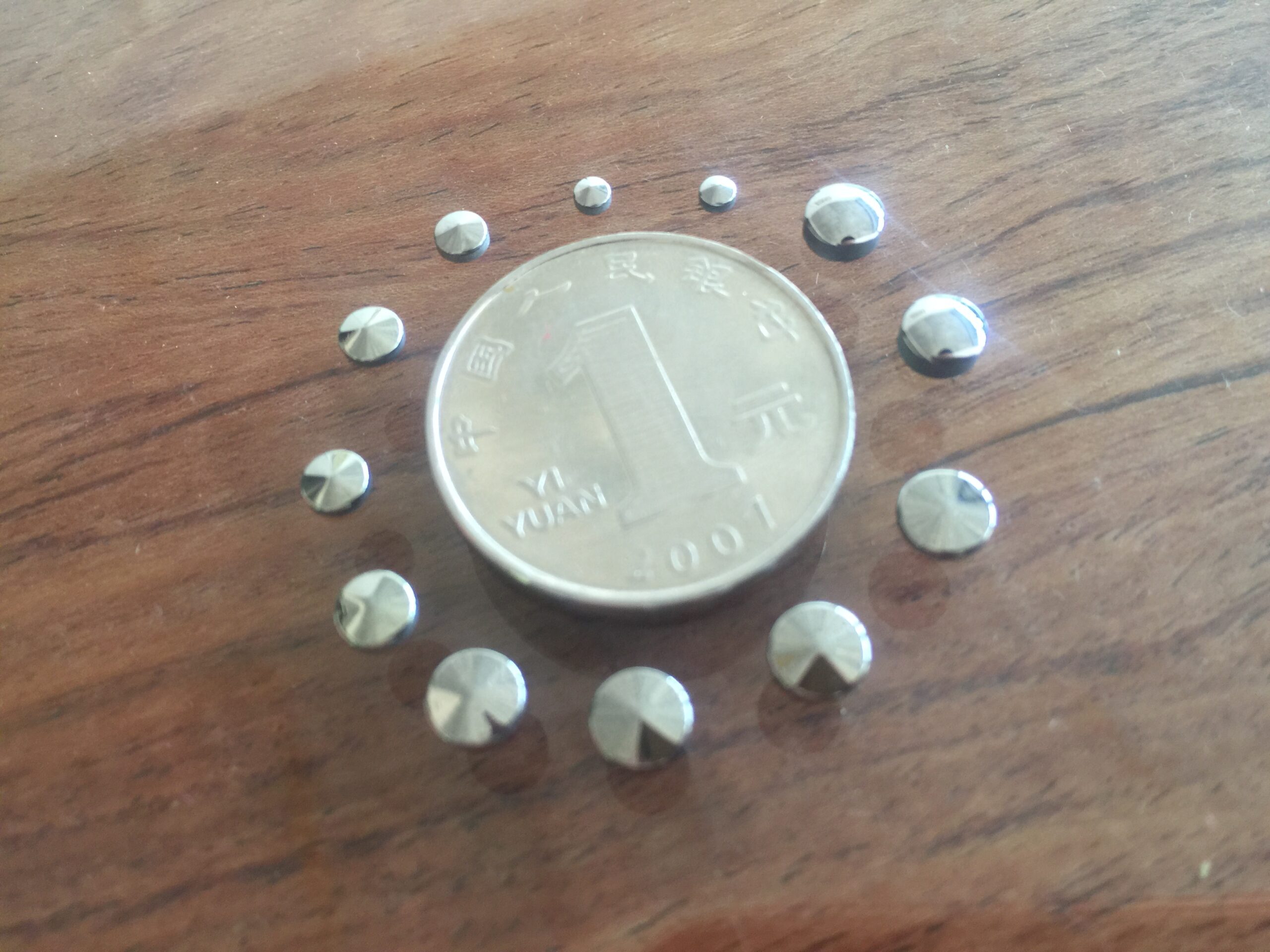
Case Studies on Germanium Recovery from Discarded Optical Fiber Materials for Reducing Environmental Pollution
Abstract
The recovery of germanium (Ge) from discarded optical fiber materials significantly reduces the risk of heavy metal pollution while enhancing resource recycling efficiency. Typical case studies include: (1) Hydrometallurgical processes (hydrochloric acid leaching followed by distillation purification) achieving Ge recovery rates above 90%, with heavy metal content in waste acid liquids reduced to below 1 ppm; (2) Pyrolysis-chlorination methods involving high-temperature decomposition of organics to generate GeCl₄ with 99.99% purity, reducing energy consumption by 40% compared to traditional processes; (3) Biosorption technologies utilizing thiol-modified fungal mycelia selectively adsorbing Ge ions, lowering germanium concentration in wastewater from 200 mg/L to 0.5 mg/L. These technologies effectively mitigate soil pollution caused by landfilling (germanium leaching reduced by 98%) and promote the green transformation of the optical communications industry.
- Environmental Pollution from Discarded Optical Fibers and the Value of Germanium Recovery
1.1 Characteristics of Optical Fiber Waste and Pollution Mechanisms
- Material composition: Optical fiber preforms contain germanium-doped layers (5–20% GeO₂), with pure SiO₂ cladding; each ton of discarded fiber contains 1.5–6 kg of germanium. Outer sheaths include PVC (with phthalate plasticizers) and aramid fibers, which are difficult to degrade.
- Pollution risks: During landfilling, GeO₂ dissolves into Ge⁴⁺ ions in acidic leachate (pH <5), migrating three times faster than lead and exhibiting a half-life exceeding 50 years. Incineration generates germanium-containing fly ash with concentrations up to 2000 mg/kg, surpassing the EU hazardous waste limit (100 mg/kg) by 20 times.
1.2 Economic and Environmental Benefits of Germanium Recovery
- Resource scarcity: Global germanium annual production is only about 150 tons. Optical fiber waste accounts for 30% of recyclable germanium sources; recycling 1 ton of fiber avoids mining approximately 20 tons of primary germanium ore.
- Pollution cost comparison: Landfilling costs (including environmental taxes) reach $800 per ton, while germanium recovery revenues can cover 120–150% of treatment costs.
- Typical Recovery Processes and Environmental Performance
2.1 Closed-Loop Hydrometallurgical Recovery
- Process flow: Crushing and sorting to separate SiO₂ and GeO₂ → hydrochloric acid leaching (6 mol/L HCl at 90°C) → distillation purification of GeCl₄ → hydrolysis and calcination to obtain high-purity GeO₂.
- Pollution control: After five cycles of leachate reuse, arsenic and lead concentrations remain below 0.1 ppm; neutralized precipitates meet GB 5085.3-2007 hazardous waste landfill standards.
- Case data: A fiber recycling plant processing 3,000 tons annually achieves 92% germanium recovery, with total heavy metals in wastewater below 2 kg/year (99% reduction compared to landfilling).
2.2 Pyrolysis-Chlorination Combined Method
- Innovative design: Two-stage pyrolysis furnace—low temperature (400°C) decomposes PVC; high temperature (1000°C) cracks aramid fibers; tail gases treated with SCR denitrification (NOx <50 mg/m³).
- GeO₂ reacts with Cl₂ at 250°C forming GeCl₄ with conversion rates >98%; condensation yields product purity of 99.99%.
- Energy optimization: Waste heat recovery reduces steam consumption by 40%, lowering energy use per ton from 1,200 kWh to 720 kWh.
- Heraeus project (Germany): Recovery costs reduced from $80/kg to $45/kg; dioxin emissions below 0.1 ng TEQ/m³ (EU limit 0.5 ng).
2.3 Application of Biosorption Technology
- Mechanistic breakthrough: Thiol-modified Aspergillus niger exhibits Ge⁴⁺ adsorption capacity up to 280 mg/g at pH 3, with selectivity coefficient (Ge/Pb) >500.
- Engineering case: A China Mobile recycling center operates bioreactors treating 5 m³/day, achieving effluent germanium concentrations below 0.5 mg/L; biosorbent regeneration maintains >85% efficiency after 10 cycles.
- Comprehensive benefits: Compared to chemical precipitation, sludge generation is reduced by 90%, and treatment costs decrease by 60% without requiring additives like sodium sulfide.
- Quantitative Assessment of Environmental Benefits
3.1 Life Cycle Analysis (LCA)
- Carbon emissions comparison: Hydrometallurgical recycling emits 12 kg CO₂ per kg Ge, an 86% reduction compared to 85 kg CO₂/kg from primary mining and refining.
- Ecotoxicity indicators: USEtox modeling shows freshwater ecotoxicity potential (FAETP) decreases from 3.5 CTUe (primary production) to 0.2 CTUe with recycling.
3.2 Pollution Blocking Effects
- Soil protection: Germanium leaching from recycled landfill residues is below 0.05 mg/L (TCLP test), a 99.5% decrease compared to untreated waste (10 mg/L).
- Water safety: A pilot project in the Pearl River Delta demonstrated that watershed germanium concentrations dropped from 1.2 μg/L to background levels (0.03 μg/L) after recovery implementation.
- Industry Promotion Bottlenecks and Countermeasures
4.1 Technical and Economic Challenges
- Cost sensitivity: When germanium prices fall below $1,000/kg, hydrometallurgical recovery net profit margins drop below 5%, necessitating government subsidies (e.g., China’s Waste Electrical and Electronic Equipment Treatment Fund).
- Equipment investment: Construction costs for plants processing tens of thousands of tons annually exceed $20 million, limiting participation by SMEs.
4.2 Policy and Standard Deficiencies
- Collection classification systems: Only the EU includes optical fibers under the WEEE directive; China lacks explicit waste classification codes for fibers (no corresponding CNHW category).
- Technical specification gaps: Absence of standards such as “Germanium Recovery from Optical Fiber Technical Specification” leads to wide process variability (recovery rates 60–95%).
4.3 Collaborative Innovation Pathways
- Industry-academia-research cooperation: Huawei and Central South University developed microwave-assisted leaching, shortening recovery cycles from 12 to 2 hours.
- Ecosystem leadership: A company’s “Fiber-to-Home Recycling Closed Loop” program mandates operators to return discarded fiber cables with a 70% return target.
- Future Technology Trends
5.1 Intelligent Sorting
- Laser-induced breakdown spectroscopy (LIBS): Real-time detection of GeO₂ in crushed materials with ±0.1% accuracy; sorting efficiency reaches 10 tons/hour, 20 times faster than manual sorting.
- Digital twin modeling: ANSYS-based leaching reactor simulations optimize reagent consumption by 15% and reduce germanium loss rate to 3%.
5.2 Green Chemistry Breakthroughs
- Ionic liquid extraction: [BMIM]PF₆ extractant exhibits Ge⁴⁺ distribution coefficient >1000 and stripping efficiency >99%, replacing toxic TBP systems.
- Photocatalytic reduction: TiO₂/g-C₃N₄ heterojunction selectively reduces Ge⁴⁺ to elemental Ge under UV, yielding 99.9% purity precipitates without added reductants.
5.3 Urban Mining Development
- Urban resource mapping: GIS-based inventories estimate global accumulative recoverable germanium in fiber waste at 800 tons (valued at $6.4 billion).
- Blockchain traceability: Full-chain data recording from base stations to recycling plants improves regulatory transparency (e.g., pilot by France’s Suez Group).
Conclusion
Germanium recovery from discarded optical fibers via hydrometallurgy and pyrolysis-chlorination effectively reduces soil heavy metal pollution (leaching decreased by 99.5%) while enabling efficient resource utilization (recovery rates above 90%). Emerging biosorption and ionic liquid extraction technologies further minimize secondary pollution risks. Overcoming cost barriers and improving policy frameworks are critical for wider adoption. Integration of intelligent sorting and green chemistry holds promise for establishing a circular economy model with lifecycle pollution control in the optical communications sector.
