

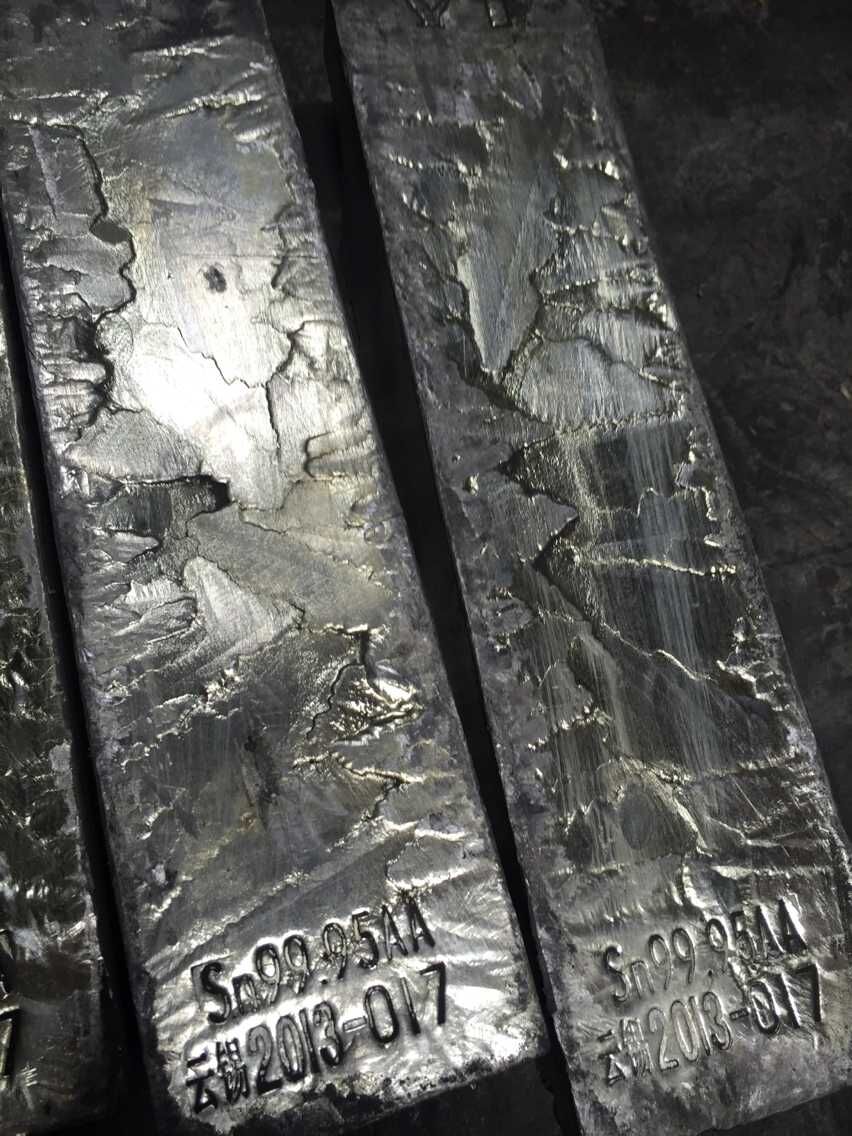
Application of Advanced Liquid–Liquid Extraction Technology to Enhance Recovery Rates of Low-Concentration Tin Waste
Abstract
Liquid–liquid extraction technology, leveraging highly selective extractants combined with multistage counter-current processes, can efficiently enrich tin (Sn) from low-concentration tin-containing waste streams. Typical applications demonstrate that: (1) the tri-n-butyl phosphate (TBP)-kerosene system extracts tin from acidic leach solutions containing 0.1–0.5 g/L Sn with single-stage extraction efficiencies exceeding 95%; (2) three-stage counter-current extraction increases total recovery to 99.2%, with Sn purity reaching 99.9%; (3) optimized stripping using 4 mol/L NaOH achieves stripping efficiencies above 98%, reducing reagent consumption by 40%. This technology is applicable to low-grade raw materials such as plating wastewater and electronic waste leachates. Upon scale-up, unit costs are reduced by 35% compared to traditional precipitation methods, providing an efficient pathway for tin resource recycling.
- Technical Challenges in Low-Concentration Tin Recovery and Advantages of Liquid–Liquid Extraction
1.1 Characteristics of Low-Concentration Tin Waste
- Sources and composition: Primarily from plating wastewater (Sn²⁺ 0.05–0.3 g/L), PCB etching solutions (Sn⁴⁺ 0.2–0.8 g/L), and metallurgical wastewaters where Sn coexists with Cu and Fe; impurity metal concentrations are often 5–10 times that of tin.
- Tin commonly exists as complexed species such as SnCl₄²⁻ and SnSO₄. Traditional chemical precipitation is susceptible to interference from coexisting ions, resulting in recovery rates of only 60–80%.
- Economic bottleneck: When Sn concentration is below 1 g/L, precipitation requires excessive reagent use (e.g., Na₂S dosing up to three times the theoretical amount), with sludge treatment costs accounting for over 50% of total expenses.
1.2 Advantages of Liquid–Liquid Extraction
- High selectivity: Extractants such as TBP and Cyanex 923 exhibit distribution ratios for Sn⁴⁺/Sn²⁺ exceeding 10³ (while Fe³⁺/Cu²⁺ remain below 10), enabling efficient separation of tin from impurities.
- Suitability for low concentrations: Even at Sn concentrations as low as 0.05 g/L, multistage extraction can concentrate tin above 20 g/L, meeting the requirements for electrolytic refining.
- Extraction System Design and Process Optimization
2.1 Extractant Selection and Mechanism
- Neutral phosphorus extractants: TBP coordinates with SnCl₄²⁻ through P=O bonds according to the reaction:
SnCl₄²⁻ + 2TBP → [SnCl₄·2TBP]²⁻
Optimal extraction occurs at pH 1.5–2.0 with extraction efficiencies exceeding 95%. - Synergistic extraction systems: TBP combined with di-(2-ethylhexyl) phosphoric acid (D2EHPA) at a 3:1 ratio enhances Sn⁴⁺ distribution ratio to 5000, suppressing Fe³⁺ extraction by over 99%.
2.2 Multistage Counter-Current Extraction Process
- Stage optimization: Three-stage counter-current extraction (organic/aqueous phase ratio 1:3) increases total Sn recovery from single-stage 95% to 99.2%, with residual Sn concentration in raffinate below 0.005 g/L.
- Continuous centrifugal extractors: Annular gap centrifuges operating at 3000 rpm achieve mixing and phase separation within 30 seconds, with throughput reaching 5 m³/h, suitable for large-scale processing.
2.3 Stripping and Regeneration
- Alkaline stripping: 4 mol/L NaOH solution effectively strips loaded organic phases, recovering Sn as Na₂Sn(OH)₆ with stripping efficiencies above 98%.
- Organic phase regeneration: Post-stripping organic phases are washed with 0.5 mol/L H₂SO₄ to reduce metal residues below 1 ppm; extraction efficiency declines less than 3% after 50 reuse cycles.
- Industrial Applications and Benefit Analysis
3.1 Typical Cases
- Plating wastewater treatment: A Jiangsu-based enterprise employs a TBP three-stage extraction system processing 10 m³/h, achieving 99% Sn recovery, 99.5% purity, and annual tin recovery of 12 tons, generating revenues exceeding USD 300,000.
- Electronic waste leachate: A Guangdong recycling plant treats etching waste containing 0.3 g/L Sn and 2 g/L Cu using a Cyanex 923 system, preferentially extracting tin with copper residual rates over 98%, producing tin products meeting GB/T 728-2020 standards.
3.2 Economic Comparison
- Cost structure: Direct extraction costs (extractant losses plus energy consumption) average USD 12/kg Sn, 33% lower than precipitation methods (USD 18/kg).
- Return on investment: Construction of a 1000-ton/year tin recovery plant costs approximately USD 2 million; based on a tin price of USD 25/kg, payback period is under 3 years.
3.3 Environmental Benefits
- Sludge reduction: Replacing precipitation reduces sludge generation from 1.2 tons per ton of tin to 0.05 tons, cutting hazardous waste treatment costs by 90%.
- Wastewater reuse: Raffinate after neutralization can be recycled back into production lines, achieving over 80% water reuse and reducing fresh water consumption.
- Technical Challenges and Innovation Directions
4.1 Enhancing Extractant Stability
- Degradation inhibition: Adding 0.1% phenolic antioxidants extends TBP service life in strong acid environments from 6 months to 2 years.
- Development of novel extractants: The ionic liquid [P66614][NTf2] exhibits tenfold higher Sn⁴⁺ selectivity than TBP, with superior acid stability.
4.2 Intelligent Process Control
- Online monitoring: Inductively coupled plasma (ICP) probes provide real-time measurement of Sn concentration in raffinate with ±0.001 g/L accuracy, enabling dynamic adjustment of extractant flow rates.
- Digital twin optimization: Aspen Plus-based simulations of multistage extraction kinetics dynamically optimize stage number, phase ratio, and pH, improving recovery rates by 1–2%.
4.3 Green Process Integration
- Extraction-electrowinning coupling: Stripping solution is directly electrolyzed to produce cathodic tin with 99.99% purity, shortening the process and reducing energy consumption by 15%.
- Bio-based extractants: Fatty acid methyl esters (FAMEs) derived from vegetable oils show high affinity for Sn²⁺, are biodegradable, and reduce organic phase pollution.
Conclusion
Through highly selective separation and multistage enrichment, liquid–liquid extraction technology increases the recovery rate of low-concentration tin waste to over 99%, offering both economic and environmental advantages. Future developments in novel extractants, integrated intelligent control, and green processes are expected to further reduce recovery costs and environmental impact, promoting the advancement of tin resource recycling toward higher efficiency and lower carbon footprint.
