

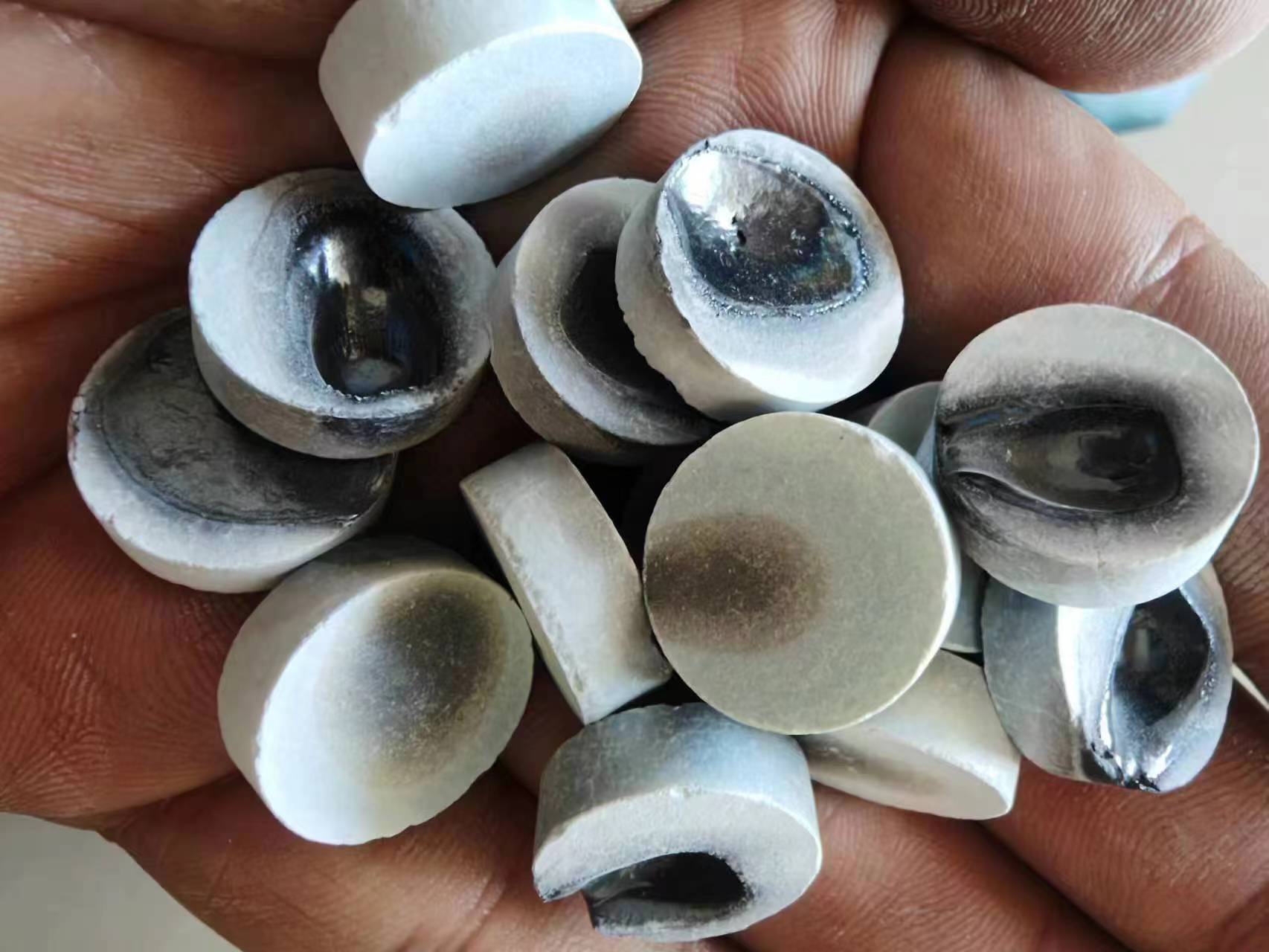
Advantages of Hafnium Applications in the Nuclear Industry
Abstract
Hafnium is a metal renowned for its excellent corrosion resistance and high melting point, playing a crucial role in the nuclear industry. As a material for nuclear reactor control rods, hafnium’s key advantages include its high neutron absorption cross-section and favorable mechanical properties, enabling effective control of nuclear reaction rates. Furthermore, hafnium’s material stability at elevated temperatures makes it suitable for high-pressure nuclear reactor environments, ensuring operational safety and efficiency. Its chemical inertness reduces corrosion risks, enhancing the durability and reliability of nuclear systems.
1.Physical and Chemical Properties of Hafnium
Hafnium (Hf), a transition metal, is distinguished by its corrosion resistance and very high melting point. These properties confer significant benefits for its use in nuclear applications.
1.1 Physical Properties
1.1.1 High Melting Point
Hafnium’s melting point is approximately 2233°C, making it suitable for use under extreme high-temperature conditions, such as inside nuclear reactors.
1.1.2 Excellent Mechanical Strength
With a relatively high density (~13.31 g/cm³) and hardness, hafnium exhibits outstanding mechanical stability under high-pressure and high-temperature environments.
1.2 Chemical Properties
1.2.1 Corrosion Resistance
Hafnium demonstrates strong corrosion resistance, effectively resisting chemical degradation under high temperature and pressure, which ensures long-term durability.
1.2.2 Chemical Inertness
Its chemical inertness in nuclear reactor environments helps minimize equipment corrosion, thereby improving system longevity and reliability.
2.Applications of Hafnium in the Nuclear Industry
Hafnium is widely applied in nuclear technology, especially as a control material in nuclear reactors.
2.1 Control Rods in Nuclear Reactors
2.1.1 High Neutron Absorption Cross-Section
Hafnium possesses a high neutron absorption cross-section, allowing it to effectively regulate reaction rates when used in reactor control rods, thereby ensuring safe nuclear fission processes.
2.1.2 Reaction Rate Regulation
The use of hafnium ensures that control rods respond rapidly, enabling efficient adjustment of reactor power output and operational stability.
2.2 Material Stability
2.2.1 High-Temperature Stability
Materials in nuclear reactors must withstand elevated temperatures; hafnium’s stability guarantees effective reactor operation under high-pressure conditions.
2.2.2 Resistance to Thermal Shock
Hafnium can resist thermal shocks within the reactor, preventing material damage or deformation caused by rapid temperature fluctuations.
2.3 Durability and Safety
2.3.1 Long-Term Durability
Hafnium’s chemical inertness and corrosion resistance significantly extend its service life in nuclear systems, reducing equipment replacement frequency and maintenance costs.
2.3.2 Safety
In high-risk nuclear environments, hafnium’s stability and controlled reactivity enhance operational safety and reduce the likelihood of accidents.
3.Challenges and Future Development
Despite its advantages, the application and development of hafnium in the nuclear industry face several challenges.
3.1 Resource and Cost Issues
3.1.1 Extraction Difficulty
Hafnium commonly coexists with zirconium, making separation complex and increasing purification costs and technical difficulty.
3.1.2 Economic Feasibility
The relatively high price of hafnium may increase costs, especially in smaller-scale reactor projects.
3.2 Directions for Technological Improvement
3.2.1 Enhancing Purification Technologies
Advances in purification methods could reduce costs and expand hafnium’s adoption and application scope in the nuclear industry.
3.2.2 Development of Innovative Applications
Exploring hafnium’s potential uses beyond current nuclear reactors, including other reactor types, could broaden its contribution to the energy sector.
4.Conclusion and Outlook
With its high melting point, corrosion resistance, and high neutron absorption cross-section, hafnium stands as a vital material in the nuclear industry. By controlling nuclear reaction rates and enhancing system stability and safety, hafnium ensures durable operation under high-temperature and high-pressure conditions. Although challenges persist due to resource scarcity and high costs, ongoing technological advancements and deeper application will likely strengthen hafnium’s role in nuclear energy. Through innovation and breakthroughs, hafnium is poised to remain a key player in the future of energy development.
