

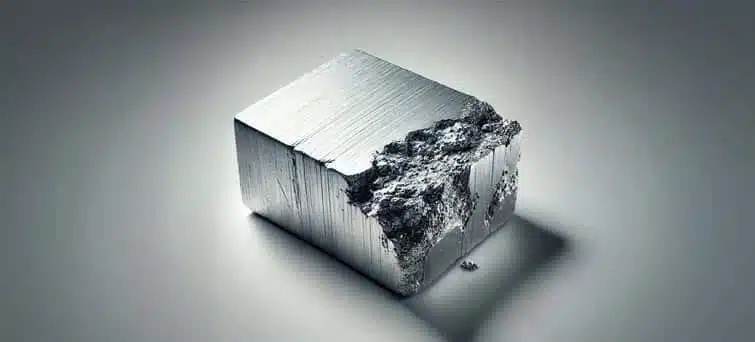
A Comprehensive Analysis of Dysprosium Alloy Applications in Global High-End Manufacturing

Abstract:
Dysprosium, a pivotal member of the heavy rare earth elements (HREEs) family, has emerged as a cornerstone material in advanced manufacturing sectors. Its unique magnetic, optical, and metallurgical properties render it indispensable in applications ranging from high-performance permanent magnets for electric vehicles (EVs) to lightweight structural alloys for aerospace. This white paper provides a comprehensive overview of the specific applications of dysprosium alloys in manufacturing, integrating the latest market data, policy shifts, and technological breakthroughs up to April 2026.
1. Introduction
Dysprosium is primarily utilized not as a pure metal, but in the form of alloys such as Dysprosium-Iron Alloy and as an additive in magnesium and aluminum matrices. The strategic value of dysprosium has been amplified by the rapid growth of the green energy and robotics sectors, coupled with a highly concentrated global supply chain.
2. Core Applications in Manufacturing
2.1 High-Performance NdFeB Permanent Magnets
The predominant application of dysprosium is as an additive in Dysprosium-Iron (DyFe) Alloy for the production of sintered NdFeB magnets. The addition of dysprosium significantly enhances the intrinsic coercivity and thermal stability of these magnets, preventing demagnetization at operating temperatures exceeding 150°C-.
- Automotive: Essential for traction motors in electric and hybrid vehicles, where under-hood temperatures demand high-grade magnetic stability.
- Renewable Energy: Critical for high-efficiency direct-drive generators in wind turbines, ensuring long-term operational reliability in harsh environments.
- Robotics & Automation: With the commercial launch of humanoid robots, demand for high-performance servo motors has surged. Each unit is estimated to require 3.5-4 kg of high-grade NdFeB, exceeding the demand from EVs and creating a new growth vector for dysprosium consumption.
2.2 Advanced Grain Boundary Diffusion (GBD) Targets
To mitigate the high cost and scarcity of dysprosium, the industry has adopted Grain Boundary Diffusion technology. In this process, high-purity Dysprosium Targets (≥99.9% purity) are utilized in physical vapor deposition to precisely diffuse dysprosium along the grain boundaries of NdFeB magnets.
This technique reduces dysprosium consumption by 30-50% compared to traditional alloying methods while achieving equivalent or superior coercivity enhancement. Companies like Grinm Advanced Materials have achieved commercial-scale production of these specialized targets, marking a significant advancement in resource efficiency.
2.3 Lightweight Structural Alloys (Mg-Dy and Al-Dy Alloys)
Recent innovations have expanded dysprosium‘s role into structural materials. In May 2025, the Chinalco Research Institute filed a patent (CN119932388A) for a novel dysprosium-containing magnesium alloy. This alloy incorporates 5-7% dysprosium along with neodymium and cerium to achieve a unique combination of properties.
- Properties: The alloy exhibits enhanced mechanical strength and, critically, improved flame retardancy.
- Applications: These characteristics make it highly suitable for weight-sensitive applications in aerospace, telecommunications, and automotive industries, where both high performance and safety are paramount.
Furthermore, patents exist for aluminum alloys containing dysprosium to improve recrystallization resistance and corrosion properties.
2.4 Frontier Technological Applications
Dysprosium-based compounds are at the forefront of several emerging technologies:
- Cryogenic Magnetic Refrigeration: Research published in 2025 highlights the exceptional magnetocaloric effect of Dy-doped materials like Gd₀.₅Dy₀.₅CrO₃, achieving a maximum magnetic entropy change of 28.79 J/kg·K at 7.5K. Similarly, Gd₁₋ₓDyₓVO₄ materials demonstrated a magnetic entropy change of 36.67 J/(kg·K) under a 5T field. These findings are crucial for developing helium-free cooling systems for quantum computing and space applications.
- Ultra-High-Density Data Storage: A 2025 study in Nature reported the synthesis of a novel dysprosium single-molecule magnet (SMM) capable of retaining magnetic memory at 100 K (-173°C), a temperature feasible in modern data center cooling systems. This paves the way for storage devices with up to 100 times the capacity of current hard drives.
- Magneto-Optical Storage: Metallic dysprosium and its oxides are used in magneto-optical recording materials and as anti-reflective coatings in advanced optics.
3. Market Dynamics and Policy Landscape
3.1 Supply-Demand and Price Trends
The global dysprosium market, valued at USD 6.3 billion in 2025, is projected to reach USD 10.8 billion by 2035, driven by a 6.2% CAGR. Dysprosium demand is projected to have exceeded supply in 2025 and is expected to remain in deficit through 2026.
This supply crunch is reflected in prices. As of early 2026, domestic Chinese prices for dysprosium oxide hovered around 145,000 yuan/metric ton, while export prices surged to $1,100/kg in Europe and $1,200/kg CIF North America due to export controls.
3.2 Strategic Export Controls
In April 2025, the Chinese Ministry of Commerce and General Administration of Customs issued Announcement No. 18, formally placing dysprosium-related items, including metal, alloys, and targets, under export control-. This policy underscores the strategic importance of heavy rare earths and has accelerated global supply chain restructuring, prompting efforts by companies like Lynas and Energy Fuels to establish ex-China separation capacity. Simultaneously, Neo Performance Materials initiated heavy rare earth separation in Estonia in April 2026, focusing on dysprosium and terbium-.
4. Conclusion
Dysprosium alloys are a critical enabler of modern manufacturing, particularly in the transition to a low-carbon economy and the advancement of intelligent automation. From stabilizing EV motors against heat to reinforcing the wings of future aircraft, dysprosium’s influence is pervasive yet precise. As global supply chains adapt to new regulatory realities and demand continues to outstrip supply, dysprosium will remain a central focus in the geopolitical and technological landscape of critical materials.
