

Hafnium High-Temperature Performance and Applications in Extreme Environments

Abstract
Hafnium, with its exceptionally high melting point of 2233°C, excellent high-temperature mechanical strength, and oxidation/ablation resistance, has become a critical strategic material for extreme high-temperature environments today. Its high-temperature performance is realized through three forms: as a grain boundary strengthening element (1%-2% addition) in nickel-based superalloys, elevating turbine blade operating temperatures above 1038°C; forming ultra-high melting point ceramic compounds—hafnium carbide (HfC) melts at 3890°C, and hafnium carbonitride composites withstand 3000°C oxyacetylene flame ablation for 900 seconds with linear ablation rates as low as 0.0007 mm/s; and as hafnium-based alloy matrices maintaining structural stability above 1650°C. Hafnium is consequently widely utilized in extreme service environments including aero-engine hot-section components (turbine blades, combustors), rocket engines (nozzles, nose cones), hypersonic vehicle thermal protection systems, nuclear reactor control rods (neutron absorption + high-temperature resistance), and plasma cutting electrodes. Its scarcity and irreplaceability define hafnium’s strategic value in modern high-temperature technology.
Main Text
I. Fundamental Physical Properties and Intrinsic High-Temperature Characteristics of Hafnium
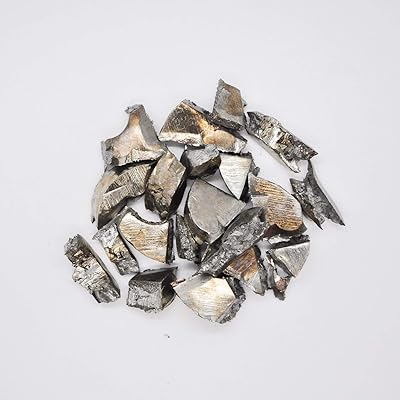
Hafnium (Hf) is a transition metal with atomic number 72, exhibiting a silvery-gray luster, density of 13.31 g/cm³, melting point as high as 2233°C (4051°F), and boiling point around 4600°C. This melting point places hafnium among the refractory metals, second only to a few elements such as tungsten and tantalum. Hafnium possesses a hexagonal close-packed (hcp) crystal structure, elastic modulus of 78 GPa, Mohs hardness of 5.5, and maintains good mechanical strength at elevated temperatures.
Chemically, hafnium is stable in air at room temperature, but powdered form ignites readily. At high temperatures, it directly combines with oxygen and nitrogen to form oxides and nitrides. Notably, hafnium exhibits rapid heat absorption and release characteristics (twice as fast as zirconium and titanium), a thermophysical property making it suitable for components requiring fast thermal response, such as jet engines.
Hafnium’s high-temperature performance originates from its strong metallic bonding and its ability to form high-melting-point oxides. Hafnium oxide (HfO₂) itself is an excellent high-temperature ceramic material with a low thermal expansion coefficient (≤10×10⁻⁶/K), maintaining structural stability above 1200°C, making it an ideal candidate for thermal barrier coatings.
II. Strengthening Role of Hafnium in Superalloys
The most significant application of hafnium in the superalloy field is as a trace addition element (typically 1%-2%) in nickel-based superalloys. In polycrystalline nickel-based alloys such as MAR-M 247, hafnium segregates to grain boundaries, significantly strengthening grain boundary cohesion, thereby substantially enhancing the material’s high-temperature creep resistance and tensile strength. These alloys are utilized by companies like Siemens for turbine blades in ground-based gas turbines, operating at temperatures up to 1038°C under prolonged high-temperature, high-pressure, and high-stress “hot-section” conditions.
Hafnium also forms second-phase dispersoids with carbon, nitrogen, and oxygen. Due to its high affinity, hafnium generates fine carbide and nitride particles within the alloy, pinning grain boundaries and dislocation motion, further enhancing the material’s high-temperature stability. Hafnium-containing nickel-based superalloys have become standard materials for critical components such as aero-engine turbine blades and combustors.
III. Hafnium’s Ultra-High Melting Point Compounds and Their Applications
Hafnium’s most remarkable high-temperature performance is demonstrated in its compounds:
- Hafnium Carbide (HfC): Melting point as high as 3890°C, one of the highest among all binary compounds. Its high elastic modulus, good electrical and thermal conductivity, and thermal shock resistance make it an ideal material for rocket nozzles and re-entry vehicle nose cones.
- Hafnium Carbonitride (HfC₀.₇₆N₀.₂₄): Recent research demonstrates that nitrogen-doped hafnium carbonitride ceramic matrix composites exhibit exceptional performance in 3000°C oxyacetylene flame ablation tests—linear ablation rate of only 0.0007 mm/s, reduced to less than 1/14th of pure HfC, withstanding over 900 seconds. The oxidation resistance mechanism involves nitrogen preferentially forming locally stable structures with hafnium through bond reconstruction, synergistically with carbon and oxygen constituting a multi-element coupled network, suppressing CO gas release and retarding oxygen diffusion.
- Hafnium-Tantalum Mixed Carbide (4TaC·HfC): Melting point as high as 4215°C, one of the highest known compounds, used for extreme thermal protection scenarios.
- Hafnium Diboride (HfB₂): Exhibits excellent high-temperature oxidation resistance, usable in air up to 2000-2200°C, with oxidation resistance ten times higher than zirconium diboride.
IV. Hafnium-Based Alloys and Composites for High-Temperature Applications
Hafnium-based alloys, by incorporating elements such as tantalum, molybdenum, and tungsten, form composite structures maintaining oxidation resistance above 1650°C. For example, Hf-20~27Ta-2Mo series alloys have been applied in rocket engine blades and thermal protection layers.
Other typical hafnium-based alloys include:
| Alloy System | Application Scenario | Temperature Performance |
|---|---|---|
| Ta-W-Hf series (e.g., T111, T222) | Spacecraft re-entry thermal protection, honeycomb structure brazing | Maintains high strength above 1482°C |
| Nb-Hf series (C-103, C-129Y) | Rocket nozzles, gas turbine blades | Used in Apollo spacecraft ascent engines |
| Mo-Hf-C series (MHC) | Rocket nozzles, high-temperature furnace components | High recrystallization temperature |
| C_f/(HfC+ZrC+TaC) composites | Hypersonic vehicle nose cones | Density 2.1-2.4 g/cm³, mass ablation rate 0.053 g/s |
V. Suitable High-Temperature Environment Types and Typical Cases
Based on the above properties, hafnium and its compounds are suitable for the following categories of extreme high-temperature environments:
1. Aero-Engine Hot-Section Components
Turbine blades and vanes must withstand enormous centrifugal and thermal stresses above 1000°C. Nickel-based superalloys containing 1%-2% hafnium, through grain boundary strengthening, significantly extend blade fatigue life in corrosive combustion gas environments.
2. Rocket Propulsion Systems
Rocket nozzles must endure high-velocity combustion gas冲刷 exceeding 3000°C. Hafnium carbide-based composites form dense oxide layers in this environment, resisting ablation and thermal shock. The Apollo lunar module ascent stage engine nozzle utilized Nb-10Hf alloy.
3. Hypersonic Vehicle Thermal Protection
Vehicle surfaces during re-entry can reach temperatures exceeding 2000°C. Hafnium-based alloys and hafnium carbide composites serve as thermal protection layers for nose cones, wing leading edges, etc., combining oxidation and thermal shock resistance.
4. Nuclear Reactor Control Rods
Hafnium possesses a large thermal neutron absorption cross-section (approximately 105 barns) and maintains high-temperature mechanical properties and corrosion resistance under neutron irradiation. It is suitable for pressurized water reactor control rods, capable of long-term service in high-temperature, high-pressure water environments. Control rod costs alone can reach millions of dollars.
5. Plasma Cutting Electrodes
Hafnium’s high melting point and electron emission properties make it an electrode insert material for plasma arc cutting torches, operating stably within arcs reaching tens of thousands of degrees Celsius.
6. High-Temperature Vacuum Electronic Devices
Hafnium is used in X-ray tube cathodes, high-voltage discharge tube electrodes, etc., leveraging its thermionic emission capability and high-temperature stability.
VI. Conclusion and Outlook
With its metallic melting point of 2233°C and compound melting points reaching up to 4215°C, hafnium has become an irreplaceable strategic material in modern high-temperature technology. Whether as a trace addition strengthening nickel-based superalloys or as the matrix for ultra-high-temperature ceramics like carbides and borides, hafnium plays a critical role in extreme environments such as aero-engines, rocket propulsion, hypersonic vehicles, and nuclear reactors.
Looking ahead, with the development of technologies such as hypersonic weapons, reusable spacecraft, and higher-efficiency gas turbines, the demand for materials capable of withstanding even higher temperatures and longer lifetimes will become more urgent. Hafnium-based ultra-high-temperature ceramic composites, through composition control, fiber toughening, and multi-scale structural design, have already demonstrated excellent potential in 3000°C ablation environments. Concurrently, hafnium’s resource scarcity (annual production approximately 70 tonnes) and extraction difficulty ensure its strategic value will continue to rise. In the realm of extreme high-temperature materials, hafnium’s “irreplaceability” will maintain its position at the technological forefront.
