

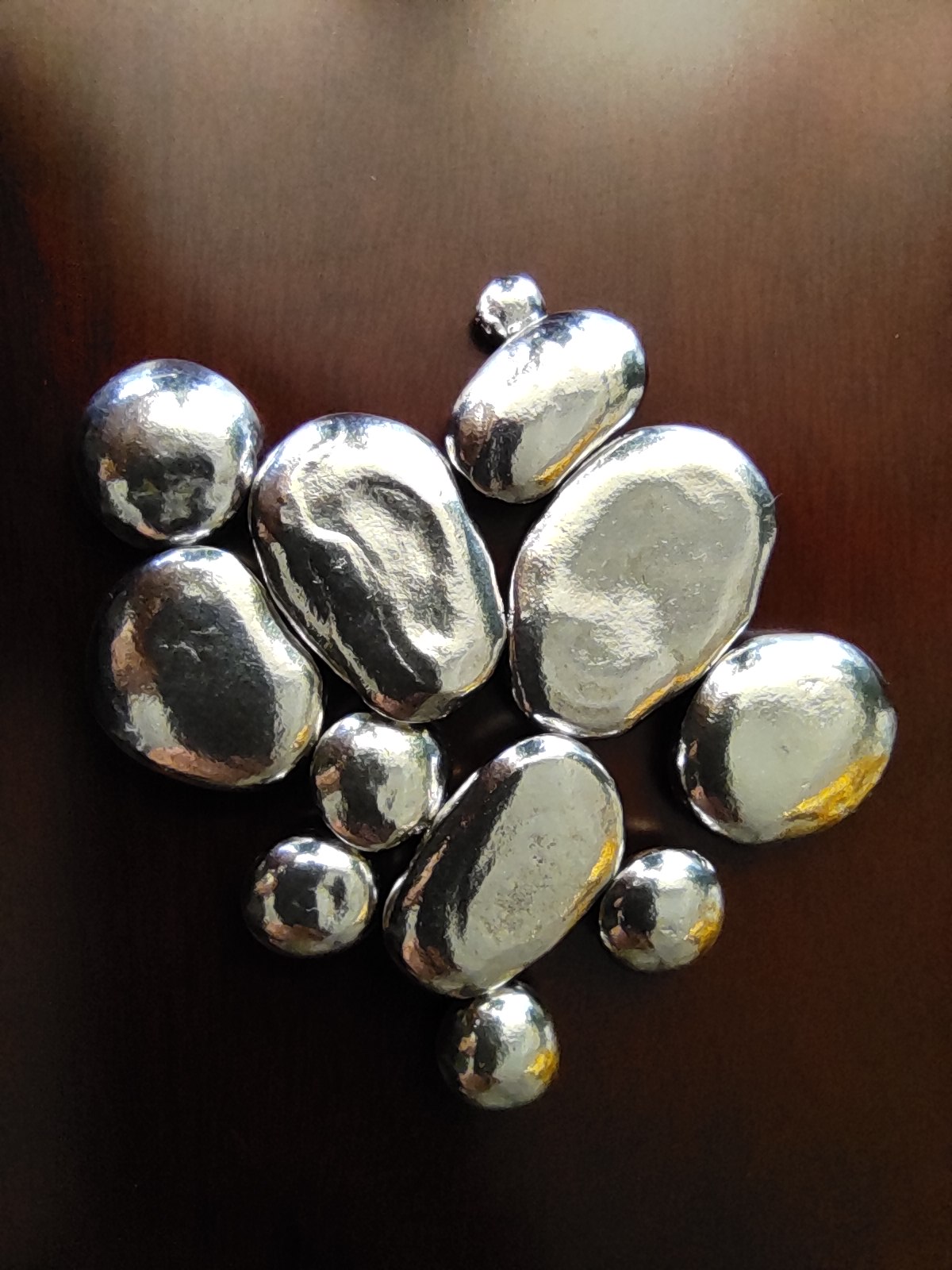
Iridium and Its Alloys in Extreme Environment Applications

Abstract
Iridium and its alloys represent the pinnacle of materials for confronting extreme environment challenges, primarily deployed in cutting-edge fields with near-absolute demands for high-temperature resistance, corrosion resistance, and stability. This stems from iridium’s unparalleled combination of properties: it possesses one of the highest corrosion resistances among all elements, withstanding attack from almost all acids including aqua regia, molten metals, and silicates. Concurrently, its melting point reaches an exceptional 2446°C, and it maintains excellent strength and creep resistance at high temperatures. Consequently, the core applications of iridium and its alloys (or composites) are highly focused on extreme scenarios in aerospace, chemical processing, nuclear energy, and fundamental scientific research. This article systematically details its specific applications in critical areas such as high-temperature thermocouples, aerospace propulsion engines, corrosion-resistant chemical apparatus, radioisotope heat sources, and high-performance spark plugs, analyzing its irreplaceable technological value.
I. Forms of Iridium Application: High-Purity Metal and Key Alloys
A crucial concept must first be clarified: in most extreme applications, high-purity iridium itself (often 99.9% pure or higher) is the primary form used, rather than broadly defined “iridium alloys.” This is because elemental iridium already possesses a very high performance ceiling. Alloying, while it can improve certain processing characteristics (e.g., adding thorium or tungsten for high-temperature strength, or rhodium to reduce brittleness), often sacrifices some corrosion resistance. Therefore, “iridium alloys” herein refer broadly to high-purity iridium-based materials or materials with limited alloying.
Their irreplaceability is built upon a “combinatorial advantage” of the following physicochemical properties:
- Ultimate Chemical Inertness: Among all metals, iridium’s resistance to chemical attack is paramount. It exhibits exceptional stability against common inorganic acids, alkalis, aqua regia, as well as molten oxides and metals at high temperatures.
- Outstanding High-Temperature Performance: Its very high melting point (2446°C) ensures it does not readily soften or melt at ultra-high temperatures. It also possesses superior high-temperature strength, creep resistance, and oxidation resistance (forming volatile IrO₄ in high-purity oxygen at high temperature, but stable in non-strongly oxidizing environments).
- Key Physical Attributes: High density (22.56 g/cm³), high elastic modulus, and relatively stable physical properties at elevated temperatures.
II. Detailed Analysis of Core Application Fields
Based on these properties, iridium’s use is strictly confined to areas serving as the “last line of defense” where conventional materials fail completely. Its main application scenarios are summarized in the table below:
| Application Field | Specific Component/Use | Environmental Challenge | Why Iridium (Alloy) is Chosen | Typical Form/Alloy |
|---|---|---|---|---|
| High-Temperature Measurement | Iridium-Rhodium Thermocouples (Ir/Ir-Rh) | Inert/vacuum or clean oxidizing atmospheres at 1800°C–2100°C. | The only metallic pair providing stable, accurate temperature measurement in this range. | Pure Ir wire paired with Ir-40Rh or Ir-50Rh alloy wire. |
| Aerospace Propulsion | Rocket engine igniters, radiation-cooled thrust chambers, blade coatings. | Extreme temperatures (>2000°C), high-velocity particle冲刷, severe thermal cycling. | The only metal capable of withstanding such temperatures in air without melting. | Pure Ir or Ir-Re / Ir-Hf composites as coatings or structural parts. |
| High-Temp. Corrosion Apparatus | Crucibles for sapphire/laser crystal growth (CZ method), glass fiber production components, highly corrosive chemical reactors. | Molten oxides (e.g., Al₂O₃) above 2000°C, molten glass, highly corrosive chemical media. | The only material that does not react with molten oxides and maintains crucible purity. | High-purity Ir crucibles, Ir sheaths, Ir coatings. |
| Nuclear Tech. & Space Power | Cladding for Radioisotope Thermoelectric Generators (RTG) (e.g., for ²³⁸PuO₂ fuel). | High temperature (>1000°C) from fuel decay, intense alpha radiation field, extreme containment & safety requirements. | Effectively contains radionuclide diffusion at high temps, ensuring decades of safe operation. | Iridium alloy (often with minor Pt-group additions) cladding. |
| High-Performance Ignition | Spark plug electrodes for aviation/racing engines. | Hot combustion gases, high-frequency high-voltage spark erosion, chemical corrosion. | Extremely high melting point & arc erosion resistance, far outlasting Ni-base or Pt electrodes. | Ir-Pt alloy or pure Ir tip. |
A deeper exploration of each field follows:
1. High-Temperature Thermocouples: The Temperature “Scale” Above 1800°C
In the 1800°C to 2100°C measurement range, iridium/iridium-rhodium (e.g., Ir-40Rh or Ir-50Rh) thermocouples are the ultimate choice among metallic thermocouples. They are primarily used in vacuum furnaces, inert gas furnaces, or clean oxidizing atmospheres, serving as the “eyes” for critical processes like high-temperature material sintering, crystal growth, and aerospace component testing. Their irreplaceability lies in the fact that within this temperature band, no other metallic pair can provide sufficient thermoelectric电动势 while maintaining structural integrity and measurement stability. Note: they are not suitable for prolonged use in reducing or contaminated atmospheres.
2. Aerospace Propulsion Engines: The Ultimate Armor Guarding the “Hot Section”
Iridium’s application in aerospace engines epitomizes the ultimate manifestation of its high-temperature capabilities:
- High-Temperature Critical Components: In radiation-cooled thrust chambers or igniters under extreme conditions, iridium or its composites are used as coatings or even thin-walled structural parts for critical sections due to their ability to withstand temperatures exceeding 2000°C in air. For example, coating a rhenium (Re) engine combustion chamber inner wall with iridium creates a perfect complement, leveraging Re’s high-temperature strength and Ir’s oxidation resistance, enabling prolonged engine operation in oxidizing exhaust gases.
- Single-Crystal Blade Protective Coatings: As part of the thermal barrier coating (TBC) system for advanced aviation engine single-crystal turbine blades, iridium coatings serve as bond coats or oxidation-resistant layers, effectively blocking oxygen inward diffusion to protect the underlying alloy.
3. Crystal Growth and Specialty Chemical Processing: Guardian of Purity and Corrosion Resistance
This is a typical application combining iridium’s corrosion resistance and high-temperature performance.
- Crystal Growth Crucibles: High-purity iridium crucibles are essential for growing large-size, high-quality laser crystals like sapphire and yttrium aluminum garnet (YAG) via the Czochralski (CZ) method. Molten Al₂O₃ (m.p. 2054°C) is highly corrosive at such temperatures, and almost any other material would contaminate the melt. Iridium crucibles ensure extreme crystal purity.
- Specialty Chemical Processing Equipment: For laboratory or pilot-scale apparatus handling molten strong alkalis, highly reactive halides, or extremely corrosive media, vessels, electrodes, or piping made of iridium or its alloys are the only viable choice.
4. Nuclear Energy and Space Exploration: The Final Barrier for Safety
In nuclear technology, iridium plays a vital safety role. In Radioisotope Thermoelectric Generators (RTGs) used for deep-space exploration, radioactive plutonium-238 dioxide fuel pellets are encapsulated within shells made of iridium alloy. The core requirement of this design is absolute containment over decades-long missions at operating temperatures exceeding 1000°C, preventing any radioactive material leakage. Iridium, due to its exceptional high-temperature strength, excellent resistance to irradiation-induced swelling, and ability to block radionuclide diffusion, stands as the only feasible material meeting this “ultimate safety” requirement.
5. High-Performance Spark Plugs: The Extremely Reliable Ignition Core
In aviation piston engines and high-performance racing engines, spark plugs operate in an extremely harsh environment. Using iridium or iridium-platinum alloy for the center electrode tip allows for a very fine tip (down to 0.4mm) due to its high melting point and resistance to spark erosion. This generates a stronger, more focused spark, improving ignition efficiency and engine performance. More importantly, it extends spark plug service life many times over that of nickel-alloy electrodes, achieving extreme reliability.
III. Challenges and Future Outlook
Despite its excellent performance, iridium application faces significant challenges:
- Extreme Scarcity and High Cost: Iridium is one of the rarest elements in the Earth’s crust, with global annual production of only a few tonnes. Its extremely high price strictly limits its use to absolutely critical “must-use” components.
- Formidable Processing Difficulties: Iridium is brittle and hard, with poor room-temperature workability and a tendency to oxidize at high temperatures. Its melting, forging, wire drawing, and welding require highly specialized processes and equipment.
Looking ahead, as fields like aerospace, nuclear energy, and fundamental science push into more extreme environments, demand for iridium will persist or even grow. Development trends will focus on:
- Composite Material Development: e.g., Ir/Re, Ir/HfC composites, aiming to combine the advantages of different materials for performance multiplication.
- Coating Technology Optimization: Developing more efficient, adherent iridium coating techniques (e.g., CVD, electroplating) to protect larger substrate areas with less material.
- Enhanced Recycling Technology: Given its scarcity, efficient recycling of iridium from spent high-temperature components and catalysts through circular economy approaches will become increasingly important.
Conclusion
In summary, iridium and its alloys represent one of the most brilliant jewels in the crown of materials science—humanity’s ultimate tool for challenging the limits of temperature and corrosion. Its application trajectory is clear and focused: from thermocouples measuring temperatures above 2000°C, to coatings protecting the heart of aerospace engines, from pristine crucibles growing laser crystals, to nuclear fuel cladding safeguarding deep-space probes for decades, and down to electrode tips igniting high-performance engines. In each role, iridium, with its unparalleled combination of properties, stands guard at the boundary where conventional materials fail, serving as the cornerstone for technological breakthroughs and mission success. Its story is a paragon of how scarcity, extreme performance, and paragon engineering needs converge in humanity’s quest to explore the unknown.
