

Selenium Purity Grades and Application Analysis

Abstract
The purity grades of selenium are strictly classified based on impurity content, forming a complete spectrum from Industrial Grade (~99%), Refined Grade (99.9%), High-Purity Grade (99.99%) to Ultra-High-Purity Grade (99.999% and above). This grading system is primarily defined by national and industry standards (e.g., YS/T 223-2007) and commercial practice. Selenium of different purities corresponds to distinct application fields: lower-purity selenium is mainly used in traditional industries like metallurgy and glass coloring, whereas high-purity selenium is fundamental to modern optoelectronics and semiconductor industries. Key applications include manufacturing photocopier drums, efficient thin-film solar cells (CIGS), infrared optical materials, and high-end compound semiconductors. Purity directly determines the material’s functionality, reliability, and the performance limits of the final products.
1. Standard Classification System for Selenium Purity Grades
The concept of selenium purity is not singular; its grade classification is based on strict chemical composition standards, focusing on the precise control of the main content lower limit and the upper limits of various impurity elements. The Chinese Nonferrous Metals Industry Standard 《YS/T 223-2007 Selenium》 is currently the most authoritative fundamental specification.
1.1 Main Purity Grades and Technical Specifications
This standard classifies selenium products into three primary grades based on chemical composition: Se-04, Se-03, and Se-02. These grades correspond to the purity levels commonly used in industry.
- Se-04 (Industrial-Grade Selenium): Requires a selenium content of not less than 99.0%, with total impurities controlled within 1%. This is the basic level, with relatively lenient control over specific impurities (e.g., iron, lead, copper, tellurium).
- Se-03 (Refined-Grade Selenium): Requires a selenium content of not less than 99.9%, with total impurities not exceeding 0.1%. It imposes stricter limits on the individual content of key impurities such as copper, mercury, arsenic, tellurium, iron, lead, nickel, chlorine, and carbon.
- Se-02 (High-Purity Grade Selenium): Requires a selenium content of not less than 99.99%, with total impurities not exceeding 0.01%. This is a critical threshold for entering high-end application fields, with control over individual impurity elements reaching the ppm (parts per million) level.
In commercial and advanced manufacturing contexts, products with purities exceeding Se-02 exist, often denoted by the number of “N”s.
- 99.999% (5N or Se-05): Total impurity content required to be less than 10 ppm.
- 99.9999% (6N or Se-06): Total impurity content required to be less than 1 ppm.
For clear comparison, the core requirements of key purity grades are summarized in the table below:
| Purity Grade (Designation) | Selenium Content (Min.) | Core Impurity Control Requirements | Primary Form |
|---|---|---|---|
| Industrial Grade (Se-04) | 99.0% | Total impurities ≤ 1%. | Lumps, ingots, powder. |
| Refined Grade (Se-03) | 99.9% | Total impurities ≤ 0.1%, with specific limits for over ten impurities (Cu, Te, Fe, etc.). | Lumps, ingots, powder. |
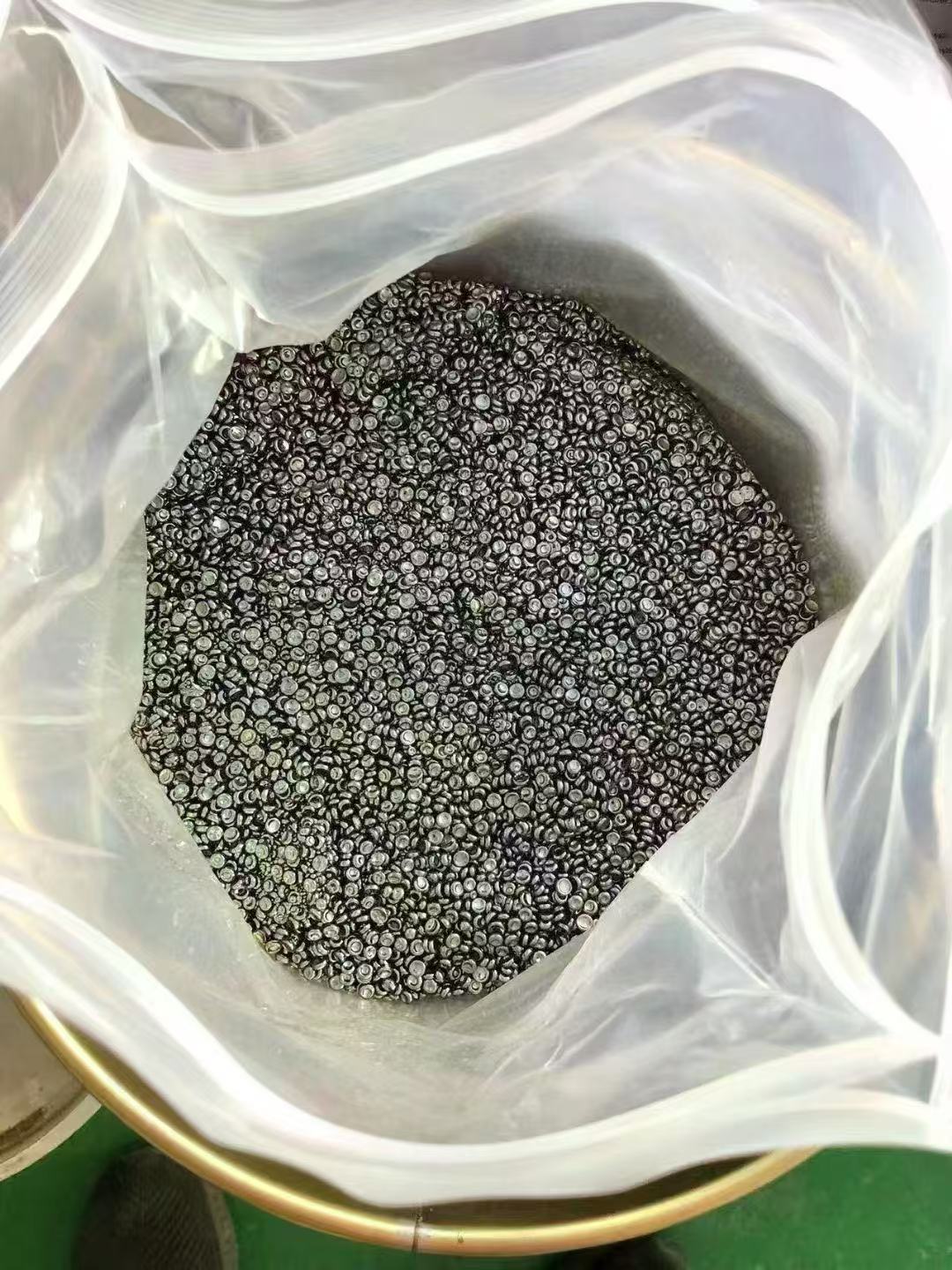
| High-Purity Grade (Se-02) | 99.99% | Total impurities ≤ 0.01% (100 ppm); individual impurity control at ppm level. | Lumps, granules, powder. |
| Ultra-High-Purity Grade (5N/Se-05) | 99.999% | Total impurities < 10 ppm. | Granules, powder (with emphasis on oxygen-free treatment and anti-caking). |
| Ultra-Pure Grade (6N/Se-06) | 99.9999% | Total impurities < 1 ppm. | Granules, powder (requires ultra-precision packaging). |
1.2 Purity Assurance and Detection
Ensuring purity relies on sophisticated analytical techniques. Lower grades can be analyzed using methods like Atomic Absorption Spectroscopy (AAS). For high-purity and ultra-pure selenium, advanced methods capable of detecting impurities at the ppt (parts per trillion) level are essential, such as Inductively Coupled Plasma Mass Spectrometry (ICP-MS) and Glow Discharge Mass Spectrometry (GD-MS). The production process typically involves complex purification techniques like distillation, vacuum distillation, and zone refining to remove key impurities like tellurium and oxygen.
2. Application Fields for Different Selenium Purity Grades
Purity acts as the bridge connecting selenium material to its final application. Due to differences in performance and cost, various grades of selenium are used across a broad spectrum, from basic industry to technological frontiers.
2.1 Industrial and Refined-Grade Selenium: Traditional & Foundational Applications
- Metallurgy: Used as an additive to improve the machinability of carbon steel and stainless steel.
- Glass Industry: Used for glass decolorization (removing green tint) and manufacturing ruby glass. Demand is high but purity requirements are modest (Se-04 grade typically suffices).
- Chemical Industry: Serves as a starting material for producing other selenium compounds (e.g., selenium dioxide, sodium selenate).
- Agriculture & Animal Feed: In strictly controlled doses, used as a trace element additive in forms like sodium selenite.
2.2 High-Purity Selenium (99.99%): The Foundation of Optoelectronics & Electronics
Achieving 99.99% purity is the “entry ticket” for selenium into functional electronic materials.
- Electrophotography & Laser Printing: This is the classic application for high-purity selenium. Its photoconductive properties make it the core material for manufacturing the photoconductor drums (or “selenium drums”) in photocopiers and laser printers. Purity directly affects copy/print resolution and drum lifespan.
- Rectifiers & Early Semiconductors: Utilized for its semiconductor properties in manufacturing selenium rectifiers historically.
- Infrared Optical Materials: High-purity selenium can be used to prepare infrared-transmitting windows and lenses for thermal imaging systems.
2.3 Ultra-High-Purity and Ultra-Pure Selenium (99.999% and above): Core Materials for Frontier Technologies
When purity reaches 5N (99.999%) or 6N (99.9999%), selenium becomes a critical base material for advanced compound semiconductors.
- Copper Indium Gallium Selenide (CIGS) Thin-Film Solar Cells: This is currently one of the most important applications for ultra-high-purity selenium. During the “selenization” process in CIGS cell manufacturing, ultra-high-purity selenium powder or vapor reacts with copper, indium, and gallium precursors to form the light-absorbing layer. Trace impurities can severely impair the cell’s photovoltaic conversion efficiency and long-term stability.
- Compound Semiconductor Manufacturing: Used to prepare II-VI compound semiconductors like zinc selenide (ZnSe) and cadmium selenide (CdSe). These materials are core components for infrared lasers, photodetectors, and light-emitting diodes (LEDs).
- Photoconductors & Specialty Alloys: Used in manufacturing highly sensitive or special-wavelength photodetector devices, as well as functional alloys with specific thermoelectric or magnetic properties.
It is crucial to distinguish that the “selenium content” standards in food or dietary supplements (e.g., “selenium-rich” labels) are entirely different concepts from the purity of elemental selenium discussed here. The former concerns the total amount or form (e.g., percentage of organic selenium) of selenium (usually present as organic or inorganic compounds) in food, governed by strict safety limits (e.g., GB 28050). This differs markedly from “high-purity selenium” used for industrial materials in terms of form, application, and safety standards.
Conclusion
In summary, the purity grades of selenium constitute a precise system strictly defined by standards and closely coupled with application requirements. Each additional “9” from 99% industrial purity to 99.9999% ultra-purity signifies an order-of-magnitude reduction in impurity content, a significant leap in production technology, and the unlocking of access to more advanced applications. Looking ahead, with the ongoing development of cutting-edge technologies like CIGS photovoltaics, infrared detection, and quantum dot displays, the demand for ultra-high-purity selenium (especially 6N and above) will continue to grow. This will drive purification technologies toward higher levels and lower costs. A deep understanding of the relationship between purity and performance is key to the correct selection of selenium materials and ensuring the competitiveness of downstream products.
