

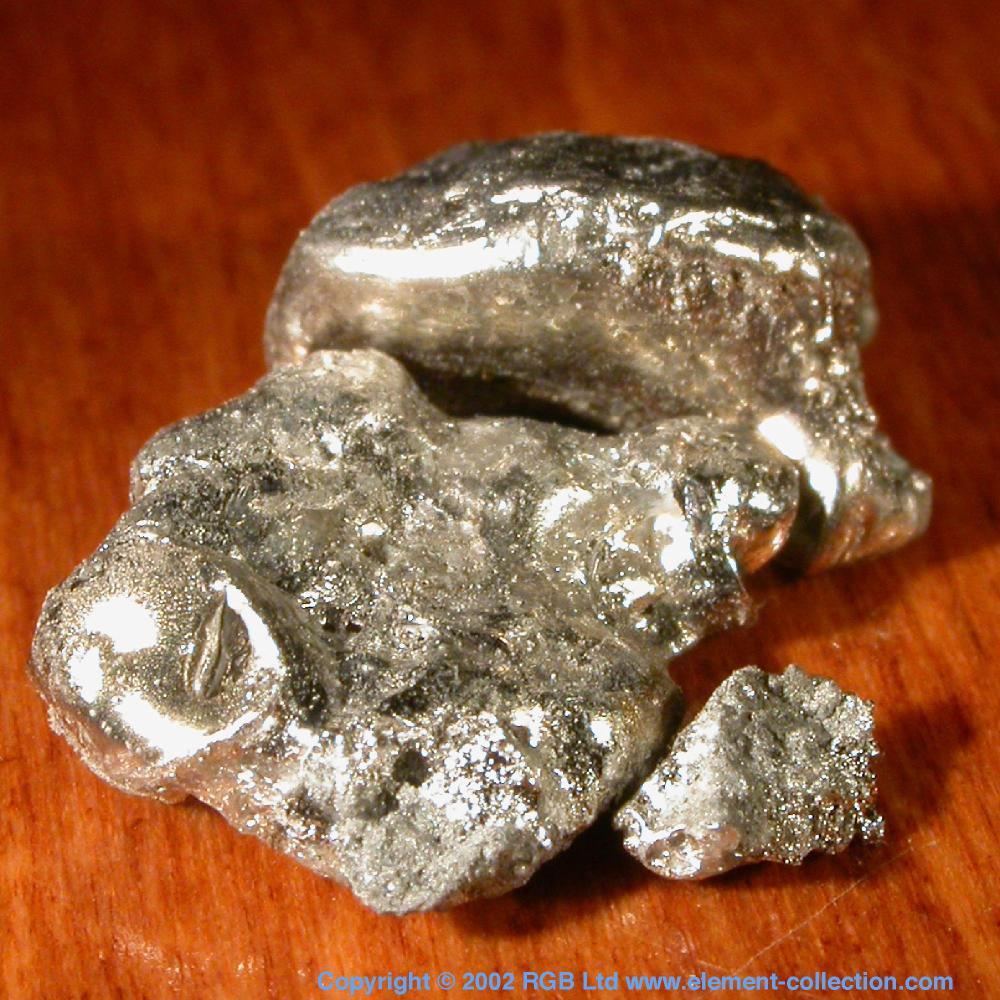
What Are the Melting Point and Density of Iridium? How Do These Properties Benefit Practical Applications?

Abstract
Iridium (Ir), a quintessential platinum-group metal, boasts an exceptionally high melting point of 2446°C (some sources cite 2450°C) and a density of 22.652 g/cm³ (20°C), ranking among the densest naturally occurring metals. These extreme properties make it indispensable in high-temperature, corrosive, and high-stress environments:
- High Melting Point: Enables iridium crucibles to maintain stability >2000°C during crystal growth (e.g., sapphire single crystals).
- Ultrahigh Density (second only to osmium): Critical for radiation shielding, with a neutron absorption cross-section of 425 barns.
- Superior Corrosion Resistance (annual corrosion rate <0.001 mm/a in aqua regia): Extends the lifespan of iridium electrodes in chlor-alkali industries to 10× that of traditional titanium electrodes.
China’s breakthroughs in iridium recycling (e.g., plasma smelting purification) have further reduced the cost of this strategic metal.
1. Physical Properties & Measurement Standards
A. Precise Melting Point Determination
- 2446°C (per GB/T 1421-2025), measured via laser-heated悬浮法 (levitation method), with ±5°C error.
- Its hexagonal close-packed (HCP) structure remains stable at high temperatures, with a thermal expansion coefficient of 6.4×10⁻⁶/K (20–1000°C).
- Comparison: Osmium (3033°C) has a higher melting point but poor workability; platinum (1768°C) is more malleable but lacks high-temperature stability.
B. Engineering Significance of Density
- Measured density: 22.652 g/cm³ (ISO 11876:2025), nearing the theoretical 22.65 g/cm³.
- In aerospace, iridium counterweights offer 12% higher volumetric efficiency than tungsten, without radioactivity risks.
- Nanoporous iridium (density: 18.5 g/cm³, pore size: 50–200 nm) combines high surface area (120 m²/g) with strength, ideal for fuel cell catalyst supports.
2. Core Advantages in High-Temperature Applications
A. Extreme-Environment Devices
- Iridium Crucibles: Withstand 2300°C/50 h in ammonia atmospheres for GaN crystal growth (LEDs), lasting 8× longer than molybdenum crucibles while reducing lattice defects to 10³/cm².
- Rocket Nozzle Liners: Ir-20Re composites raise the melting point to 2500°C, enduring >1000 thermal cycles (Mach 8 conditions).
B. Nuclear Industry Applications
- Ir-192 Radiation Shielding: 10 mm iridium shells attenuate ⁶⁰Co radiation by 99.9% due to density-driven γ-ray absorption.
- Fast Neutron Reactors: Iridium control rods have 3× the absorption cross-section of boron steel, with no helium embrittlement (post-irradiation ductility >15%).
3. Innovations Leveraging High Density
A. Precision Instrumentation
- Ir-10Pt Alloy Gyroscopes: Density uniformity <0.001%, enabling inertial navigation accuracy of 0.001°/h (100× better than quartz gyros).
- Gravitational Wave Detectors (e.g., LIGO): Iridium mirrors (surface roughness <0.1 nm) suppress thermal noise.
B. Biomedical Implants
- Porous Iridium Coatings (30% porosity) reduce joint friction coefficient to 0.08, with wear rates <0.1 mm³/million cycles, extending lifespan to 25 years.
4. Challenges & Solutions
A. Processing Difficulties
- Room-Temperature Brittleness (fracture toughness: 28 MPa·m¹/²): Mitigated via hot isostatic pressing (HIP, 1200°C/100 MPa), boosting yield from 40% to 85%.
- 3D Printing: Selective laser melting (SLM) requires >500 W laser power and 20 μm layer thickness to prevent cracking.
B. Cost Optimization
- Plasma Smelting Recycling (>3000°C) from spent catalysts achieves 99.95% purity with 30% energy savings over chemical methods.
Conclusion
Iridium’s unrivaled melting point and density create technological barriers in aerospace, nuclear energy, and precision manufacturing. Future directions include:
- Ir/HfC Composites (target: 3000°C resistance).
- ALD Thin-Film Deposition to cut semiconductor costs.
- Global Recycling Systems (China’s e-waste recovery rate: >98%).
With 6G terahertz devices driving demand for iridium electrodes, its strategic value will continue to rise.
