

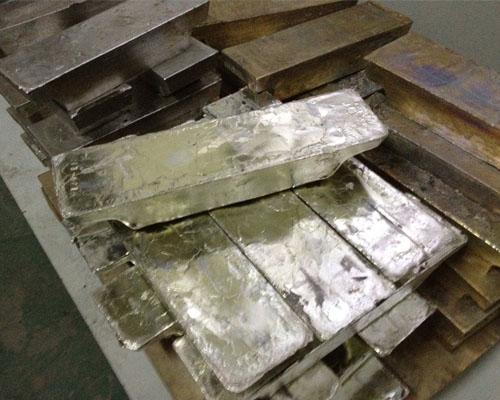
Composition and Performance Characteristics of Solder Alloys

Abstract
Solder alloys are tin (Sn)-based metallic materials widely used in electronics assembly, automotive radiator sealing, and other applications. The most common formulation is tin-lead (Sn-Pb) solder (e.g., Sn63/Pb37, melting point 183°C), valued for its low melting point, excellent wettability, and electrical conductivity (resistivity ~12.6 μΩ·cm). Lead-free solders (e.g., Sn-Ag-Cu systems) incorporate silver (Ag) and copper (Cu) to enhance creep resistance (shear strength >30 MPa) but exhibit a higher melting point (217°C). Key characteristics include:
- Sn-Pb alloys: Low cost, mature processing technology.
- Sn-Ag-Cu alloys: Environmentally friendly, high-temperature resistant.
- Sn-Bi alloys (melting point 138°C): Suitable for low-temperature soldering.
Impurities (e.g., Cu >0.5%) degrade mechanical properties, necessitating rosin-based flux to purify the solder interface.
1. Composition Systems and Phase Diagram Features
(1) Binary Alloys (Sn-Pb)
- Eutectic Sn63/Pb37 has a single melting point (183°C) with no solid-liquid phase gap, enabling rapid soldering.
- Lead reduces surface tension (from 540 mN/m for pure Sn to 380 mN/m for Sn63/Pb37), improving wetting angle on copper substrates (<20°).
- Non-eutectic compositions (e.g., Sn60/Pb40) exhibit a mushy zone, increasing “cold solder joint” risk.
- Adding 0.5% antimony (Sb) refines grain structure, increasing tensile strength to 45 MPa.
(2) Ternary Alloys (Sn-Ag-Cu)
- SAC305 (Sn96.5/Ag3.0/Cu0.5) is the dominant lead-free solder, where Ag₃Sn and Cu₆Sn₅ intermetallic compounds (IMCs) enhance shear strength (32 MPa vs. 25 MPa for Sn-Pb).
- Excessive Ag (>3.5%) thickens IMCs, reducing ductility (elongation <15%).
(3) Low-Temperature Alloys (Sn-Bi-In)
- Sn42/Bi58 melts at 138°C, but bismuth (Bi) brittleness can be mitigated by 1% indium (In), improving elongation from 5% to 12%.
2. Key Performance Metrics and Influencing Factors
(A) Physical Properties
- Electrical Conductivity
- Sn63/Pb37 resistivity (12.6 μΩ·cm) is close to pure Sn (11.5 μΩ·cm) and superior to SAC305 (14.2 μΩ·cm).
- High-frequency applications require controlled Ag content to minimize skin effect losses.
- Thermal Properties
- Sn-Ag-Cu thermal conductivity (50 W/(m·K)) exceeds Sn-Pb (35 W/(m·K)), but its CTE (24 ppm/℃) mismatches PCB substrates (16 ppm/℃), necessitating Cu₆Sn₅ IMC layers for stress buffering.
(B) Mechanical Properties
- Creep Resistance
- SAC305 exhibits 100× lower creep rates at 125°C than Sn-Pb, due to Ag₃Sn grain boundary pinning.
- Sn-Bi alloys suffer grain boundary sliding at 80°C, limiting use to low-temperature environments.
- Fatigue Life
- Sn-Ag-Cu withstands >5000 thermal cycles (-40~125°C), outperforming Sn-Pb (3000 cycles).
- Adding 0.1% nickel (Ni) improves Sn-Pb fatigue life to 4000 cycles.
(C) Impurity Control
- Copper Contamination (>0.5%)
- Causes brittle solder joints; nitrogen-assisted soldering limits Cu to <0.3%.
- Aluminum (Al) & Zinc (Zn)
- >0.005% forms Al₂O₃/ZnO films, impairing wettability; fluoride-active fluxes are required for removal.
3. Flux Synergy
(1) Rosin-Based Flux (RMA Grade)
- Contains 20% rosin + 2% organic acids (e.g., succinic acid).
- Activation range: 150–170°C; insulation resistance >10¹⁰ Ω (meets IPC-J-STD-004).
(2) No-Clean Flux
- Alcohol-based solvents + 0.5% halogens (e.g., brominated succinic acid).
- Surface tension ≤25 mN/m, ideal for microcomponents (e.g., 0402 size).
Conclusion
Optimizing solder performance requires balancing:
- Composition design (e.g., Ag/Cu ratio in SAC305).
- Impurity control (e.g., Cu <0.3%).
- Flux compatibility (e.g., rosin activation at 150°C).
Future Trends:
- Nano-silver (50 nm) modified solders to reduce melting points below 200°C.
- Biodegradable fluxes (e.g., citric acid derivatives) replacing traditional rosin.
- Sn-Ag-Cu-In quaternary alloys + ultra-low-halogen fluxes for 5G microelectronics.
