

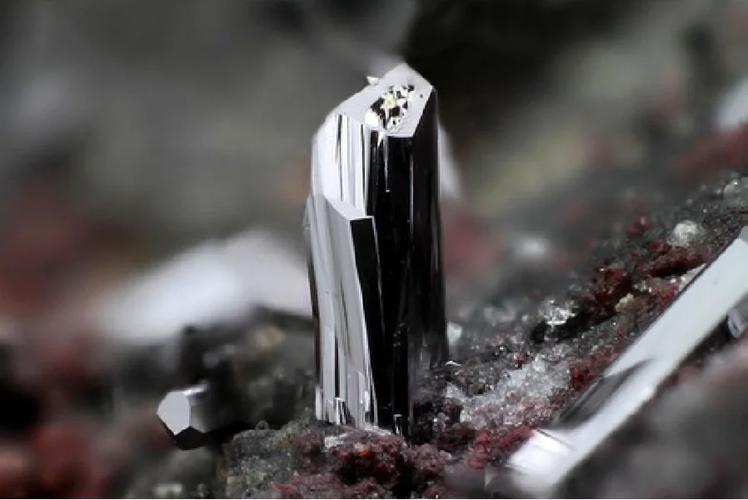
Properties and Applications of Different Selenium Forms (Elemental Selenium, Selenides, etc.)

Abstract
Selenium (Se), a nonmetallic element, exhibits significant differences in physicochemical properties and applications depending on its chemical forms (elemental selenium, selenides, selenates, etc.).
- Elemental selenium exists most stably as gray selenium (hexagonal crystal system), which demonstrates photoconductivity (electrical resistance changes under light exposure) and is used in semiconductors and photosensitive materials.
- Selenides (e.g., Na₂Se) participate in selenoenzyme synthesis (e.g., glutathione peroxidase, GPx) in biological systems, providing antioxidant and anticancer effects.
- Selenates (SeO₄²⁻) are highly oxidizing and are used in glass decolorization and electrolytic manganese catalysts.
Toxicity varies drastically among forms—selenite (SeO₃²⁻) is 10 times more toxic than selenides, requiring strict intake control (adult daily limit: 400 μg). Future research should focus on enhancing nano-selenium bioavailability and improving industrial selenium waste recycling.
1. Elemental Selenium: Forms and Properties
1.1 Allotropes Comparison
- Gray Se: Hexagonal crystal, density 4.81 g/cm³, melting point 217°C, the only form with metallic conductivity. Used in photocopier drums (light response <1 ms).
- Red Se: Amorphous, density 4.26 g/cm³, soluble in CS₂, used as a vulcanizing agent for rubber (reduces curing temp. by 20°C).
- Black Se: Vitreous, density 4.28 g/cm³, applied in infrared optics (transmission range 1–20 μm).
1.2 Optoelectronic Applications
- Gray Se’s photoconductivity made it essential in early X-ray imaging plates (sensitivity 5 μGy).
- Cadmium selenide (CdSe) quantum dots exhibit >90% fluorescence efficiency, used in QLED red-emitting layers.
2. Selenides: Biological & Industrial Significance
2.1 Bioactive Forms
- Selenocysteine: The 21st natural amino acid, active site of GPx, neutralizes free radicals (rate constant 10⁶ M⁻¹s⁻¹).
- Sodium selenide (Na₂Se): Common lab selenium source, but highly toxic (LD₅₀ 3 mg/kg, oral rats). Must be converted to organic Se (e.g., selenomethionine) for supplements.
2.2 Industrial Catalysis
- Molybdenum diselenide (MoSe₂) serves as a hydrogen evolution reaction (HER) catalyst with 150 mV overpotential (10 mA/cm²), costing 1/50th of platinum catalysts.
- Copper indium gallium selenide (CIGS) thin-film solar cells achieve 23.4% efficiency (NREL-certified), outperforming poly-Si.
3. Oxidized Selenium Compounds: Properties & Risks
3.1 Selenates vs. Selenites
- Sodium selenate (Na₂SeO₄): Strong oxidizer, used in glass decolorization (0.01% removes Fe²-induced green tint).
- Sodium selenite (Na₂SeO₃): Highly toxic (LD₅₀ 7 mg/kg), yet at 0.1 ppm, prevents Keshan disease.
3.2 Environmental & Health Hazards
- SeO₃²⁻ in wastewater must be reduced to Se⁰ via zero-valent iron (removal rate >99%) to prevent bioaccumulation (fish BCF up to 10⁴).
- Selenium toxicity (>1000 μg/day) causes selenosis (hair loss, neurological damage).
4. Emerging Applications & Challenges
4.1 Medical Breakthroughs with Nano-Se
- Nano-red Se (50 nm particles) has 5x higher bioavailability than selenite, used in targeted cancer therapy (IC₅₀ 10 μM for HepG2 cells).
- Bismuth selenide (Bi₂Se₃), a topological insulator, shows quantum anomalous Hall effect (threshold 100 K).
4.2 Resource Recycling
- Wet-process Se recovery from copper anode slimes (H₂SO₄-O₂ system) achieves >95% yield at 99.99% purity.
- CIGS from PV waste can be separated via vacuum distillation (bp 684.9°C), with 90% reusability.
Conclusion
Selenium’s multiform nature makes it indispensable in biomedicine, energy, and electronics, but its toxicity disparities (e.g., Se⁰ low-tox vs. SeO₃²⁻ high-tox) demand strict regulation. Future priorities:
- High-precision Se speciation analysis (e.g., HPLC-ICP-MS).
- Scalable nano-Se synthesis (±5 nm size control).
- Global Se recycling (esp. e-waste).
As the world’s top Se reserve holder (23% global share), China should lead in standardization (e.g., GB/T Se product purity) to drive industry advancement.
