

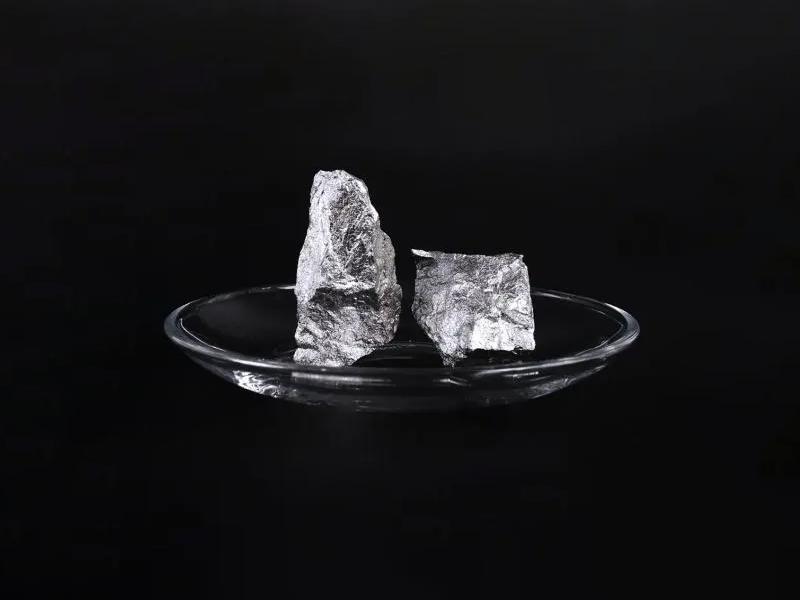
Platinum-Rhodium Recovery from Waste Refractory Castables

Shaoguan Yuntian Metals
Abstract
In the fiberglass industry, it is well-known that platinum-rhodium (Pt-Rh) alloys are essential for bushing plates in glass fiber production. However, few realize that these precious metals gradually volatilize, detach, and become adsorbed by surrounding refractory castables during high-temperature operations. When equipment is scrapped, these castables—often treated as “waste”—actually contain highly valuable platinum and rhodium.
With soaring precious metal prices, these overlooked waste materials have suddenly become a highly sought-after secondary resource. Compared to mining, waste castables contain astonishingly high Pt-Rh concentrations, making them a “secondary gold mine.”
Why Should Waste Castables Be Re-evaluated?
Based on your provided composition data, waste castables contain:
- ~0.8% platinum
- ~0.12% rhodium
- The remainder consists mainly of alumina (Al₂O₃) and silica (SiO₂).
This concentration is equivalent to a high-grade ore deposit in mining terms. For fiberglass manufacturers, this represents a long-overlooked profit opportunity.
Moreover, China’s limited domestic precious metal reserves contrast sharply with the growing demand from industries like fiberglass, chemicals, and electronics. Recovering Pt-Rh from waste has become a critical measure for ensuring supply chain security.
Technical Challenges: Pt-Rh “Locked” in Refractory Matrices
The primary issue is not low concentration but extraction difficulty.
After prolonged exposure to high-temperature furnaces, platinum and rhodium become tightly encapsulated by Al₂O₃ and SiO₂, making conventional leaching methods ineffective. To address this, we propose a comprehensive recovery process:
- Ball milling (≤74 μm) – Increases surface area for reaction.
- Alkali roasting – Breaks down Al₂O₃/SiO₂ encapsulation.
- Aqua regia leaching – Dissolves Pt-Rh into solution.
- Diethylenetriamine (DETA) selective rhodium precipitation – Critical separation step.
- Ammonium chloride platinum precipitation – Yields high-purity sponge Pt.
Core Strategy:
Break encapsulation → Precise separation → Final purification.
This approach effectively solves the industry’s long-standing challenge of Pt-Rh recovery from castables.
Key Technological Breakthroughs: High Leaching & Separation Efficiency
1. Alkali Roasting: Exceptional Liberation
- Optimal conditions:
- NaOH dosage = 1.5× raw material weight
- 750°C, 40 min roasting
- Result: >99% Pt and Rh leaching efficiency, fully liberating the metals from encapsulation.
2. Platinum-Rhodium Separation: The Critical Step
- DETA selectively precipitates Rh (not Pt) at 65°C.
- At 8.5× Rh stoichiometric dosage, 99.98% Rh precipitation efficiency is achieved.
- This step completely resolves the Pt-Rh separation challenge.
3. High-Purity Final Products
- Sponge platinum and rhodium powder reach >99.95% purity, meeting industrial standards.
Economic Value: Not Just Savings, but Profit Generation
- For fiberglass plants:
- Waste castables, once a costly disposal burden, now yield high-value metal powders.
- A dual benefit model: Cost reduction + Revenue generation.
- For recyclers:
- Stable supply, traceable sources, and 99% recovery rates make this an ideal secondary resource.
- Environmental & scalability advantages:
- Low environmental impact, scalable, and ready for industry-wide adoption.
Conclusion by Shaoguan Yuntian Metals
Recovering platinum and rhodium from seemingly ordinary castables is not just about resource conservation—it’s a forward-looking strategy for material security. Amid global precious metal supply constraints, such secondary resources will grow increasingly vital.
