

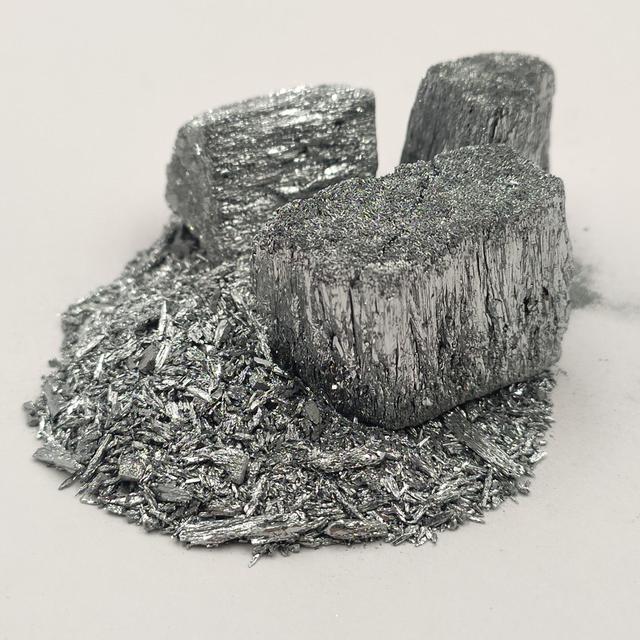
Key Industrial Applications of Tellurium and Its Critical Roles Across Industries

Abstract
Tellurium, as a rare and dispersed metal, holds significant value across multiple industrial sectors. Its primary applications include:
- Photovoltaics (cadmium telluride (CdTe) thin-film solar cells),
- Electronics & Semiconductors (thermoelectric materials, photodiodes),
- Metallurgy (additive for copper/steel alloys), and
- Chemical Industry (catalysts, rubber vulcanization agents).
CdTe solar cells, known for their low-light performance and high conversion efficiency, represent a major direction in photovoltaic technology. Meanwhile, bismuth telluride (Bi₂Te₃) and other thermoelectric materials play a crucial role in energy conversion. Additionally, tellurium enhances metal processing capabilities, improving precision manufacturing. With the growth of renewable energy and advanced electronics, tellurium’s strategic importance continues to rise.
1. Tellurium’s Central Role in Photovoltaics
Cadmium telluride (CdTe) thin-film solar cells dominate tellurium consumption, offering key advantages:
- High Photoelectric Conversion Efficiency – Lab efficiencies exceed 22%, outperforming traditional silicon cells in low-light conditions, making them ideal for utility-scale plants and building-integrated PV (BIPV).
- Cost-Effectiveness – Thin-film technology reduces material usage, lowering power generation costs by 15–20% compared to silicon-based cells.
- Environmental Adaptability – High resistance to heat and radiation makes CdTe suitable for desert and space applications.
Over 40% of global tellurium production is used in photovoltaics, with China and the U.S. as leading producers. Technological advancements drive an annual demand growth of 8–10%.
2. Applications in Electronics & Semiconductors
A. Thermoelectric Materials
- Bismuth telluride (Bi₂Te₃) exhibits the highest room-temperature thermoelectric efficiency (5–8%), used in:
- Automotive refrigerators,
- Spacecraft radioisotope batteries,
- Waste heat recovery in 5G base stations and data centers to improve energy efficiency.
B. Semiconductor Devices
- Zinc telluride (ZnTe) enables infrared detectors and high-speed laser diodes (1.5–3.5 μm wavelength), crucial for fiber optics and medical imaging.
- Mercury cadmium telluride (HgCdTe) is the core material for high-performance infrared focal plane arrays, used in military and meteorological satellites.
3. Metallurgical & Alloy Enhancements
A. Copper Alloy Additive
- Adding 0.1–0.5% tellurium improves machinability (30% lower cutting force) while maintaining ≥90% IACS conductivity, ideal for precision connectors and electrodes.
B. Steel Modification
- Tellurium reduces sulfide inclusions, enhancing pitting corrosion resistance in stainless steel, extending service life in marine engineering.
4. Diverse Applications in Chemicals & Medicine
A. Catalysis
- Telluric acid (H₆TeO₆) selectively catalyzes olefin oxidation reactions (≥85% selectivity) in petrochemical processes.
B. Pharmaceutical Potential
- Organotellurium compounds (e.g., tellurocysteine) exhibit anti-inflammatory and antioxidant properties, with ongoing research in anticancer drug development.
5. Challenges & Future Trends
- Resource Constraints – Annual tellurium production is only 500–600 tons, with ~90% sourced as a byproduct of copper smelting. Recycling rates must improve from 60% to >80%.
- High-Purity Demand – Semiconductor and PV industries require 6N (99.9999%) ultra-high-purity tellurium, driving R&D in vapor-phase refining and zone melting.
- Competition from Alternatives – Perovskite solar cells may challenge CdTe, but tellurium’s irreplaceability in thermoelectrics ensures its strategic value.
Conclusion
Tellurium’s industrial applications span traditional metallurgy to cutting-edge technologies. As clean energy and advanced manufacturing expand, improving resource efficiency and recycling technologies will be critical to sustaining its supply chain. The metal’s unique properties ensure its continued importance in next-generation electronics, energy systems, and high-performance materials.
