

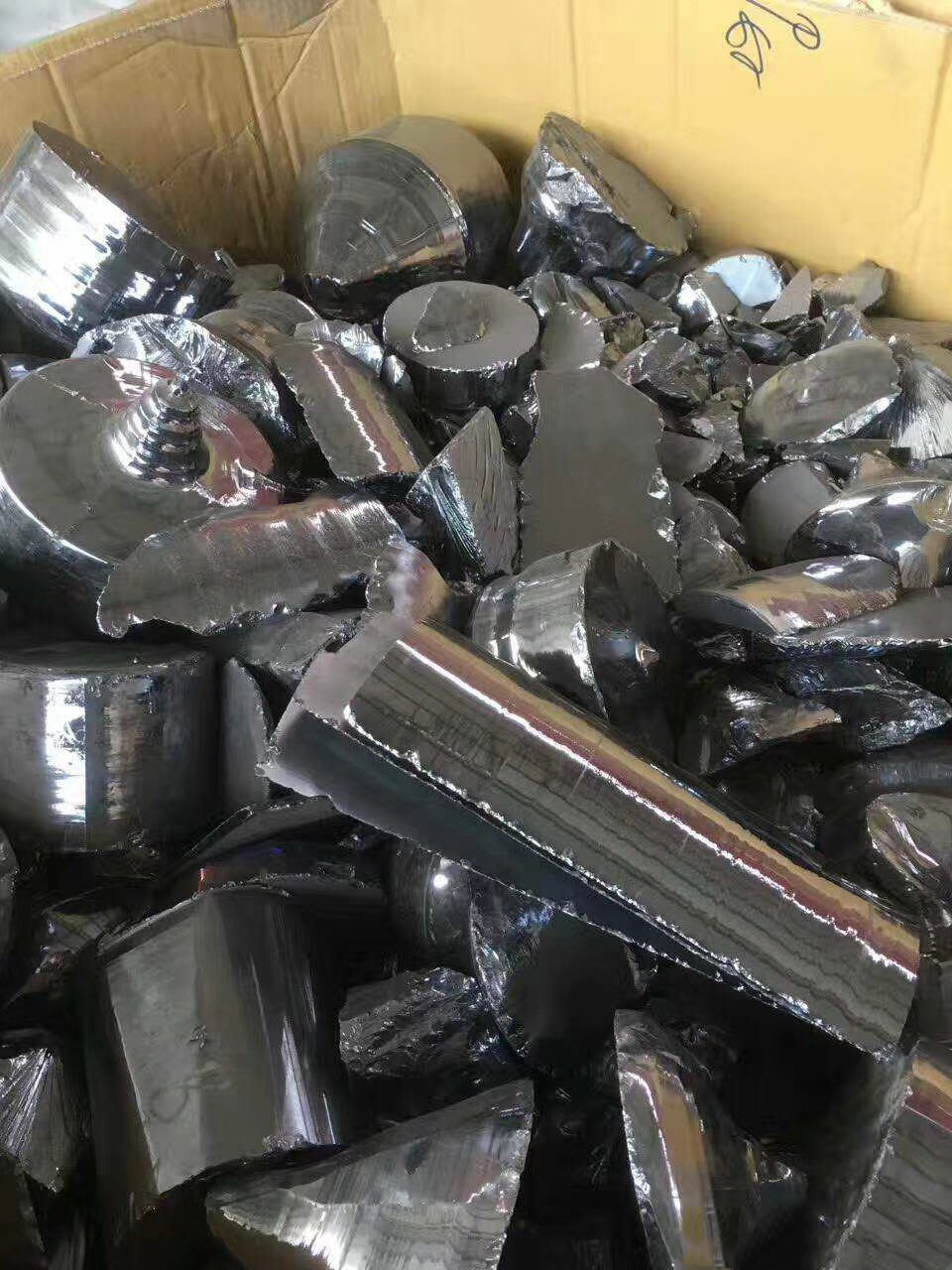
Purification Technologies for High-Purity Germanium and the Impact of Different Purity Grades (e.g., 5N, 6N) on Semiconductor Industry Applications

Abstract
High-purity germanium is an indispensable material in the semiconductor industry, commonly available in purity grades of 5N (99.999%) and 6N (99.9999%). The primary purification technologies include zone refining and chemical vapor deposition (CVD). These methods ensure the high purity of germanium by minimizing impurity interference, thereby enhancing its performance in optoelectronic and electronic devices. Different purity grades directly affect key parameters such as electrical conductivity and carrier mobility, making purity selection critical in high-demand semiconductor and infrared optical applications.
1.Purification Technologies for High-Purity Germanium
In the purification process of germanium, the goal is to eliminate impurities to improve purity, thus enhancing its performance in semiconductor and optoelectronic applications.
1.1 Zone Refining
1.1.1 Principle and Operation
Zone refining reduces impurity concentration by moving a molten zone along a germanium ingot. Due to the differing solubilities of elements in liquid and solid phases, impurities tend to concentrate in the molten zone. As the molten zone moves, pure germanium recrystallizes behind it, progressively increasing the overall purity.
1.1.2 Advantages and Limitations
Zone refining effectively removes most impurities, achieving purities from 5N to 6N. Its main limitations include relatively slow processing speed, operational complexity, and stringent requirements for temperature gradients and molten zone stability.
1.2 Chemical Vapor Deposition (CVD)
1.2.1 Principle and Operation
CVD converts germanium compounds in the gas phase into pure germanium deposited on substrates. Typically, hydrogen reduction of germanium chloride is employed to deposit elemental germanium.
1.2.2 Advantages and Limitations
CVD enables production of high-purity germanium thin films on various substrates, suitable for large-scale manufacturing and complex geometries. Challenges involve precise control of reaction conditions and potential contamination during processing.
1.3 Other Methods
1.3.1 Melt Electrolysis
As a supplementary method for further purification, melt electrolysis removes specific metallic impurities from germanium.
1.3.2 Physical Vapor Transport
Used for producing high-purity germanium in special forms such as nanowires and thin films, this method requires highly specialized technical facilities due to its complexity.
2.Impact of Different Purity Grades
Germanium purity directly influences its electronic and optical properties, thereby affecting its performance in semiconductor and optoelectronic industries.
2.1 5N Grade Germanium
2.1.1 Applications and Impact
5N purity germanium is primarily used in optical fibers, solar cells, and infrared optical components. This purity level provides good transparency and conductivity, with reduced impurity concentrations minimizing scattering and resistive losses.
2.1.2 Technical and Market Acceptance
Due to relatively lower cost and sufficient performance for most optical applications, 5N germanium holds substantial market share and demonstrates mature technology readiness.
2.2 6N Grade Germanium
2.2.1 Applications and Impact
With higher purity and lower impurity levels, 6N germanium exhibits higher carrier mobility, making it suitable for high-end semiconductor devices and high-precision detectors. Its potential is recognized in spintronics and quantum device development.
2.2.2 High-Precision Requirements
In semiconductor manufacturing demanding extreme precision, 6N germanium’s electrical stability and reduced impurity-related defects are critical, supporting advancements in high-frequency devices and efficient sensor technologies.
2.3 Challenges and Advantages of Purity Enhancement
2.3.1 Challenges
Further purity improvement faces technical difficulties, particularly in removing certain metallic impurities. Purification processes become increasingly complex and require advanced equipment.
2.3.2 Advantages
High-purity germanium exhibits excellent stability under extreme conditions, enhancing its value in military and aerospace applications. Its role in emerging global technology markets is increasingly prominent, driving continuous technological innovation.
3.Future Development and Trends
3.1 Technological Innovation
3.1.1 Integration with Nanotechnology
Combining nanotechnology and silicon-on-insulator techniques promotes efficient utilization of germanium, opening broader prospects for high-performance applications.
3.1.2 Automation and Intelligent Production
Advances in intelligent control and automated production technologies will improve purification efficiency and product consistency, reducing production costs for high-purity germanium.
3.2 Market Demand and Ecological Sustainability
3.2.1 Market Expansion
Driven by 5G technology, infrared sensors, and clean energy development, demand for high-purity germanium will continue to grow.
3.2.2 Ecological Challenges and Solutions
Resource recycling and environmentally friendly production technologies will become vital supports for the high-purity germanium industry to address limited resources and environmental protection requirements.
Conclusion
High-purity germanium plays an indispensable role in modern technology, profoundly impacting semiconductor and optical fields. Purification technologies such as zone refining and chemical vapor deposition directly enhance the performance of electronic and optoelectronic devices. As the semiconductor industry advances technological innovation, the market prospects for germanium will broaden, providing a reliable core material for next-generation high-tech products.
